1) Hook: When faith stops “working”
Some people don’t “lose faith” in a dramatic lightning-bolt moment. Instead, it happens quietly—like a belief system that no longer matches life. Prayers feel unanswered, doctrines feel emotionally brittle, and the official answers don’t explain what you’re actually seeing.
If you’ve ever wondered why religion fails people, you’re not alone. Surveys and cultural trends show increasing numbers of people describing religion as either intellectually unpersuasive or personally unsatisfying—sometimes both. And when faith no longer provides coherence, comfort, or credibility, it can start to feel unconvincing.
2) Religion criticism from the outside vs. personal experience from the inside
Religion criticism often comes from the outside: philosophers, historians, and scientists pointing out origins of belief, inconsistencies, or social harms. Common themes include outdated premises, moral contradictions, and institutions protecting power rather than truth.
But criticism becomes uniquely persuasive when it mirrors lived disappointment. When you’re already wrestling with unanswered prayers, moral confusion, or hypocrisy in your own community, the broader critique doesn’t just sound plausible—it sounds recognizably accurate.
In other words, criticism doesn’t automatically “break” faith. It often names what people are already feeling.
3) The Problem of Suffering: unanswered pain as a belief-breaker
For many people, the first crack in religious confidence is not abstract doubt—it’s real pain.
A Medium article on the real reasons people lose their faith describes how personal tragedy (for example, illness or loss) can shatter simplistic ideas about a protective God. Instead of strengthening belief, suffering exposes a mismatch between doctrine and experience.
This conflict can look like:
- “If God is good and all-powerful, why does this happen?”
- “Why do prayers seem to make no difference?”
- “Why does ‘hope’ not protect children, caregivers, or the vulnerable?”
Even people who still want to believe may struggle with the feeling that the religious explanation is either too vague (offering comfort without explanation) or too rigid (requiring trust in claims that don’t fit observed reality).
4) Doctrinal pressure points that create moral and logical conflicts
Even when suffering isn’t immediate, doctrines can still create pressure points—teachings that feel morally or logically incompatible with lived empathy.
Biblical literalism: when comfort becomes hard to reconcile
Some traditions emphasize literal readings of sacred texts. That approach can produce intense tension when the text claims to offer certainty, but everyday life looks uncertain, unfair, or morally puzzling.
When a comforting interpretation can’t survive confrontation with reality, literalism can become less a source of truth and more a source of stress.
Hell and the problem of atonement: justice vs. mercy
For many, concepts like hell, divine punishment, and atonement create a moral dilemma. The central issue isn’t only whether these doctrines are “true.” It’s whether they feel ethically credible.
- Justice can feel overridden by theological mechanisms people struggle to justify.
- Mercy can feel conditional rather than compassionate.
- Love can feel inconsistent with exclusion, eternal punishment, or spiritual “fine print.”
When the story about God doesn’t align with the values people use to judge right and wrong, faith can feel morally unconvincing.
5) Cognitive dissonance and the “fit” problem
Belief can also collapse through cognitive dissonance—the mental discomfort that shows up when teachings conflict with lived experience or personal values.
This is the “fit” problem: religion may claim to explain your world, but it doesn’t fit your observations. That mismatch often pushes people toward reassessment rather than “trying harder.”
Instead of thinking, “Maybe I’m misunderstanding,” some end up thinking:
- “Maybe this belief system doesn’t match reality.”
- “Maybe the emotional comfort is not evidence.”
- “Maybe my empathy can’t be used as fuel for an incompatible doctrine.”
Over time, the cost of maintaining the mismatch grows.
6) Institutional and social trust failures
Even if doctrines are intellectually survivable, trust can still die.
Many people lose confidence because the institution—its leaders, messaging, and community behavior—fails to embody its own claims.
Hypocrisy
One of the most corrosive experiences is seeing religious people who don’t match the message: compassion performed on Sundays but denied in practice. When moral authority is claimed but behavior contradicts it, people conclude the system may protect itself more than it serves truth.
Unanswered prayers and perceived double standards
When prayers repeatedly seem unanswered—especially for the vulnerable—religion can feel less like guidance and more like ritual. And when the community responds with blame (“you didn’t have enough faith”) rather than accountability (“we don’t know”), the credibility gap widens.
Community can protect beliefs more than truth
Some faith communities can create emotional incentives to ignore inconsistencies. Social belonging may become stronger than intellectual integrity. In that environment, doubt doesn’t only challenge doctrine—it threatens identity.
7) Evidence gaps: the intellectual challenge of belief
For many skeptics, the decisive factor is not cruelty or hypocrisy—it’s the lack of credible evidence.
General religion criticism points to historical development of religious ideas, explanations for belief grounded in human psychology and culture, and concerns about harm. From this perspective, many religious claims are treated as certainty without matching the standard of evidence used elsewhere.
Some people also worry about scientific incompatibility. Even if “science and religion” aren’t always in direct conflict, many believers struggle to reconcile specific claims with what the world appears to show.
When evidence is missing, belief can start to feel like an act of commitment rather than a conclusion drawn from reality.
8) Harm concerns that make religion feel unsafe or harmful
Another major reason religion can feel unconvincing is that it can appear unsafe—morally, physically, or psychologically.
Medical neglect and misinformation
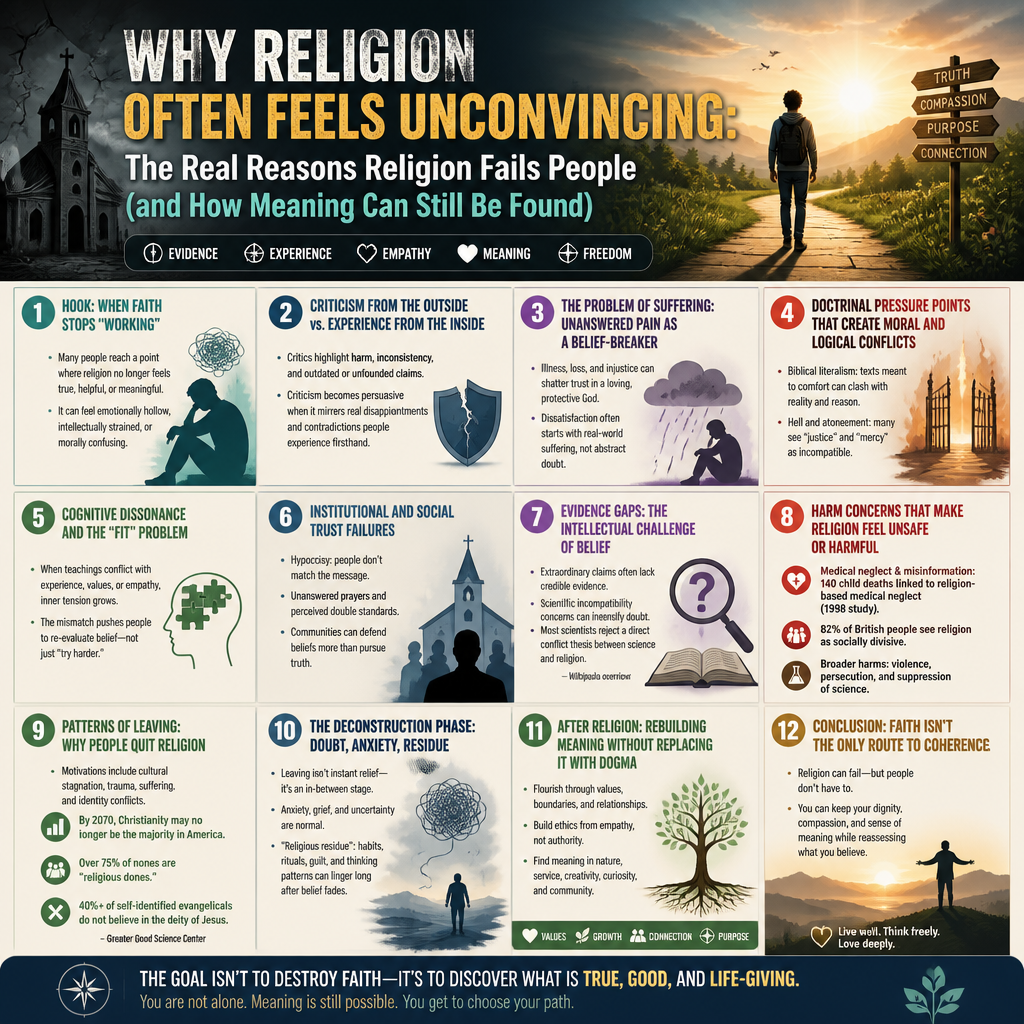
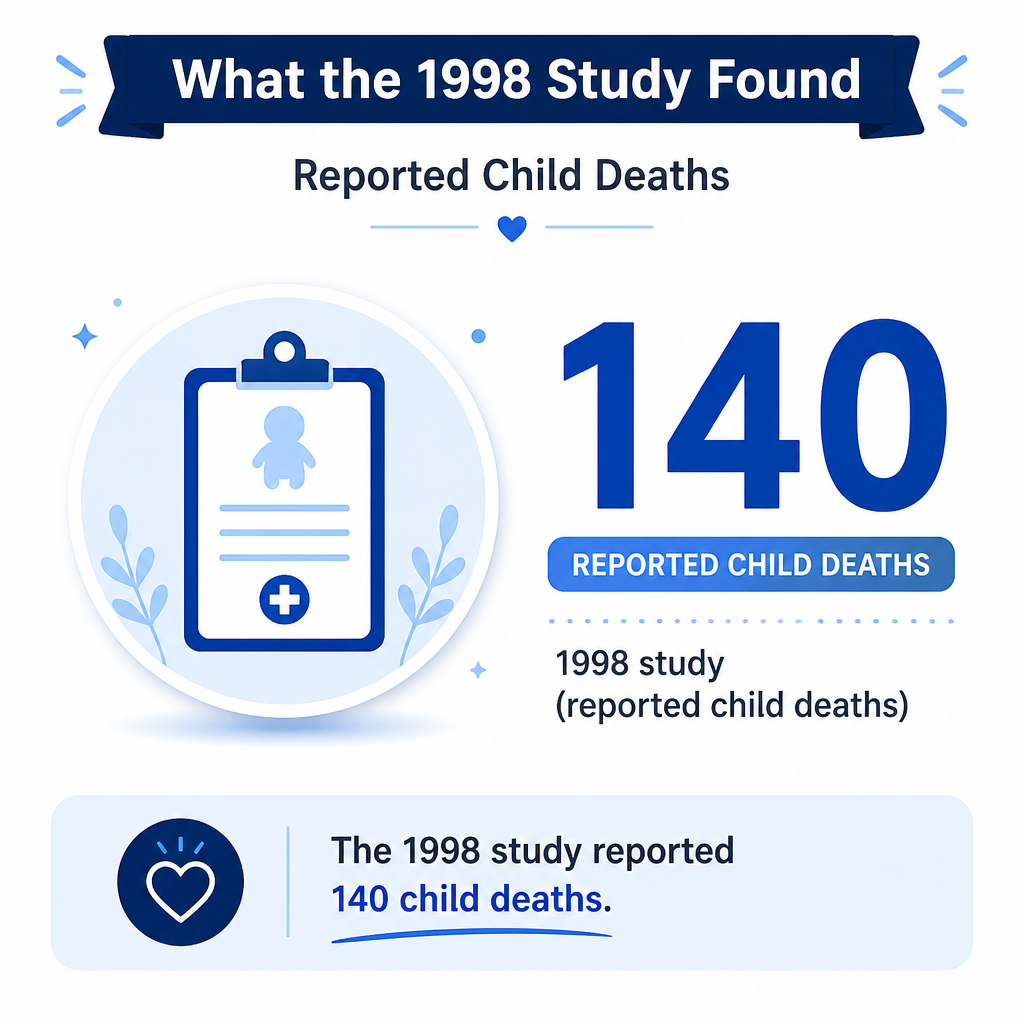
One of the sharpest areas of religion criticism involves health outcomes. For example, the Wikipedia overview on criticism of religion cites a 1998 study that reported 140 child deaths from religion-based medical neglect.
When belief leads people to delay or refuse effective medical care, faith stops feeling like harmless spirituality and starts feeling like a risk to life.
Broader social harms: violence and suppression of science
Beyond medicine, criticism highlights broader harms such as violence, suppression of scientific inquiry, and oppression within certain contexts.
The same overview also notes that 82% of British people see religion as socially divisive, suggesting many people experience religion not only as personally unconvincing, but socially destabilizing.
At the same time, it also reports that most scientists reject the “conflict thesis” between science and religion—meaning the simple story (“science and faith always fight”) is often overstated. Still, concerns remain when doctrines are used to justify harm or restrict knowledge.
9) Patterns of leaving: why people quit religion
Why do people quit? Research looking at motivations repeatedly returns to themes like:
- Trauma and suffering
- Cultural stagnation
- Intellectual challenges
- Identity pressures (feeling forced into a story that no longer fits)
Greater Good Science Center also describes the process of deconstruction and “religious residue” (habits and thinking patterns that can linger after leaving).
Quantitative context
While personal reasons vary, larger patterns matter:
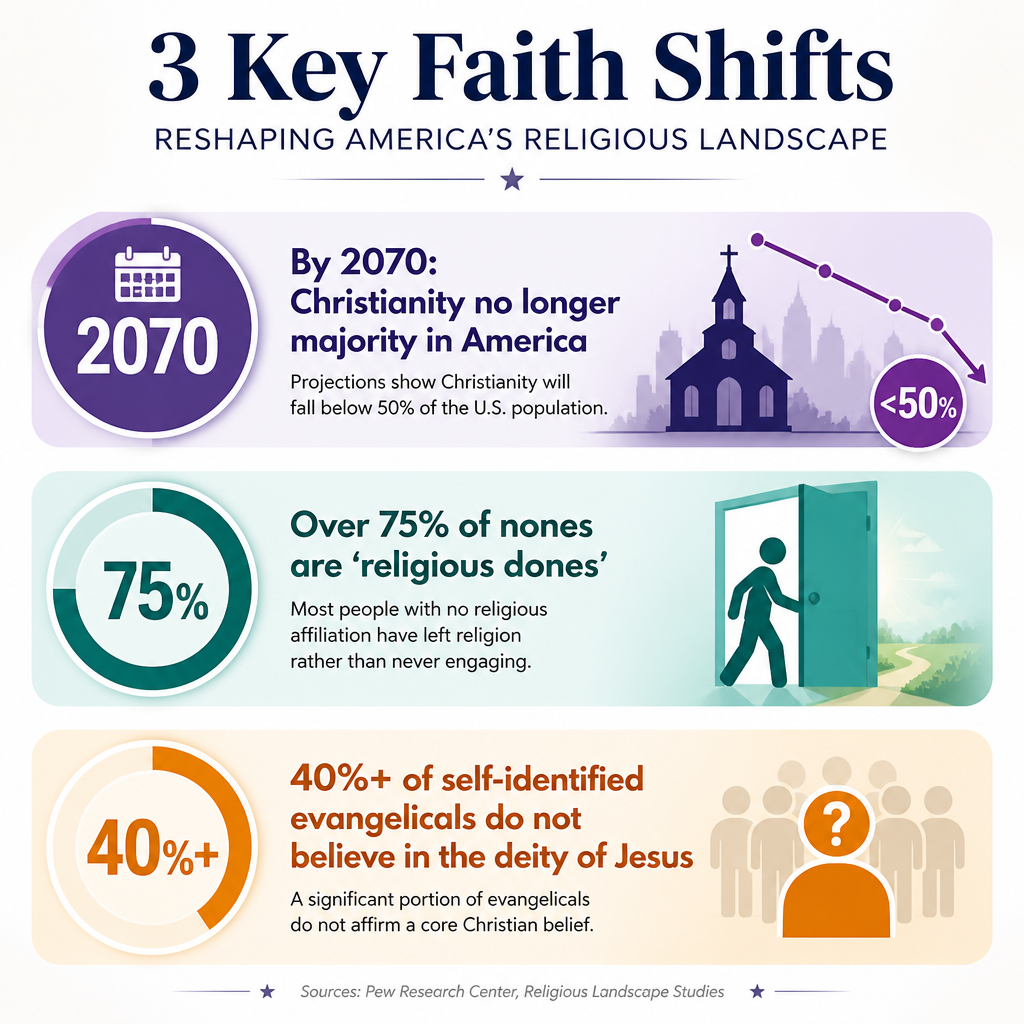
- By 2070, Christianity may no longer be the majority in America (as cited by the source).
- Over 75% of nones are described as “religious dones,” not necessarily spiritual—indicating dissatisfaction with the traditional religious package.
- 40%+ of self-identified evangelicals reportedly do not believe in the deity of Jesus.
These trends don’t “prove” religion is false—but they do show that why religion fails people is not a rare experience. It’s a recurring one.
10) The deconstruction phase: doubt, anxiety, residue
Leaving religion often looks like a transition—not an instant vacation from uncertainty.
Greater Good Science Center highlights deidentification and the discomfort of the “in-between” stage, where:
- former certainty fades
- belonging becomes unstable
- old habits linger even when new beliefs arrive
This is where “religious residue” can be confusing. Even after people stop believing, they may still feel guilt during normal life choices, experience fear during moments of danger, or default to ritual thinking.
Deconstruction can be painful—but for many, it becomes a pathway to more authentic meaning.
11) After religion: rebuilding meaning without replacing it with dogma
A common fear is that rejecting religion means rejecting meaning altogether. That doesn’t have to be true.
The goal can shift from “Is religion convincing?” to “What kind of life is coherent, ethical, and fulfilling?”
Research-based accounts of post-religion flourishing emphasize:
- Values you can live consistently (compassion, honesty, responsibility)
- Boundaries that protect you from manipulation
- New meaning sourced from relationships, nature, art, learning, community service, or personal growth
Practical direction matters too. Instead of moving from doctrine to emptiness, people can move toward:
- ethics grounded in human dignity
- community grounded in mutual care
- spiritual practice grounded in experience rather than coercion
- worldview grounded in evidence, humility, and revision
12) Conclusion: faith isn’t the only route to coherence
So, why does religion often feel unconvincing? Because suffering, doctrinal conflicts, evidence gaps, hypocrisy, and harm concerns can collide with empathy and lived experience.
But the response doesn’t have to be cynicism. The better question may be:
How can we keep dignity, compassion, and meaning while honestly reassessing belief?
If religion no longer “works” for you emotionally or intellectually, that can be a signal—not of personal failure, but of alignment. You may be choosing clarity over comfort, integrity over pressure, and meaning that you can actually live with.