The Muslim Future in the West: Islam Growth, Pluralism, and a “New Muslim Identity”
“Muslim future west” is no longer a distant question. It is unfolding in schools, workplaces, mosques, parliaments, and interfaith councils. The direction of that future depends on islam growth west (demographics and community life), but also on social choices: will Western societies protect pluralism and reduce Islamophobia—or will misunderstanding harden into fear and conflict?
In this guide, we’ll draw on three influential resources—Western Muslims and the Future of Islam by Tariq Ramadan, John Esposito’s work on pluralism and Islamophobia, and scholarship reviews of Ramadan’s central “compatibility” thesis—to map a realistic, hopeful way forward.
1. Why the Muslim future west matters now
Western public life is becoming more religiously diverse. Muslim communities are growing, contributing, and (in many places) organizing new ways to live their faith as citizens of plural democracies. That transformation affects everyone: how governments design policies, how neighbors interpret religious visibility, and how young people imagine who they can become.
When the question is framed as a threat, it encourages stereotyping and defensive politics. When it is framed as an opportunity for shared civic flourishing, it becomes possible to ask better questions:
- What does “integration” actually mean in practice?
- How can pluralism be protected without demanding that minorities erase their identity?
- How can communities reduce friction while preserving religious meaning?
That’s why the muslim future west matters: it’s a test case for whether plural societies can remain humane, cohesive, and confident.
2. Who “Western Muslims” are: identity formation in plural societies
“Western Muslims” are not a single group with one uniform worldview. They include recent immigrants, multi-generational families, converts, students, professionals, and grassroots activists. They vary by theology, culture, language, class, and political orientation.
Yet they share a common challenge: how to build an identity that is both faithful and lived—without treating “religion” and “citizenship” as enemies.
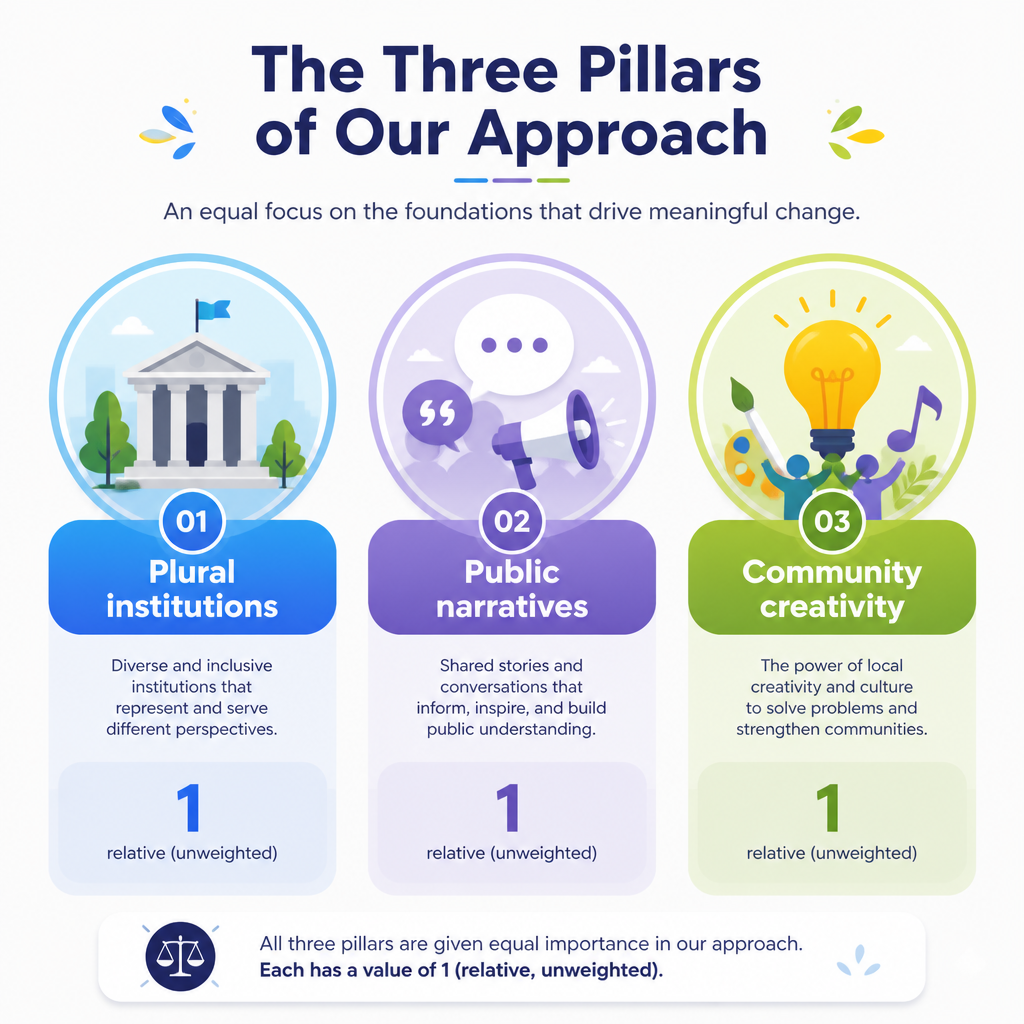
In many Western contexts, identity formation is shaped by three forces:
- Plural institutions (schools, courts, civic organizations) that must treat difference fairly.
- Public narratives that can either humanize Muslims or reduce them to stereotypes.
- Community creativity as Muslims develop new forms of practice, leadership, and interfaith engagement.
The future will favor communities that can hold continuity with their faith while also understanding the expectations and norms of their societies.
3. Islam growth west: demographic momentum and cultural participation
Islam growth west is sometimes discussed only in demographic terms, but it’s also cultural and civic. Growing Muslim populations tend to bring:
- More youth navigating identity in new educational and social environments.
- More institutions—mosques, schools, charities, youth groups, and scholarship circles.
- More public visibility (through community events, volunteer work, and interfaith activities).
As participation increases, so does the need for respectful frameworks: how local governments accommodate religious life, how employers handle reasonable accommodations, and how media discussions avoid sensationalism.
In other words, demographic change becomes political and moral change—unless society chooses to treat pluralism as a value, not a slogan.
4. Tariq Ramadan’s thesis: a new Western Islam that harmonizes faith and culture
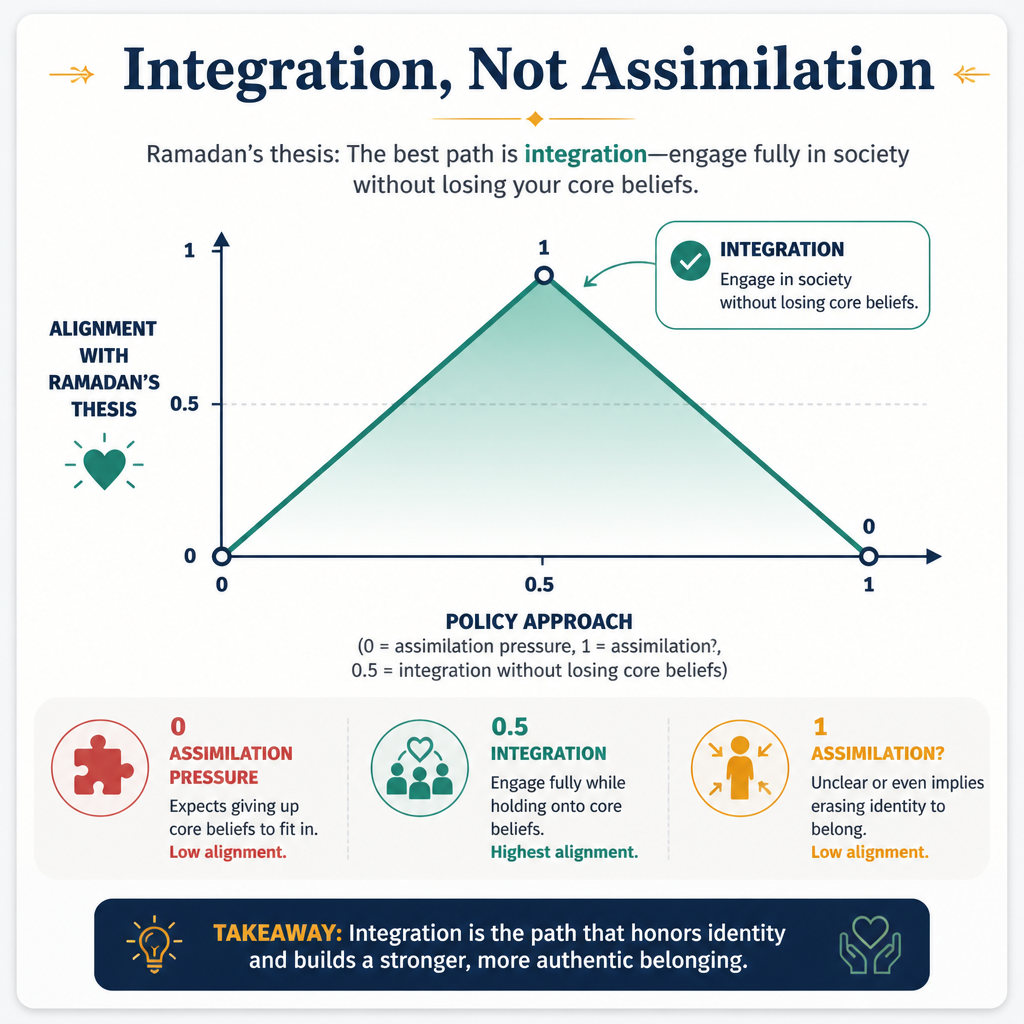
Tariq Ramadan’s work argues that Islam is not destined to remain foreign in the West. Instead, Muslims can build a new Muslim identity that feels at home—without discarding core beliefs. This is often summarized as an “integration without losing core beliefs” thesis.
What “integration without losing core beliefs” looks like
Ramadan’s central insight is that integration is not assimilation. Integration asks: how can faith be lived consistently in a Western context—ethically, intellectually, and spiritually—while still respecting Western civic norms?
That can include:
- Living Islam as a comprehensive moral framework, not only as private rituals.
- Engaging public questions (education, justice, family life, economics) through Islamic thought.
- Developing local expressions of worship and community life that reflect the realities of Western societies.
The “silent revolution” in practice
Ramadan describes a “silent revolution” in which many communities—often quietly—begin reshaping how Islam is understood and practiced in secular settings. This doesn’t necessarily look like dramatic reform. It may look like:
- New leadership styles that speak to educated Western youth.
- More structured engagement with social issues through charitable work.
- Conversation and study circles that connect classical principles to contemporary dilemmas.
Applying Islamic thought to contemporary Western questions
One of Ramadan’s strongest contributions is the insistence that Islamic thought is not frozen in time. Islamic jurisprudence and theology include methods for reasoning about changing contexts. In a Western setting, that means applying moral principles to current realities—without surrendering truth claims.
This kind of intellectual work is crucial for the muslim future west, because it creates leaders and ideas that can meet modern challenges with depth rather than slogans.
5. John Esposito’s future vision: protecting pluralism and ending Islamophobia
Where Ramadan emphasizes identity formation and cultural compatibility, John Esposito emphasizes the conditions that make pluralism possible. His argument is straightforward: if societies want Muslims to contribute peacefully, they must protect pluralism—and they must address the public harms of Islamophobia.
Pluralism as policy and social practice
Pluralism is not only an abstract ideal; it is enacted through laws and everyday behavior. That includes:
- Fair treatment in schools and workplaces.
- Freedom of religion with clear, consistent rules.
- Equal civic respect regardless of faith identity.
When pluralism is protected, Muslims can build communities that are confident in their place in the West—rather than living in fear of constant suspicion.
Countering myths vs. reality in public perceptions
Islamophobia often depends on myths that simplify complex realities. Esposito’s work highlights the importance of distinguishing public rhetoric from lived experience: many Muslims want the same civic stability, personal safety, and shared prosperity as their neighbors.
Addressing myths requires more than private education. It requires public accountability in how media and political leaders frame Muslims.
Interfaith dialogue and education as tools for cohesion
Interfaith dialogue is not only symbolic. When done well, it becomes a practical method for building trust, clarifying misunderstandings, and creating cooperation on shared community needs.
Education is equally important: helping people understand Islam as a diverse religion with internal complexity reduces the power of fear-based narratives.
6. What Muslim contributions make possible in Western civic life
In a hopeful future, Muslim communities are not treated as problems to manage but as neighbors and partners to build with. Contributions appear in multiple arenas:
- Community building: mutual aid, mentoring programs, youth initiatives, and family support.
- Scholarship and public thought: academic work, ethical debates, and theological reflection relevant to modern life.
- Shared public values: service to the community, care for the vulnerable, and commitment to justice.
These contributions are strengthened when Muslims experience pluralism as real—meaning their civic voice is welcomed, not dismissed.
7. The reform-and-adaptation debate: compatibility vs. conflict
Discussions about the muslim future west often become polarized around a single question: should Muslims adapt or should they resist?
A productive way to reframe the debate—consistent with Ramadan’s approach—is to see adaptation as a form of continuity. In other words, adapting practices to a new context doesn’t necessarily mean surrendering faith; it can mean applying moral reasoning to new social realities.
Compatibility doesn’t mean ignoring differences. It means treating Islam as capable of ethical and intellectual engagement within Western civic norms.
Conflict usually increases when adaptation is demanded one-sidedly (minorities forced to “fit in” by hiding their identity) or when inclusion is replaced by suspicion.
8. Practical pathways for a shared future
A hopeful muslim future west does not come from slogans. It comes from practical choices—by Muslims, by institutions, and by the broader society.
Civic engagement, respectful dialogue, and inclusive institutions
- Civic engagement: encouraging Muslims to vote, volunteer, run for local office (where appropriate), and participate in community boards.
- Respectful dialogue: moving from accusation to conversation, focusing on shared goals (safety, education, public morality).
- Inclusive institutions: consistent rules that allow religious practice in ways that respect everyone’s rights.
Building coalitions to reduce social friction
Coalitions—across faiths, community organizations, and civic groups—create a different narrative about who Muslims are in public life. They demonstrate reliability through action.
Examples of coalition-building include joint charity drives, neighborhood safety initiatives, disaster relief partnerships, and school-based interfaith events.
When cooperation becomes visible, fear loses its fuel.
9. Conclusion: From fear to flourishing—imagining a hopeful, plural West
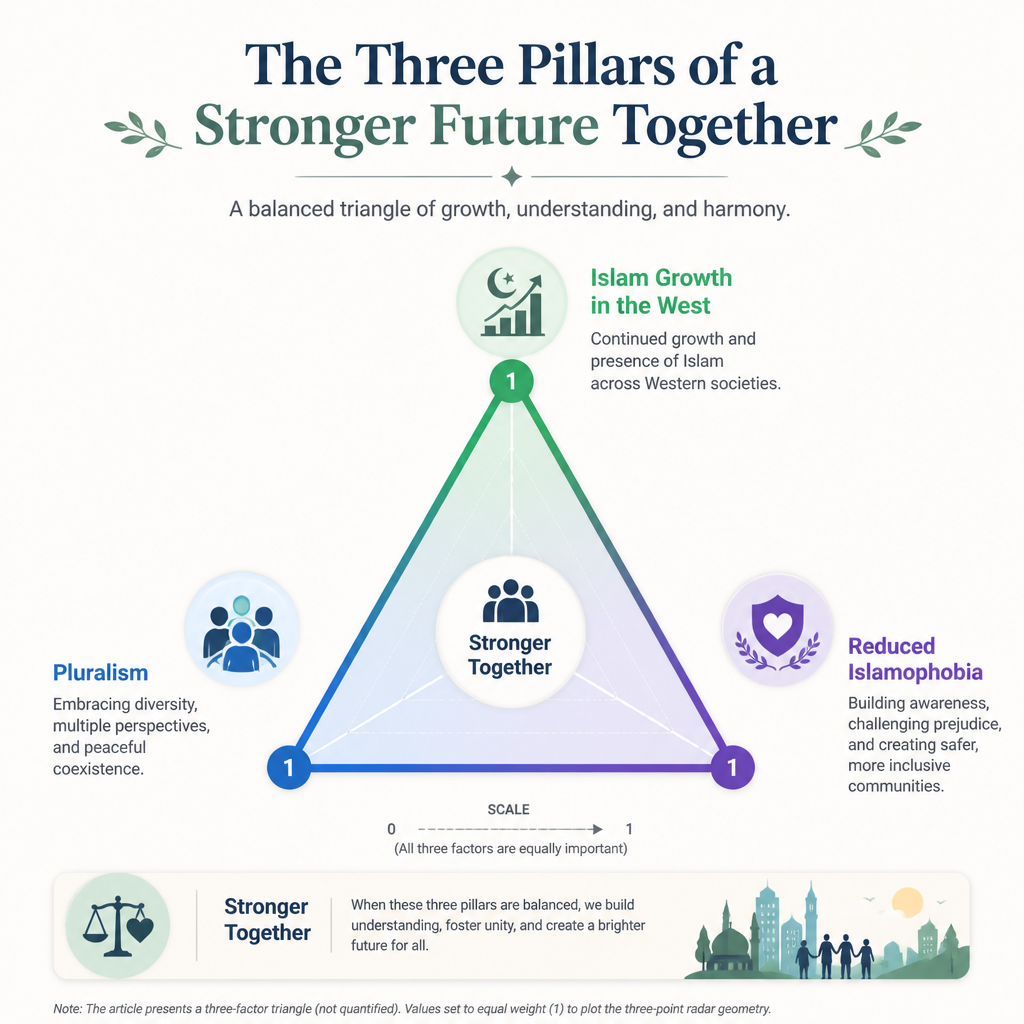
The future of Muslims in Western societies will be determined by a triangle of factors:
- Islam growth west (community vitality and youth engagement)
- Pluralism (how society protects rights and respects difference)
- Reduced Islamophobia (how myths are challenged and people are recognized as individuals)
Tariq Ramadan’s vision highlights the possibility of a new Muslim identity—a Western Islam that harmonizes faith and culture without losing core beliefs. John Esposito’s vision highlights the responsibilities of the broader society to protect pluralism and end fear-driven narratives.
If both tracks move forward—identity building on one side and social inclusion on the other—then the muslim future west can become a story of flourishing rather than friction.