Signs of God in the World Around Us: Nature, Order, and Evidence of God’s Presence
“Signs of God” are easy to overlook because they’re often ordinary. A sunset that makes you pause. A sudden storm that shows the power of creation. The calm reliability of seasons. Even the uneasy sense that some acts are truly wrong, even when no one is watching.
For Christians, these aren’t random coincidences. They’re signs of god—indicators that the world around us is more than matter in motion. The Bible suggests that creation itself functions like a kind of witness: “For since the creation of the world God’s invisible qualities—his eternal power and divine nature—have been clearly seen, being understood from what has been made” (Romans 1:20; see also Psalm 19).
This article explores how we can recognize signs of God in nature, order, human moral awareness, and even at the cosmic scale—while also respecting how science describes real mechanisms.
1) The Scripture Lens: Creation Declares God
Scripture does not ask us to ignore nature; it invites us to look at it. Romans 1:20 and Psalm 19 present a startling idea: the world is not silent about God. Creation reveals God’s eternal power and divine nature. The point isn’t that the universe downloads a full theology into our brains, but that it points us toward a Creator.
In other words, nature is not merely “what happens.” It’s also evidence—and the “why” behind the “how” matters.
2) Science and Faith Together: Why Mechanisms Don’t Remove God’s Presence
Many people assume that if science can explain how something works, then God becomes unnecessary. But the deepest question is not only how—it’s also who sustains and why anything exists at all.
For example, scientific biology explains photosynthesis and evolution through real processes. Yet a Christian can say: those processes are exactly the sort of “secondary causes” through which God continues to sustain the world. One helpful way to frame this is that science describes mechanisms, while faith perceives God’s sustaining presence behind the mechanisms.
As one science-and-faith perspective argues, God’s presence may not appear as a measurable “extra ingredient” in lab results. Instead, it’s seen through the conviction that nature’s orderly causes are continuously upheld by God. The mechanisms explain the route; faith interprets the destination.
3) Evidence of God in Nature’s “How”: Life, Complexity, and Sustaining Causes
Let’s begin with the part many people can appreciate even before they have theological commitments: life is astonishingly complex, and it runs on ordered, dependable systems.
Photosynthesis and biological “workability”
Consider photosynthesis—the process by which plants convert light into usable energy. The beauty is not just that it exists, but that it works reliably enough to support vast ecosystems. If the world were less stable, life would collapse into chaos.
Christians can affirm what science shows: the mechanism is real. Yet they can also confess what faith adds: the mechanism is not an accident that happened once and then became self-sustaining forever. Nature’s ongoing intelligibility suggests that reality is held together with purpose.
Evolution as mechanism, not a replacement for meaning
Evolution describes how living things change over time through natural processes. But even if those processes are the “how,” they still raise the “what and why” questions: Why do laws exist at all? Why is the universe capable of producing life? Why does matter display the kind of reliability that makes biological development possible?
Faith doesn’t deny the mechanism; it adds a bigger frame. The world’s capacity to produce life becomes one more reason to ask whether evidence of god nature is visible in the very structure of reality.
4) Evidence of God in Nature’s “What”: Attributes Reflected in Creation
Some of the strongest signs of god aren’t only about the processes of nature. They’re about what nature seems to reflect—attributes such as power, moral order, wisdom, and relational unity.
Infinity and power (the sky and the storm)
Look up at the night sky. The scale is almost unbearable. The heavens don’t feel small or tame. When storms roll in, we witness power that can overwhelm human plans.
There’s a reason Scripture connects creation to God’s “eternal power.” Creation communicates something like infinity—space that goes on, and forces that exceed our control.
Moral and just order (ecosystems and conscience)
Nature isn’t moral in the same way humans are moral, but it often displays consistent order. Seasons return. Bodies regulate. Ecosystems interlock. That order invites the question: if reality is intelligible, why?
And then there’s moral awareness. Even when people disagree, they often carry an inner sense that some things are wrong. Conscience functions like a moral signal—something deeper than social convention.
In one widely shared compilation of “ways nature points to God,” moral and just order is highlighted as an argument: creation’s balance and coherence echo the kind of justice and stability we would expect from a moral Author.
Intentional design and timing (purpose in nature)
Life depends on timing. Cells must divide at the right moment. Organisms require precisely tuned conditions. Even the environment around us works with astonishing coordination.
One memorable way to express this is through the “Goldilocks” idea: Earth isn’t just “inhabited”; it’s positioned and conditioned for life. The world’s habitability suggests more than randomness. It suggests a fittingness—an alignment between the created environment and the created ability to live.

As an example, even the simple rhythm of a human heartbeat illustrates design-like regularity: the heart beats roughly 100,000 times per day—not once, but continuously, in a complex system that keeps functioning long enough for a human life to unfold.
A relational universe (interdependence and unity)
Creation is not a pile of isolated parts. It’s a network of dependencies: oxygen relates to plants, plants relate to animals, animals relate to ecosystems, and ecosystems relate to climate patterns.
Some Christians see in this interdependence a reflection of relational reality—suggesting a universe grounded in the kinds of unity and relationship that Christians associate with God.
The takeaway: nature’s attributes—power, order, purpose, relational structure—can be read as evidence of god nature pointing beyond itself.
5) Evidence at the Cosmic Scale: Origin and Fine-Tuning
If nature gives us signals on the ground level, the cosmos gives us signals on a grander scale.
The universe had a beginning (and Big Bang questions)
Many modern discussions point to the Big Bang as evidence that the universe began. One organization summarizing the discussion notes that the universe began about 14 billion years ago. The scientific story describes the expansion of space-time, but the deeper metaphysical question remains: why is there something rather than nothing?
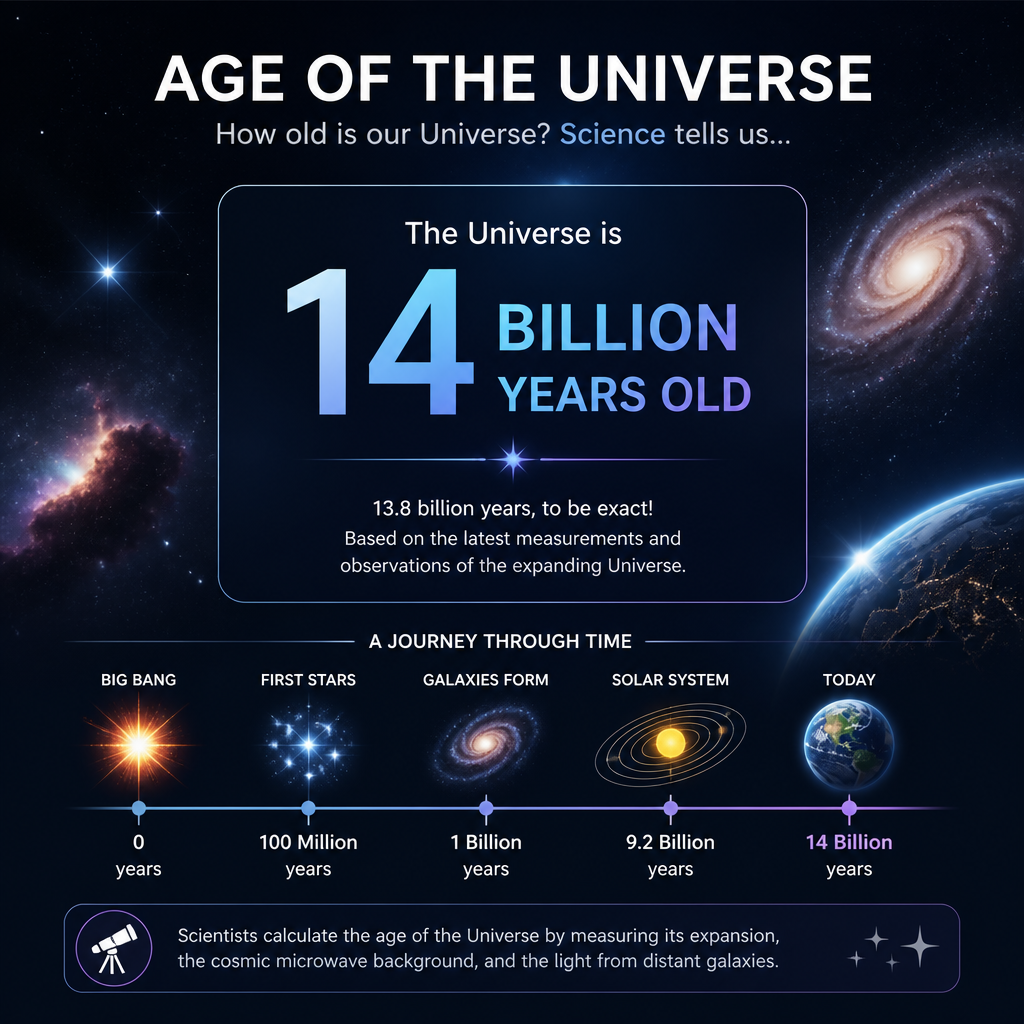
Some scientific frameworks suggest that if the universe began, then “cause” must exist beyond the universe’s own space-time framework. Science is not always able to name that cause, but it can raise the kind of question that faith answers.
Fine-tuning: conditions that permit life
A second cosmic line of reasoning is fine-tuning—the observation that the physical constants of the universe appear to be set in ranges that allow complex structures and life.

Examples often mentioned include:
- gravity
- the cosmological constant
- the strong nuclear force
- Earth’s distance from the Sun (supporting a “Goldilocks” environment)
One reason this matters for signs of god is that multiple parameters appear to cooperate. If one were different in the wrong direction, life as we know it would be impossible.
Important humility: probabilities, not absolute proof
It’s also wise to be honest about the nature of evidence. Fine-tuning arguments often provide strong reasons to believe, not mathematical certainty. A careful summary notes that science typically supports probabilities and rational inferences, rather than absolute proof in a courtroom sense.
Still, when both origin questions and life-permitting conditions converge, many people—believers and non-believers alike—find the evidence compelling.
6) The “Brokenness” of the World as a Sign Too
So far, the signs of God we’ve looked at tend to emphasize beauty, order, and intelligibility. But there’s another kind of sign: the brokenness we can’t fully ignore.
Longing, pain, injustice, and death create a dissonance. Many people feel that the world isn’t the way it should be. That ache can be interpreted in different ways—but for Christians, it points toward the deeper need for redemption.
In other words, the world’s brokenness can function as a sign in the direction of the gospel: something in us recognizes that we were made for more than this, and that more ultimately comes from God.
7) How to Recognize Signs of God: Humility, Attention, and Invitation
If creation can be a witness, then the next question is practical: how do we actually “read” the signs?
1. Slow down and attend
Most people don’t miss signs because they’re blind; they miss them because they’re rushing. Awe requires space.
2. Hold together evidence and humility
Faith doesn’t demand that every question be answered instantly. It invites ongoing trust. Science can describe mechanisms; faith interprets meaning. Both can be part of a thoughtful pursuit.
3. Let the signs lead to a Person
“Evidence” is not an end in itself. For Christians, signs of God ultimately point toward God’s character—his power, wisdom, goodness, and desire for relationship.
If you’ve ever looked at nature and felt both small and wonder-filled, that may be the world doing what Romans 1:20 suggests: making God’s invisible qualities noticeable enough to seek him.
Conclusion: Creation as a Guide Toward the Creator
Signs of god appear everywhere once you know how to look: in everyday beauty, in dependable order, in moral awareness, and in the cosmos itself. Science can illuminate the mechanisms that make life possible, and faith can perceive the sustaining presence that keeps the world intelligible.
From Romans 1:20 to Psalm 19, Scripture encourages believers to treat creation not as noise, but as message. And even when the world is fractured, the ache within us can become an invitation—toward hope, toward God, and toward the gospel direction of restoration.
References and Reading List
- BioLogos — “Where is God in Nature?” https://biologos.org/articles/where-is-god-in-nature
- Medium — “21 Ways Nature Proves the Existence of God” https://medium.com/@tudor.onutu/21-ways-nature-proves-the-existence-of-god-0823ab7826bd
- C.S. Lewis Institute — “What Scientific Proof Do We Have That There Is a God?” https://www.cslewisinstitute.org/resources/what-scientific-proof-do-we-have-that-there-is-a-god/