
Peer Pressure Muslim: How to Stay Muslim with Faith, Identity, and Righteous Friends
Peer pressure muslim isn’t a modern invention. Human beings have always wanted to belong, to be liked, and to avoid ridicule. Islam teaches that social tests—mockery, exclusion, and pressure to compromise—are part of the same moral struggle faced by earlier believers. The difference is that Islam also gives you a roadmap: anchor yourself in faith, build identity, and surround yourself with upright companions so you can stay muslim with steadiness.
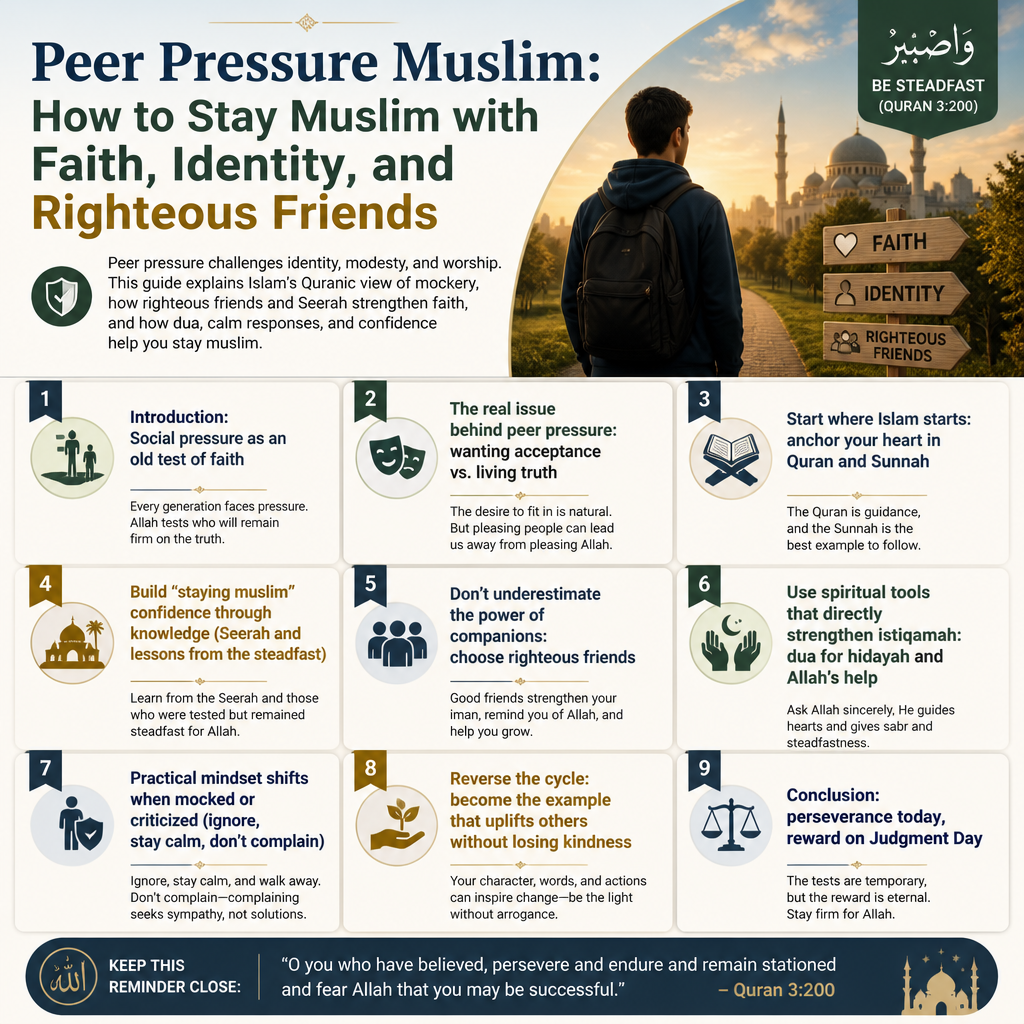
1. Introduction: Social pressure as an old test of faith
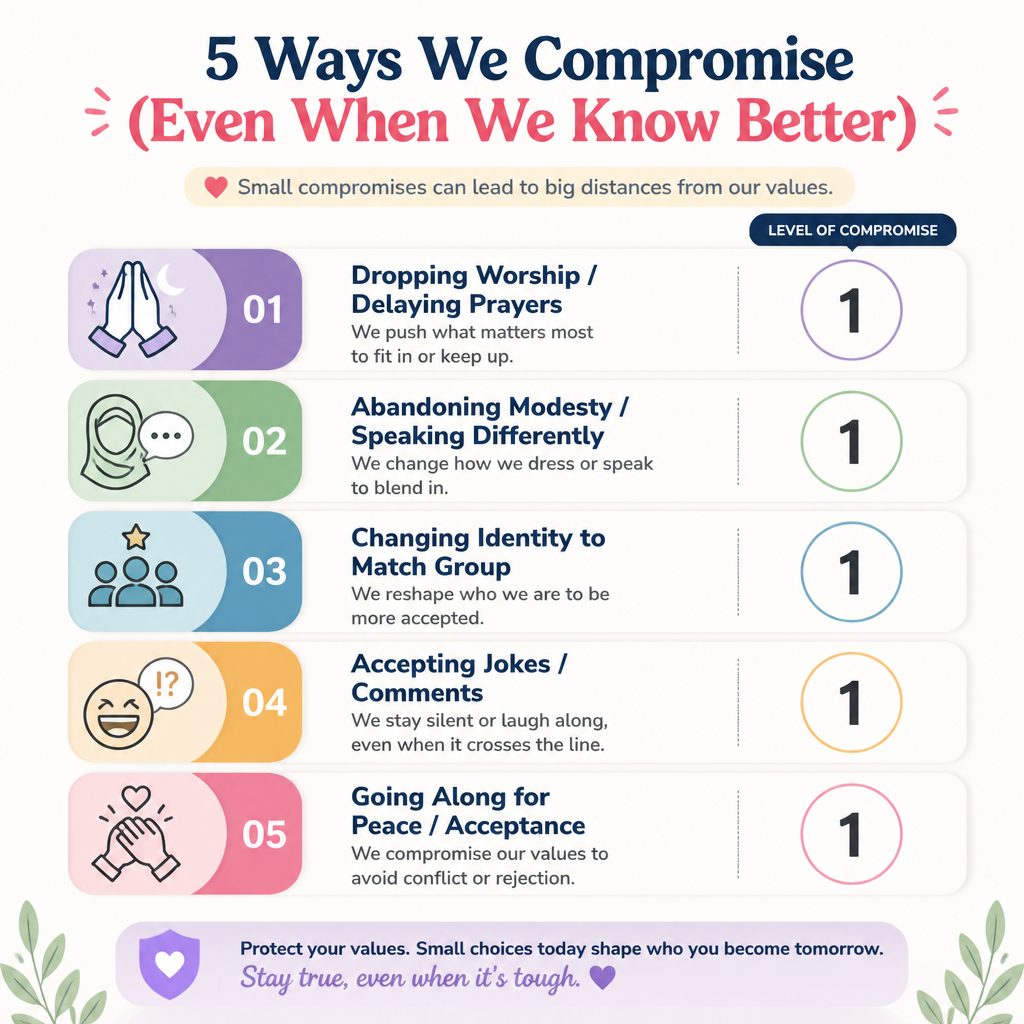
Ask any believer who is serious about deen and you’ll hear a similar story: at school, at work, online, or in family circles, someone may try to push you into:
- dropping worship or delaying prayers,
- abandoning modesty or speaking differently than Islam teaches,
- changing your identity to match the group,
- accepting jokes and comments that make you uncomfortable,
- or “just going along” for peace and acceptance.
These moments can feel like a pressure cooker. But Islam frames this as a test, not a dead end. The Qur’an shows believers enduring mockery and rejection while remaining anchored in truth. In other words: what you’re feeling is not unusual—it’s part of a long line of believers who chose Allah over approval.
2. The real issue behind peer pressure: wanting acceptance vs. living truth
Peer pressure often works because it attacks a soft spot: the desire to be accepted. When you secretly hope, “If I act like them, they’ll stop judging me,” you become vulnerable. Islam is realistic: people can be drawn toward what the crowd is doing—even when that crowd conflicts with Allah’s guidance.
So the real battle usually isn’t “them vs. you.” It’s truth vs. approval.
When you stop treating acceptance as the ultimate goal, peer pressure loses its power. You can still be kind and respectful, but you don’t have to surrender your deen.
3. Start where Islam starts: anchor your heart in Quran and Sunnah
If you want to resist peer pressure, you need more than willpower. You need a foundation. In Islam, the foundation is the Qur’an and Sunnah—because they correct your beliefs and strengthen your heart at the same time.
Here are practical ways to “anchor”:
- Choose a daily Qur’an routine (even small, consistent amounts). Consistency builds steadiness.
- Connect your struggles to Qur’anic meaning: remind yourself that believers were mocked, yet Allah’s promise is real.
- Keep Sunnah habits that renew identity (dhikr, dua, honest speech, regular prayer).
One of the quickest ways peer pressure wins is by confusing you—making you doubt whether Islam is actually for “real life.” Qur’an and Sunnah restore clarity.
4. Build “staying muslim” confidence through knowledge (Seerah and lessons from the steadfast)
Many people think staying muslim is only about avoiding sin. In reality, it’s also about confidence—confidence that your path is correct, wise, and protected by Allah.
Knowledge gives that confidence. Two especially powerful sources are:
Seerah: faith that becomes courage
When you study the Prophet’s ﷺ life and the early believers, you see something important: steadfastness isn’t theoretical. It’s lived under pressure—under hardship, rejection, and ridicule.
Lessons from the steadfast (steadfastness is teachable)
When you read about believers who remained firm, you realize that “staying muslim” isn’t impossible. It’s practiced, strengthened, and rewarded.
Practical step: pick one story from the Seerah or scholars’ biographies each week and ask yourself: What did they do when they faced ridicule or temptation? Then apply the lesson to your situation today.
5. Don’t underestimate the power of companions: choose righteous friends
Islam pays close attention to companions because company shapes behavior. A person can be weak in isolation and strong among upright friends—or the reverse.
There’s a difference between:
- being respectful to everyone, and
- choosing close companions who will raise you or lower you.
If your closest friends constantly mock your worship, pressure your modesty, or push you away from deen, that’s not “just friendship.” That’s moral influence.
What to do:
- Seek friends who are serious about salah, manners, and honesty.
- Find at least one person you can talk to without pretending.
- Spend more time with groups that make righteousness normal.
Importantly, you can treat others kindly without surrendering your standards. You can maintain boundaries while still being human.
6. Use spiritual tools that directly strengthen istiqamah: dua for hidayah and Allah’s help
Even the strongest person has moments of weakness. That’s where dua and reliance on Allah become non-negotiable.
Instead of only thinking, “I must resist,” shift to, “Ya Allah, help me remain steadfast.” Dua is not a motivational quote—it is worship, and it directly asks Allah for guidance and strength.
Make dua for hidayah and istiqamah
- Ask Allah to keep your heart firm.
- Ask for protection from being changed by the crowd.
- Ask for the courage to be consistent even when you feel alone.
Try to attach dua to specific moments. For example: before school/work interactions, before social media scrolling, or before attending an event where you feel pressure.
And one more powerful habit: increase your connection to Allah through dhikr. When your heart remembers Allah, social pressure becomes less commanding.
7. Practical mindset shifts when mocked or criticized (ignore, stay calm, don’t complain)
Sometimes peer pressure shows up as mockery: “Why are you praying again?” “You’re so strict.” “Don’t be weird.” Or you might face criticism from people who think they know better.
Islam teaches a balanced response: don’t amplify the mockery, don’t panic, don’t chase arguments all day. You can be calm, respectful, and firm.

Mindset shift #1: Their reaction is not your measurement
Stop asking, “Will they like me?” Instead ask, “Did I obey Allah?”
Mindset shift #2: Mockery is a test, not a verdict
Mockery doesn’t mean you’re wrong. Many believers were mocked before you. If anything, it can become a sign that you’re moving in the direction of truth.
Mindset shift #3: Don’t complain—stay constructive
Complaining can drain your heart and make you obsess over their words. A steadier approach is to keep your focus on improvement: what will you do today to be more consistent?
Practical responses you can use:
- Short answers: “I’m keeping my commitments.”
- Boundary statements: “That’s not for me.”
- Humility without surrender: “I understand, but I have my reasons.”
8. Reverse the cycle: become the example that uplifts others without losing kindness
One of the most beautiful aspects of faith is that it can influence others positively. Islam allows you to “reverse peer pressure”—not by forcing, but by becoming the kind of person who reminds others that goodness is possible.
When you stay muslim with manners, you show that deen does not require arrogance. It can look like:
- respectful speech even when others are rude,
- stability in worship even when others mock,
- honesty in dealings even when shortcuts are offered,
- calmness during conflict instead of drama.
Over time, people may stop pressuring you because they recognize your consistency. Sometimes your steady example becomes the doorway Allah uses to guide someone else.
9. Conclusion: perseverance today, reward on Judgment Day
Peer pressure muslim challenges your identity, modesty, worship, and inner peace. But Islam teaches that mockery and social conformity are not the final story. The final story is Allah’s promise.
If you want to stay muslim, focus on what has proven power:
- Anchor in Qur’an and Sunnah,
- Build confidence through Seerah and lessons from the steadfast,
- Choose righteous friends,
- Use dua for hidayah and istiqamah,
- Stay calm, ignore mockery, and avoid complaining,
- Become an uplifting example with kindness.
Perseverance today is not wasted effort. It is preparation for the Day when Allah rewards sincerity—not social approval.