Islam Lifestyle: How Islam Functions as a Complete Deen (Way of Life)
If you’ve ever heard people say, “Islam is a way of life,” you may have wondered what that really means beyond weekend worship, mosque attendance, or a set of beliefs. In this article, we’ll look at the Islam lifestyle vision of Islam—one that treats faith as a whole system of guidance for every part of living.
As you read, keep one question in mind: Islam isn’t merely something you believe. It is something you live—a path shaped by Allah’s commands in spiritual, social, personal, and practical matters.
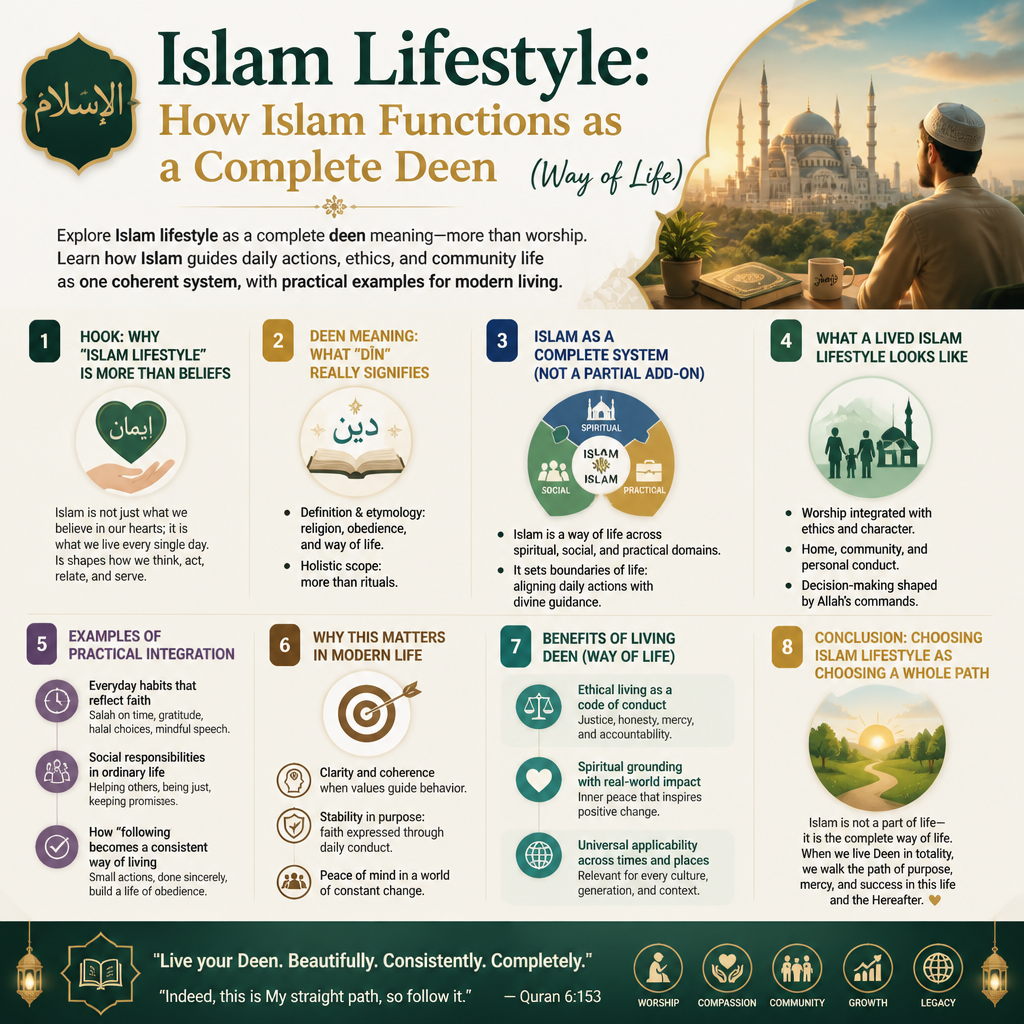
Islam Lifestyle: How Islam Functions as a Complete Deen (Way of Life) + (infograph)
1) Hook: Why “Islam lifestyle” is more than beliefs
Many faiths discuss truth and morality. Islam goes further by presenting truth as guidance that reaches into ordinary life—how you earn, speak, keep promises, care for family, manage emotions, and build relationships. That’s why “Islam lifestyle” isn’t a trendy phrase. It describes a complete, intentional way of living.
Islam asks you to bring your whole self into worship and ethics, not just your thoughts. That’s the essence of Islam’s claim: guidance from Allah that shapes the entire human journey.
2) Deen meaning: What “dīn” really signifies
Definition and etymology
To understand Islam as a way of life, we begin with deen meaning. The Arabic term dīn (دين) is often translated as “religion,” but it carries a deeper sense of “way” and “system.” According to Wikipedia, dīn refers to religion or way of life and emphasizes Islam as a complete system.
Holistic scope: more than rituals
In Islam, worship is not separated from behavior. Prayer, fasting, charity, and remembrance are not isolated activities. They are meant to train the heart and then reshape daily conduct.
This aligns with how many Islamic resources explain Islam as an all-encompassing framework—often described as “boundaries of life,” meaning that Islam’s guidance covers a person’s actions within the whole span of living.
3) Islam as a complete system (not a partial add-on)
One reason people misunderstand the phrase “Islam lifestyle” is that they think Islam is mainly spiritual, while life—work, family, society, and decisions—runs on its own rules. Islam challenges that assumption.
Islam a way of life means that the commands of Allah are relevant not only in places of worship but also in the workplace, the home, the street, and the marketplace.
Spiritual, social, and practical domains
Consider how Islam integrates multiple dimensions:
- Spiritual: connecting the heart to Allah through worship and remembrance.
- Social: building responsibilities toward family, neighbors, and the wider community.
- Practical: making choices in work, money, honesty, and interpersonal dealings based on divine guidance.
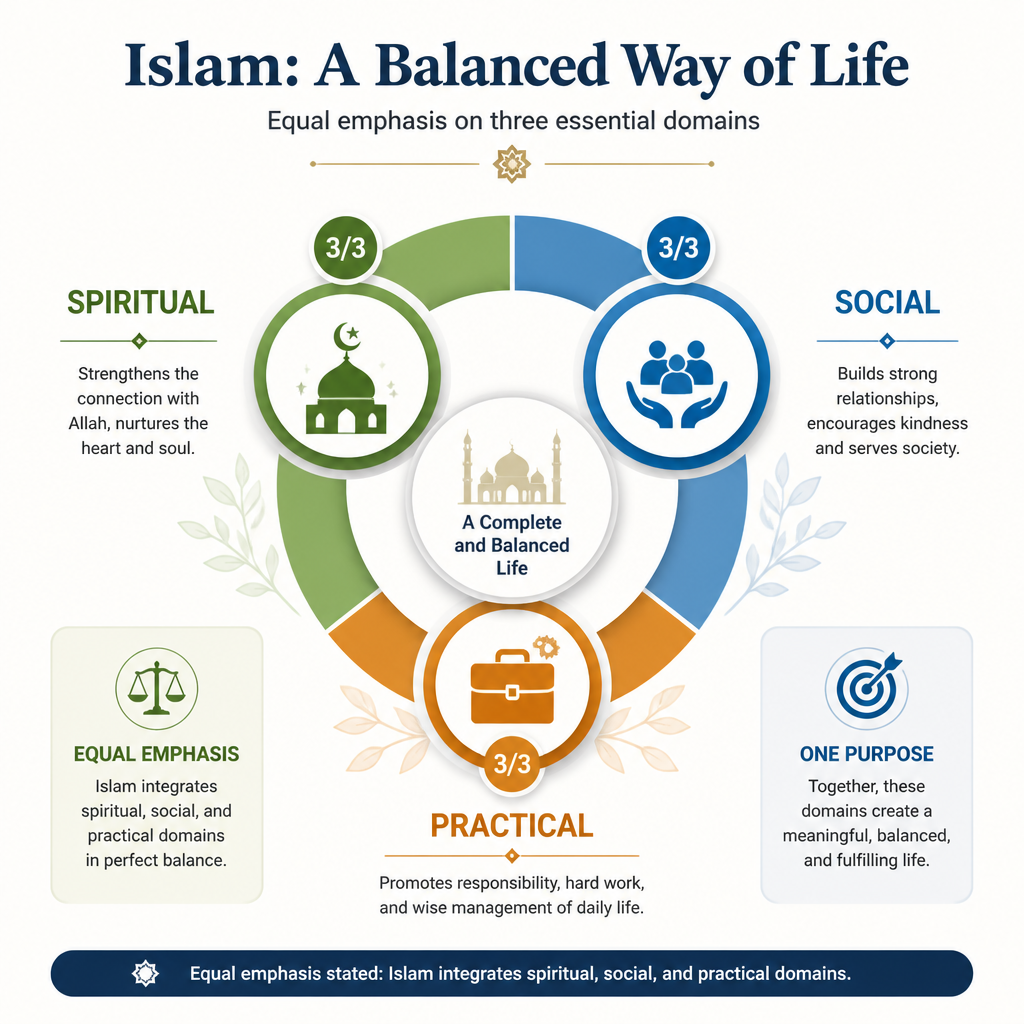
Islam lifestyle integrated domains (spiritual, social, practical)
“Boundaries of life”: aligning daily actions with divine guidance
Some summaries of Islam emphasize that the religion offers guidance within the “boundaries of life”—not by controlling every detail in a rigid way, but by giving principles that help you navigate real situations faithfully.
From this perspective, Islam lifestyle is not a costume you put on. It’s a compass that guides you, especially when life becomes complex or tempting.
4) What a lived Islam lifestyle looks like
When Islam is lived as deen (way of life), a person’s character becomes one of its most visible proofs. Here are some practical ways that Islam shows up in daily living.
Worship integrated with ethics and character
In Islam, worship isn’t meant to end at the prayer mat. It should produce transformation:
- Greater honesty and trustworthiness
- More self-control and discipline
- More mercy, patience, and respect for others
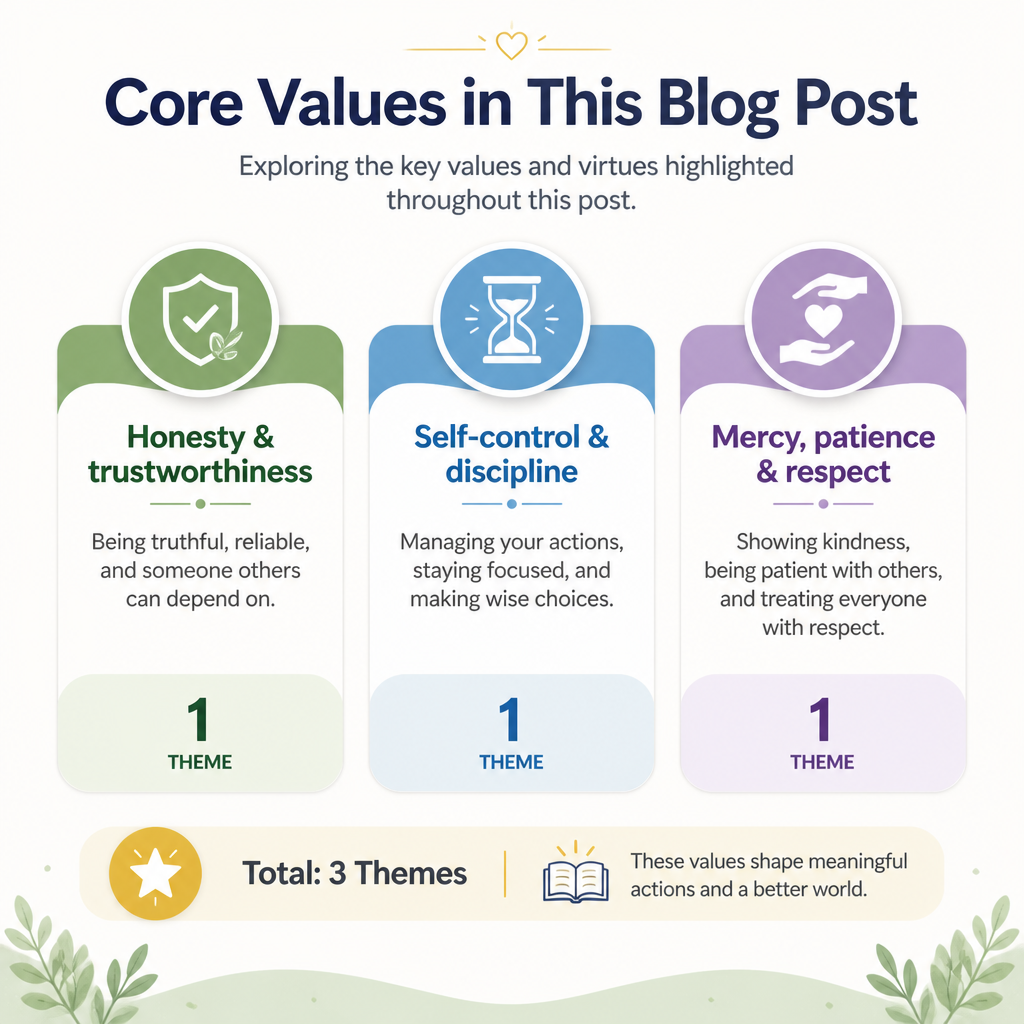
Ethical outcomes from worship integrated with ethics and character
When worship leads to ethical growth, faith becomes “lived,” not just performed.
Home, community, and personal conduct
Islam lifestyle extends into home life and community life—because the heart of the deen is not only public rituals but also private responsibilities.
- At home: caring for spouses and children, fulfilling duties, managing conflict with adab (proper conduct).
- In community: supporting neighbors, showing kindness, and cooperating for good.
- In personal conduct: guarding the tongue, being mindful with time and energy, and keeping integrity in solitude.
Decision-making shaped by Allah’s commands
A true Islam lifestyle means your decisions are influenced by Allah’s guidance—especially when you’re unsure, pressured, or faced with shortcuts.
Instead of asking only, “Will this benefit me?” you also ask, “Is this pleasing to Allah? Is it just? Is it truthful? Does it protect the rights of others?”
5) Examples of practical integration
Let’s make this concrete. What does Islam a way of life look like in everyday actions?
Everyday habits that reflect faith
- Morning and evening remembrance that keeps the heart connected to Allah throughout the day.
- Consistency in prayer that forms discipline and reduces scattered living.
- Fasting (including beyond Ramadan as possible) as training for the self and empathy for others.
- Charity and giving not as an occasional gesture but as a natural expression of gratitude.
Social responsibilities in ordinary life
- Honoring agreements—from workplace commitments to personal promises.
- Speaking with adab—avoiding backbiting, insults, and harmful exaggerations.
- Supporting the needy through zakah, sadaqah, and practical help.
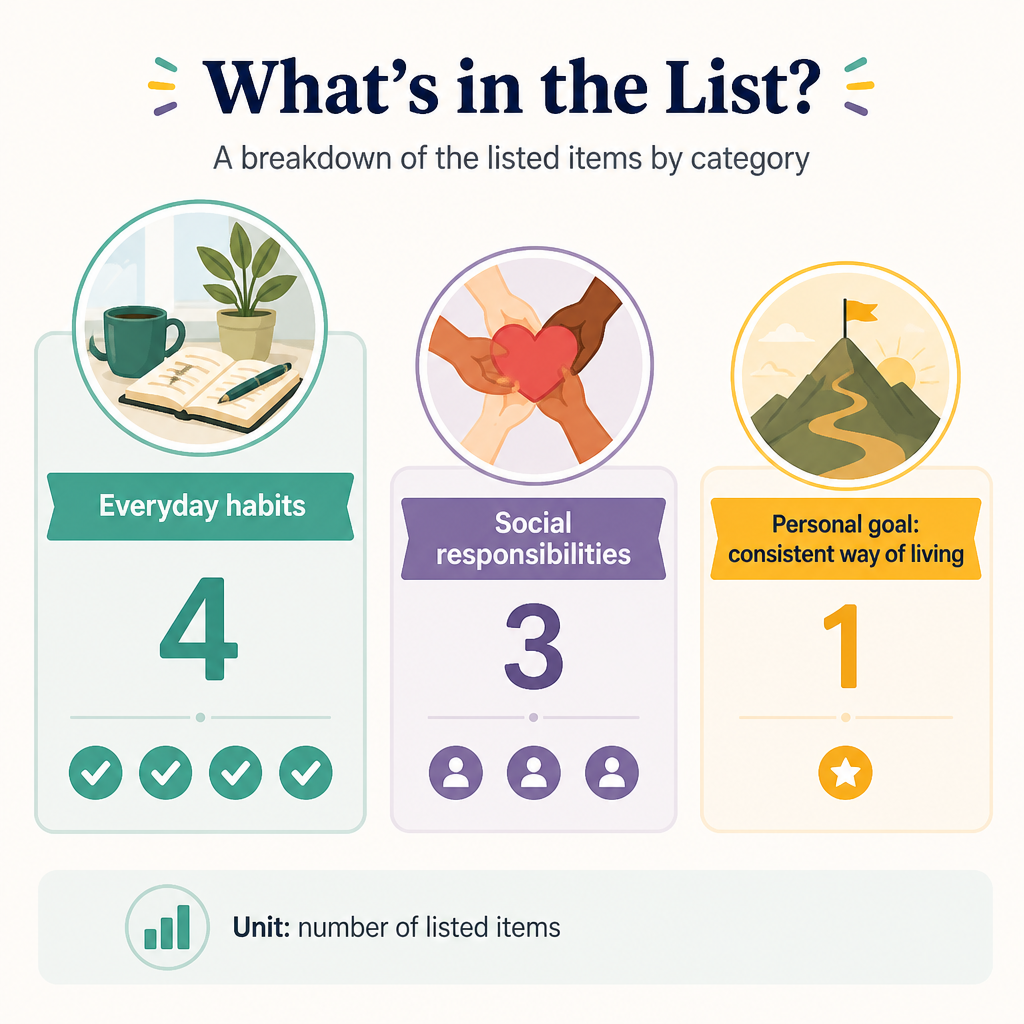
Practical integration examples count by category
How “following” becomes a consistent way of living
The goal isn’t perfection overnight. An Islam lifestyle is a journey of following—learning, applying, improving, and returning to Allah with sincerity.
Over time, “following” becomes normal. It shapes your identity: a person who tries to live by divine guidance even when life is busy or emotions run high.
6) Why this matters in modern life
Modern life can feel fragmented—work stresses you, social media pulls you in different directions, and values often change according to trends. In such a world, living Islam as a whole system offers clarity and stability.
Clarity and coherence when values guide behavior
When deen meaning is understood as a comprehensive way, life becomes more coherent. You’re not switching moral values depending on the moment. Instead, your actions reflect a consistent framework.
Stability in purpose: faith expressed through daily conduct
Islam lifestyle gives you purpose beyond passing feelings. It shapes your “why” and then expresses that “why” through daily behavior—so your life has direction even when circumstances change.
7) Benefits of living Deen (way of life)
Many people ask, “What do I gain by living Islam as a complete system?” The benefits are spiritual and practical.
Ethical living as a code of conduct
Resources discussing deen often describe it as a universal code of conduct for decent existence—meaning it provides ethical structure for living.
That structure helps you avoid extremes: neither selfishness without restraint nor moral chaos without foundation.
Spiritual grounding with real-world impact
When faith is lived, worship becomes transformative. It strengthens the heart, renews intention, and reduces emptiness. Then, it spills into real life through kindness, fairness, and self-discipline.
Universal applicability across times and places
Islam a way of life is not limited to one culture, one era, or one environment. The principles can be lived in different settings because the guidance addresses the human being—spirit, character, relationships, and responsibility.
Conclusion: Choosing Islam lifestyle as choosing a whole path
Islam lifestyle means more than attending religious activities. It means living deen meaning—a complete, holistic way of life shaped by Allah’s guidance.
So the real takeaway is simple: Islam is not meant to be a partial part of your life. It is meant to be the framework that organizes how you think, worship, serve others, make decisions, and become the best version of yourself by the standards of Allah.
Choosing Islam lifestyle is choosing a whole path—one that connects worship to ethics, spirituality to daily conduct, and faith to real purpose.