How to Find Truth: A Practical Guide to Honest Truth-Seeking (No Bias, No Echo Chambers)
If you’ve ever thought, “I just want the truth”, you’re already ahead of the game. But here’s the catch: “how to find truth” feels hard because your mind is built for speed, comfort, and social belonging—not for careful clarity.
In a world of half-statements, algorithmic echo chambers, and confident misinformation, honest truth-seeking is not a mood. It’s a method. And the method starts with one uncomfortable question:
Am I trying to discover what’s true… or discover what I already want to be true?
This guide will show you a practical, step-by-step way to search for truth with fewer biases, better questions, and higher moral responsibility.
1. Why “how to find truth” feels hard: the mind’s shortcuts
Your brain uses shortcuts because it must. Without fast judgment, daily life would collapse under complexity. The problem is that those shortcuts can masquerade as truth.
Common traps include:
- Confirmation bias: you notice what fits and ignore what doesn’t.
- Motivated reasoning: you defend conclusions because you feel they protect your identity, relationships, or worldview.
- Naïve realism: you assume your perception is the same thing as reality.
- Tribal filters: you treat disagreement as danger instead of information.
None of this means you’re “bad.” It means you’re human. Honest truth-seeking is learning how to work with your mind’s natural tendencies—without surrendering to them.
2. Define truth-seeking: what you’re trying to do (and what you’re not)
Before you search, define the mission. Many people say they want truth, but what they really want is:
- Vindication (“I’m right and you’re wrong”).
- Relief (“I need certainty right now”).
- Victory (winning arguments is the goal).
Truth-seeking is different. It means:
- Following the evidence wherever it leads.
- Updating your beliefs when new information appears.
- Reducing self-deception and treating your own assumptions as suspects.
Keep that definition in mind. It will act like a compass when your emotions pull the steering wheel.
3. Step 1—Spot the move from assumption to fact
One of the fastest ways to lose truth is to label your assumptions as facts. Your mind will do this quietly—especially when you’re stressed, offended, or afraid.
Try this checkpoint:
What am I currently inferring… and what am I actually observing?
Example: Suppose you suspect a coworker is stealing. If you move from “they seemed off” to “they are guilty,” you’ve short-circuited the truth process. Better is to keep your suspicion as a hypothesis and look for evidence that could confirm or disconfirm it.
4. Step 2—Pause and audit your emotions, desires, and fears
Emotions are not useless. They’re information about what you value. But they are unreliable as detectors of factual reality.
Before you decide what’s true, ask:
- What am I feeling? (anger, anxiety, envy, excitement)
- What do I want to be true?
- What do I fear might be true?
Then take a short mental step back—long enough to prevent your emotions from turning into arguments.
Feelings can point to your needs. They can’t certify your conclusions.
5. Step 3—Use multiple criteria for truth claims: senses, reason, authority, inspiration
To how to find truth in practice, you need more than a single “lens.” Different lenses fail in different ways.
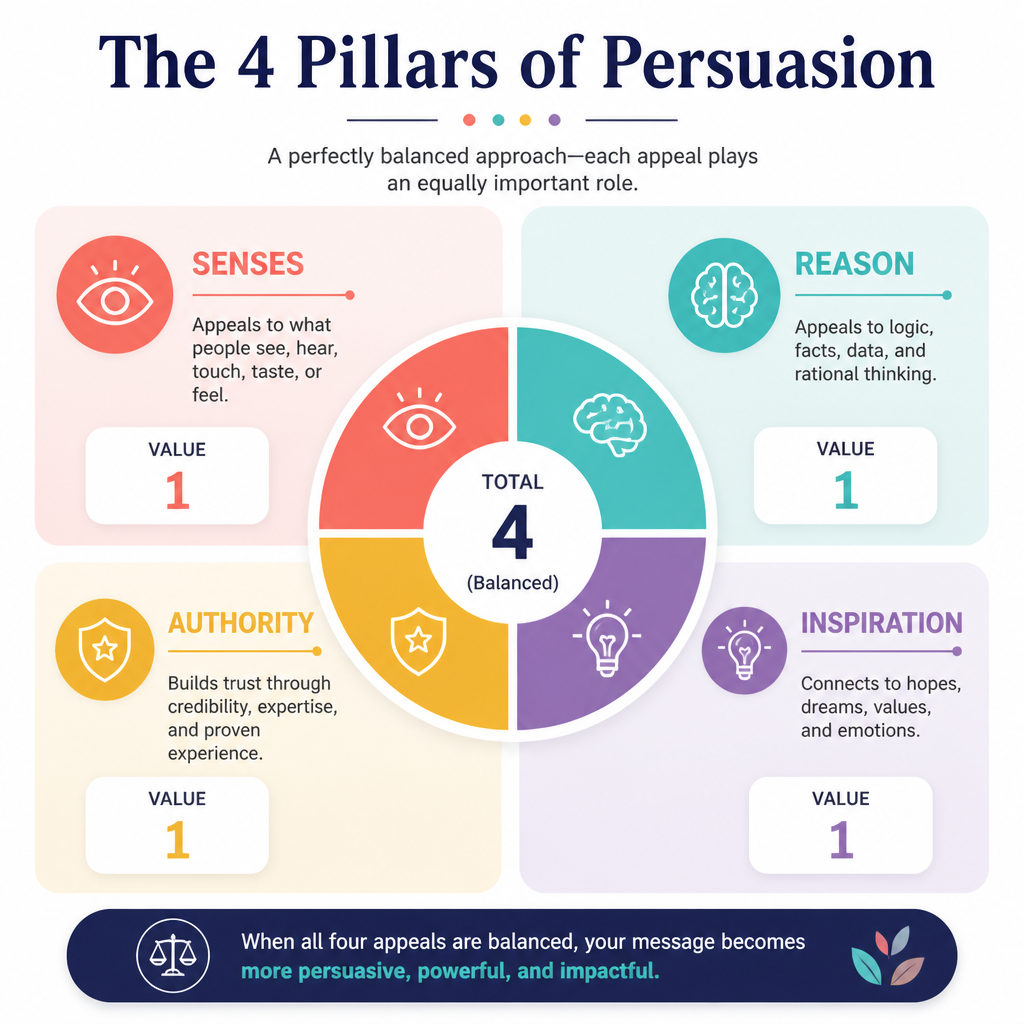
Abdu’l-Bahá (as summarized in Bahá’í teachings) outlines four proofs or ways to identify truth:
- Senses: what you can perceive (sight, hearing, etc.)
- Reason: what you can justify through logic
- Authority: reliable sources, expertise, and testimony
- Inspiration: moral and spiritual insight—where sincerity and conscience matter
Important nuance: senses can deceive. Mirages, optical illusions, and misinterpretations are real. That’s why you use senses in combination with reason, credible authority, and—when appropriate—moral/spiritual discernment.
6. Step 4—Balance epistemologies: foundational certainty, coherence, correspondence, pragmatism, and social realities
Truth-seeking gets stronger when you admit there are different types of truth justification. Psychology Today discusses major epistemological approaches, including:
- Foundationalism: you rely on basic certainties (like mathematics or obvious self-evidence).
- Coherence: you check whether beliefs form a consistent whole.
- Correspondence: you compare claims to evidence and the way the world behaves.
- Pragmatism: you consider whether beliefs work for achieving goals and solving problems.
- Social realities: you recognize that truth-claims are shaped by communities, norms, incentives, and power.
In everyday life, you don’t need to label these frameworks. You just need to ask:
Is my belief supported by evidence? Is it internally consistent? Does it survive scrutiny from others? And does it behave well in the real world?
This balance helps you avoid the “single-method trap,” where one tool becomes a blind faith religion.
7. Step 5—Never silo inputs: compare competing claims and steel-man opponents
Echo chambers don’t just make you ignorant—they make you certain. Certainty is not the problem; false certainty is.
So break the silo:
- Find competing claims.
- Compare sources across different communities.
- Steel-man the best version of the opposing view.
Steel-manning means: if you were arguing for their side, what would be the strongest argument? If their strongest argument still fails, you’ll know why—not just that you feel annoyed.
8. Step 6—Look at behaviors, not just words: check for “tells” and inconsistencies
When people lie, they may still speak smoothly. But behavior often reveals friction between intention and action.
A practical rule:
Don’t only ask what someone says. Ask what they do, and whether their actions match their claims over time.
Look for:
- Inconsistencies across different contexts
- Refusal to clarify or provide verifiable details
- Overconfident certainty without evidence
- Behavior changes when incentives shift
This doesn’t mean you assume deception automatically. It means you gather reality-based data instead of relying on rhetoric.
9. Step 7—Ask better questions: what evidence would change your mind?
A powerful truth-seeking question is also uncomfortable because it invites loss:
What would I need to see to admit I’m wrong?
When you can name disconfirming evidence, you become harder to fool—by others and by yourself.
Try writing two lists:
- Evidence that supports your current belief
- Evidence that would falsify or weaken it
If you can’t create the second list, you might not have a belief—you might have an identity slogan.
10. Step 8—Distinguish “what is” from “what I want”: Stoic-style acceptance of reality
Truth-seeking is helped by Stoic-style acceptance: reality is not obligated to satisfy your preferences.
So separate:
- What is (facts, constraints, observed outcomes)
- What I want (hopes, desires, personal goals)
Desire can motivate action. But desire must not masquerade as evidence.
Reality is the referee, not the team you cheer for.
11. Step 9—Test truth responsibly: when to rely on evidence, and when to suspend judgment
You don’t have to know everything to search honestly. But you do need rules for how you handle uncertainty.
Use this decision guide:
- Rely more on evidence when consequences are high and the claim is testable.
- Use probabilistic language (“likely,” “suggests,” “based on limited data”).
- Suspend judgment when key evidence is missing or contradictory.
- Update quickly when strong new evidence arrives.
The goal is not paralysis. The goal is calibrated thinking.
12. Step 10—Handle uncertainty ethically: don’t weaponize doubt or certainty
Uncertainty can be honest—or it can be a tactic.
Be careful if:
- You use doubt to avoid accountability (“We don’t know, so I can’t be responsible”).
- You use certainty to dominate (“This is true because I feel it, believe it, or want it”).
- You shift the goalposts whenever evidence challenges you.
Ethical truth-seeking treats doubt and certainty as tools that must match the evidence—nothing more.
13. Step 11—Build habits for ongoing truth-seeking (daily practice)
Truth-seeking isn’t one heroic moment. It’s a daily practice. Here are habits that work:
- Do a “belief audit” once a week: Which beliefs did you claim strongly? What changed?
- Keep a “prediction journal”: If you make a claim, write what would happen if you’re right.
- Practice charity toward evidence: When you disagree, ask what evidence the other person might be seeing.
- Slow down at emotional intensity: If you feel rage or euphoria, pause before concluding.
- Curate inputs: diversify sources and intentionally leave echo chambers.
14. Common failure modes: motivated reasoning, confirmation bias, naïve realism, and tribal filters
To search honestly, you must recognize when your process is failing. Common failure modes include:
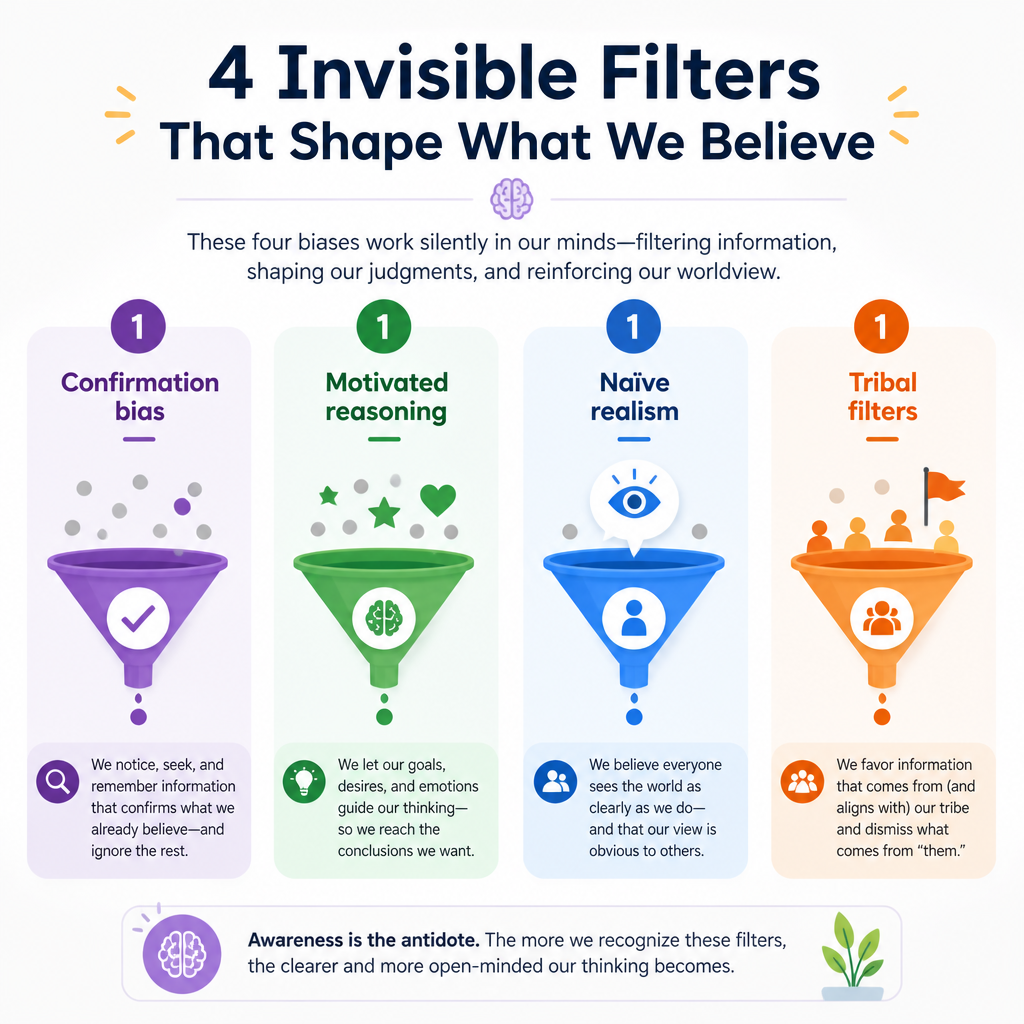
- Motivated reasoning: your conclusion protects identity, so evidence is treated as an enemy.
- Confirmation bias: you over-weight confirming details and under-weight disconfirming ones.
- Naïve realism: you assume perception equals truth.
- Tribal filters: you interpret new information through group loyalty.
When you notice these, don’t panic. Treat them as data about how your mind works. Then return to the method: spot assumption-to-fact, audit emotion, consult multiple criteria, compare competing claims, and test with evidence.
15. Conclusion: becoming a calmer, clearer truth-seeker in a world of lies
To how to find truth is ultimately to learn how to relate to reality without self-deception. Honest truth-seeking is not cynicism. It’s discipline.
If you do this well, you become calmer—not because the world is calmer, but because your mind is less easily hijacked by fear, desire, and group pressure.
And in a world of lies and half-truths, that calm clarity is its own form of courage.
References
-
Nate Anglin, “How To Find The Truth In Any Situation, Even In A World Of Lies.” https://www.nateanglin.com/blog/how-to-find-the-truth-in-any-situation-even-in-a-world-of-lies
-
Psychology Today, “Seven Approaches to Finding the Truth.” https://www.psychologytoday.com/us/blog/theory-knowledge/202009/seven-approaches-finding-the-truth
-
BahaiTeachings.org, “The 4 Ways to Identify the Truth.” https://bahaiteachings.org/ways-identify-truth/