First Steps After Becoming Muslim: New Muslim Guide to Pray, Learn, and Grow
Congratulations on taking your shahada. If you’ve just become Muslim, you’re beginning a lifelong journey of worship, learning, and transformation. But it’s also normal to feel overwhelmed: “What do I do next? How do I pray? What’s required of me right now?”
This new muslim guide is a practical, beginner-friendly roadmap to your first steps after becoming Muslim—focused on what matters most: how to pray islam (Salah), building a foundation, finding support, and growing your character.
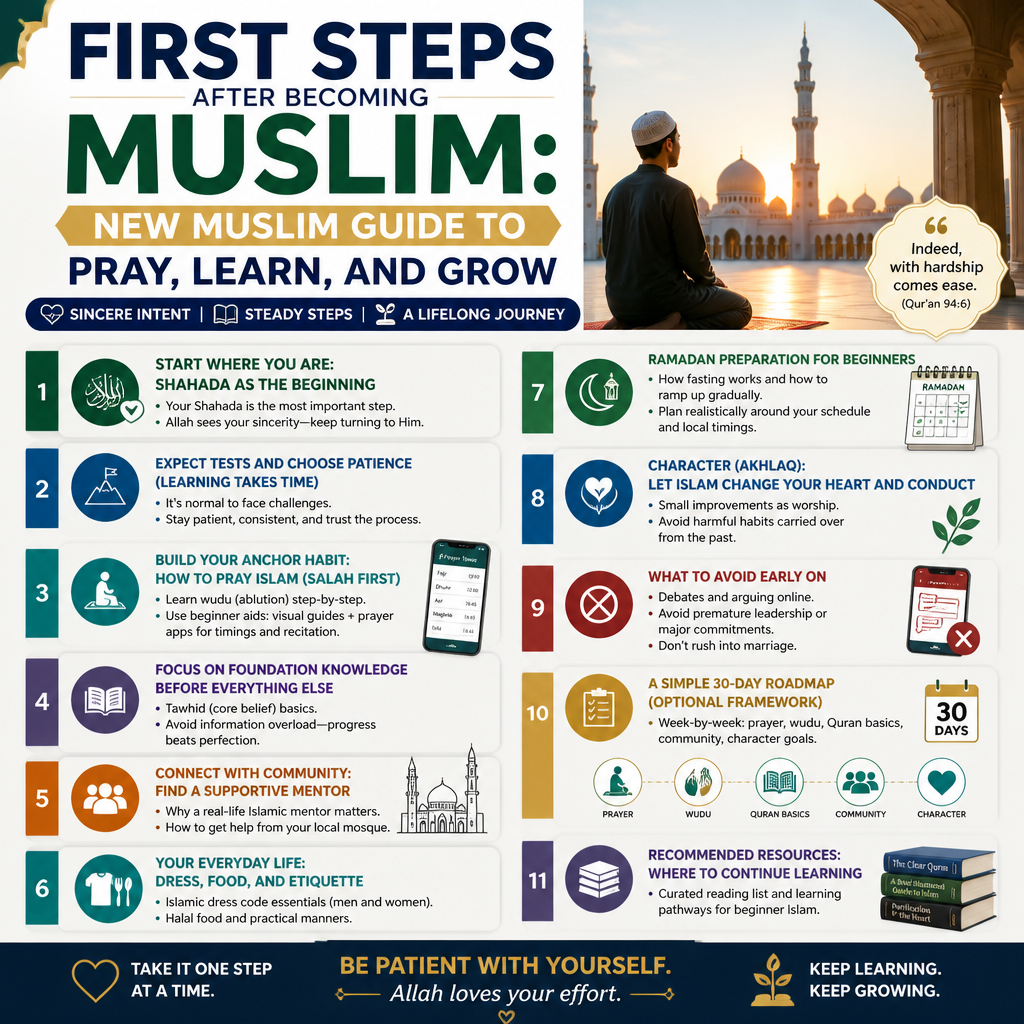
1. Start Where You Are: Shahada as the Beginning
Your shahada is not just a moment—it’s a fresh start. Islam begins with sincerity, and it continues with effort. The best mindset for a new Muslim is:
- Be patient: learning takes time.
- Take small steps: progress beats perfection.
- Keep your heart connected: worship is not only knowledge; it’s connection with Allah.
After shahada, prioritize what helps you draw closer to Allah—especially prayer, which becomes the anchor of your daily life.
2. Expect Tests and Choose Patience (learning takes time)
It’s common to face “after shahada” challenges: struggling to learn Arabic, feeling nervous about making mistakes in prayer, family pressure, or simply fatigue from absorbing new information.
Islam teaches that believers are tested. Tests are not a sign that you’re failing; they’re often part of growth. Choose a steady approach:
- Don’t aim to master everything at once.
- Avoid information overload. One new habit well learned is better than ten half-learned ideas.
- Continue even when it feels hard. Effort is rewarded—especially when you’re struggling as a beginner.
Think of it like building a home: you start with a foundation, not a roof.
3. Build Your Anchor Habit: How to Pray Islam (Salah first)
If you want one clear answer to “What should I do first?” it’s this: learn Salah. Salah is your direct link to Allah five times a day, and it trains your soul in consistency.
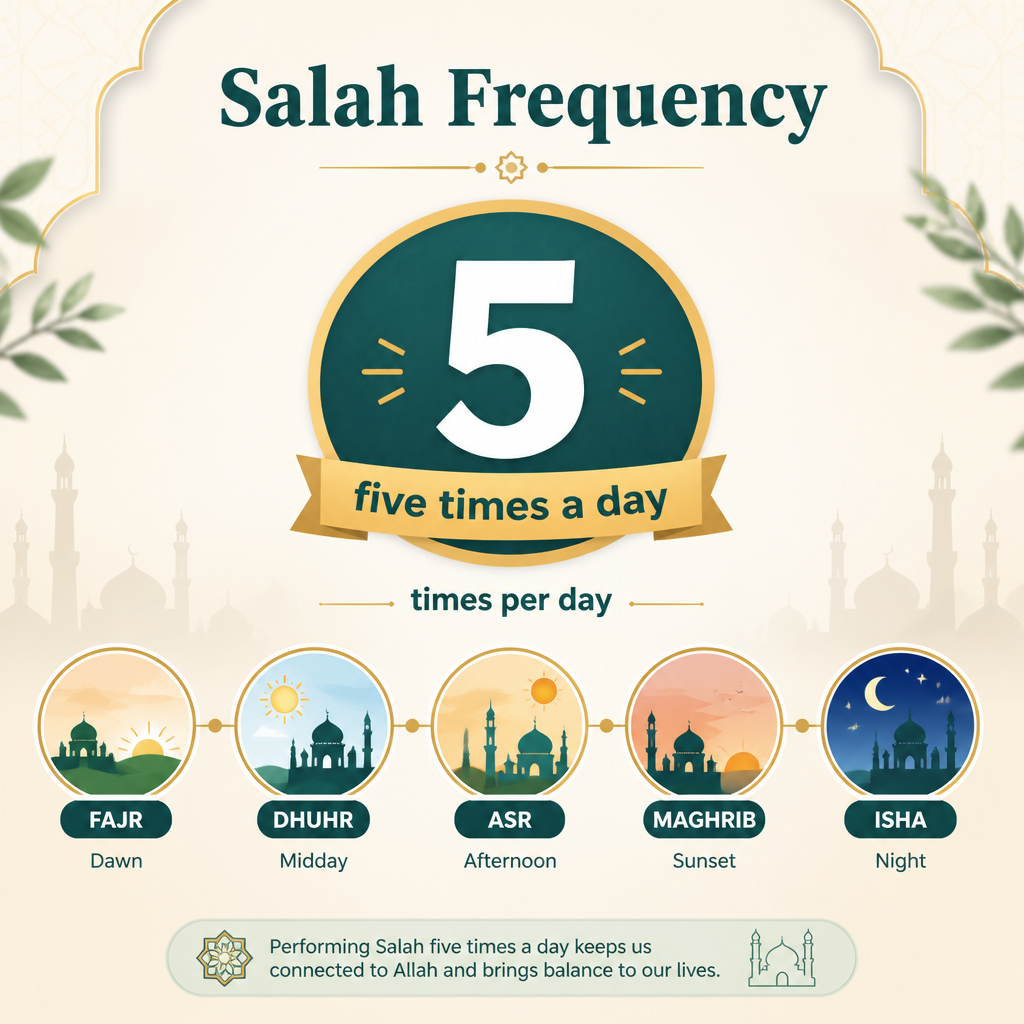
Step A: Learn wudu (ablution) step-by-step
Before Salah, you must be in a state of wudu (ablution). Your goal is not to be perfect immediately—it’s to learn the process correctly and repeat until it becomes natural.
Beginner approach:
- Find a trustworthy video or visual guide for wudu.
- Practice slowly at home (no rush, no pressure).
- Repeat daily until you can perform wudu comfortably without doubting every step.
Tip: If you make mistakes in the early days, treat it as learning. Ask questions and improve gradually.
Step B: Start praying—even as you learn
You don’t need perfect Arabic to begin praying. Start with what you know:
- Learn the basics of the prayer positions (standing, bowing, prostrating).
- Learn how to recite the opening chapter (Al-Fatihah) as best you can.
- Use beginner tools for accuracy and confidence.
Use beginner aids: visual guides + prayer apps for timings and recitation
Many new Muslims benefit from tools that reduce uncertainty:
- Prayer apps: for accurate prayer times and sometimes recitation support.
- Visual tutorials: step-by-step guidance for wudu and Salah.
- Recitation practice: short sessions (10–15 minutes) daily are more effective than occasional long study.
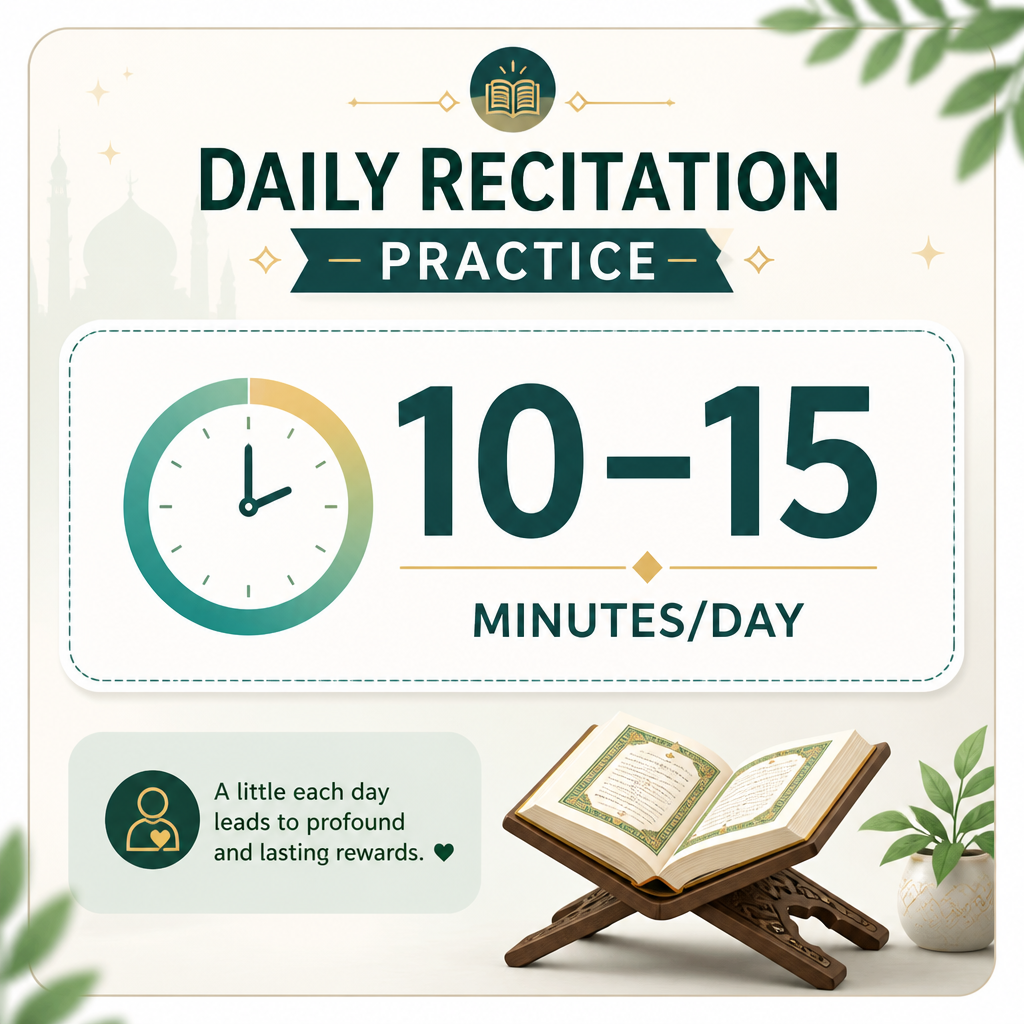
Your goal is consistency: praying regularly while learning is far better than studying without prayer.
4. Focus on Foundation Knowledge Before Everything Else
After prayer, focus on the foundation of belief. A helpful principle for beginners is: knowledge should lead to worship, not simply information storage.
Tawhid (core belief) basics
Begin your learning with Tawhid—the oneness of Allah. As a beginner, aim to understand:
- Allah is the One Creator
- He alone deserves worship
- Prayer and life choices should reflect that reality
Avoid information overload—progress beats perfection
It’s easy to fall into a trap: consuming videos, reading long texts, and still feeling anxious about “not knowing enough.” To avoid that, use a simple rule:
- Learn only the next practical step you can apply in your day.
For example: learn enough Arabic recitation to improve Salah, not enough to overwhelm yourself.
5. Connect With Community: Find a Supportive Mentor
Learning Islam is easier when you’re not doing it alone. While books and videos help, a real-life Islamic mentor can answer your questions quickly and prevent misunderstandings.
Why a real-life Islamic mentor matters
- They help you correct mistakes early (especially in prayer).
- They guide your pace so you don’t burn out.
- They support your character growth beyond “rules.”
How to get help from your local mosque
- Introduce yourself after prayers.
- Ask if they offer new Muslim classes or beginner circles.
- Find someone who can check your wudu/Salah learning if possible.
Community is not a bonus—it’s part of the sunnah of learning. Allah places believers to support believers.
6. Your Everyday Life: Dress, Food, and Etiquette
Islam changes your life gradually. Start with the basics that protect modesty, cleanliness, and intentional living.
Islamic dress code essentials (men and women)
Dress in Islam is about modesty and dignity. As a beginner:
- Men: generally focus on covering the area between the navel and knees and avoiding tight clothing and immodesty.
- Women: generally focus on covering properly in a way that maintains modesty (including the headscarf in many contexts).
If you’re unsure about details for your specific situation, ask someone knowledgeable or your local mosque—don’t guess from random sources.
Halal food and practical manners
- Begin learning what foods are halal and where to find them.
- Avoid alcohol and other major prohibited substances.
- Apply good manners: truthful speech, respect, and cleanliness.
Your old habits won’t vanish instantly. That’s okay. Choose one improvement at a time.
7. Ramadan Preparation for Beginners
If you become Muslim during or near Ramadan, it may feel urgent. But you can prepare with the beginner mindset: gradual readiness and realistic planning.
How fasting works and how to ramp up gradually
Ramadan fasting has its own rules. If you’re able to fast, aim to understand:
- Fasting from dawn to sunset
- What breaks the fast
- How to prepare spiritually (intention, Quran, prayer)
If you’re not sure about eligibility due to your circumstances, ask a qualified scholar or your local mosque.
Plan realistically around your schedule and local timings
- Use a prayer/ramadan timetable for local timings.
- Eat with purpose (healthy suhoor, balanced iftar).
- Build routines for taraweeh if you attend.
Remember: Ramadan is training your soul, not proving anything.
8. Character (Akhlaq): Let Islam Change Your Heart and Conduct
Islam is not only about performing acts of worship; it is also about transforming behavior. Many new Muslims underestimate this until they notice how Islam changes their reactions—how they speak, how they treat others, and how they handle anger.
Small improvements as worship
Try focusing on one character goal at a time:
- Be more honest
- Lower your gaze and protect your speech
- Be kinder, more patient, and more forgiving
These improvements are part of worship because they reflect your faith in Allah.
Avoid harmful habits carried over from the past
As much as you can, reduce exposure to things that lead you away from the straight path. You don’t have to do everything instantly—just make conscious choices daily.
9. What to Avoid Early On
Many new Muslims run into avoidable problems when they enter online debates or rush into big decisions. To protect your growth:
- Avoid debates and arguing online. Focus on learning and worship.
- Avoid premature leadership or major commitments. Earn confidence through practice.
- Don’t rush into marriage just because you feel urgency. Make decisions calmly with guidance.
- Be careful with “confusing” advice from people who don’t know your situation.
Your first months should build stability, not chaos.
10. A Simple 30-Day Roadmap (optional framework)
If you like structure, use this as a starting point. Adjust it to your pace and your local environment.
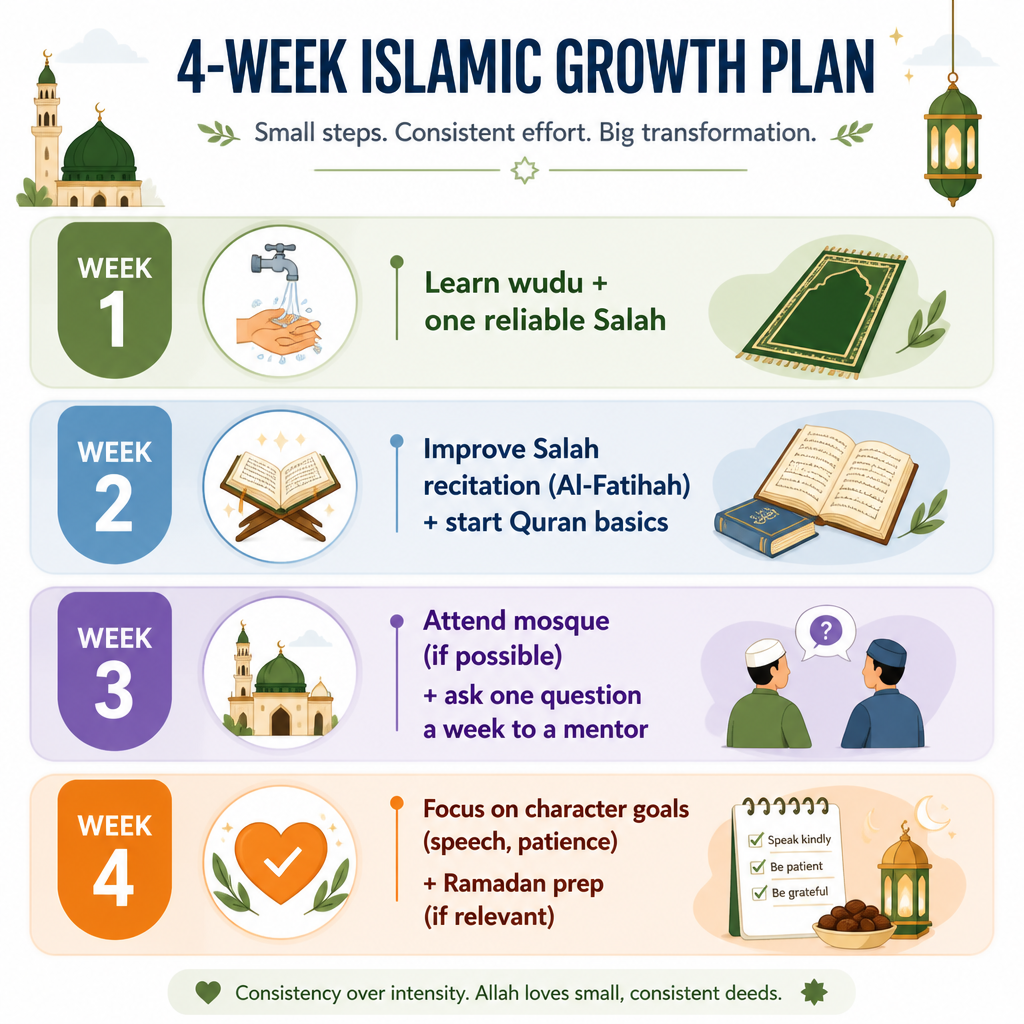
- Week 1: Learn wudu + one Salah you can perform reliably.
- Week 2: Improve Salah recitation (especially Al-Fatihah) + start Quran basics (short passages).
- Week 3: Attend mosque if possible + ask one question a week to a mentor.
- Week 4: Focus on character goals (speech, patience) + Ramadan prep if relevant.
Consistency matters more than intensity.
11. Recommended Resources: Where to Continue Learning
Use a learning pathway that matches beginner islam. A few recommended categories and starting points:
- New Muslim guides and quick start manuals for prayer, wudu, and first practices.
- Prayer tutorials that include visual guides.
- Trusted books for foundational belief and practical guidance.
- Local mosque classes for real-life mentorship.
Top resources (3):
- WhyIslam.org / Laura El Alam — A Quick Start Manual for New Muslims
- IslamOnline.net / Musa A. Mosiudi — New Muslim First Steps
- MuslimConverts.com — New Muslim Guide
Conclusion
Taking your shahada is the beginning, not the finish line. In your first steps after becoming Muslim, prioritize what strengthens your bond with Allah:
- Learn how to pray Islam (Salah) and wudu
- Build a foundation (Tawhid and core basics)
- Seek support from a mentor and your mosque community
- Improve your daily life through modesty, halal basics, and good manners
- Grow your character gradually
And remember: you don’t need to become perfect overnight. You just need to keep moving forward with sincerity.
May Allah grant you ease, guidance, and blessings on your new journey.