Can Morality Exist Without Religion? The Case for Morality Without Religion — Ethics Atheism and Moral Philosophy
Is morality possible without religion? For many people, the phrase “morality without religion” sounds like a contradiction. The common claim is that without God (or sacred scripture), we would have no objective standards, no motivation to be good, and no reliable reason to restrain harm.
But moral philosophy—and what we can learn from empirical studies of moral judgment—offers a different conclusion: morality can exist without religion. We can ground ethical obligations in reason, shared human capacities, social consequences, empathy, and the demand to treat persons with dignity. In this article, we’ll examine the key objections, the logic behind divine-command theories (and why they struggle), and several secular moral frameworks that can support stable, accountable ethics.
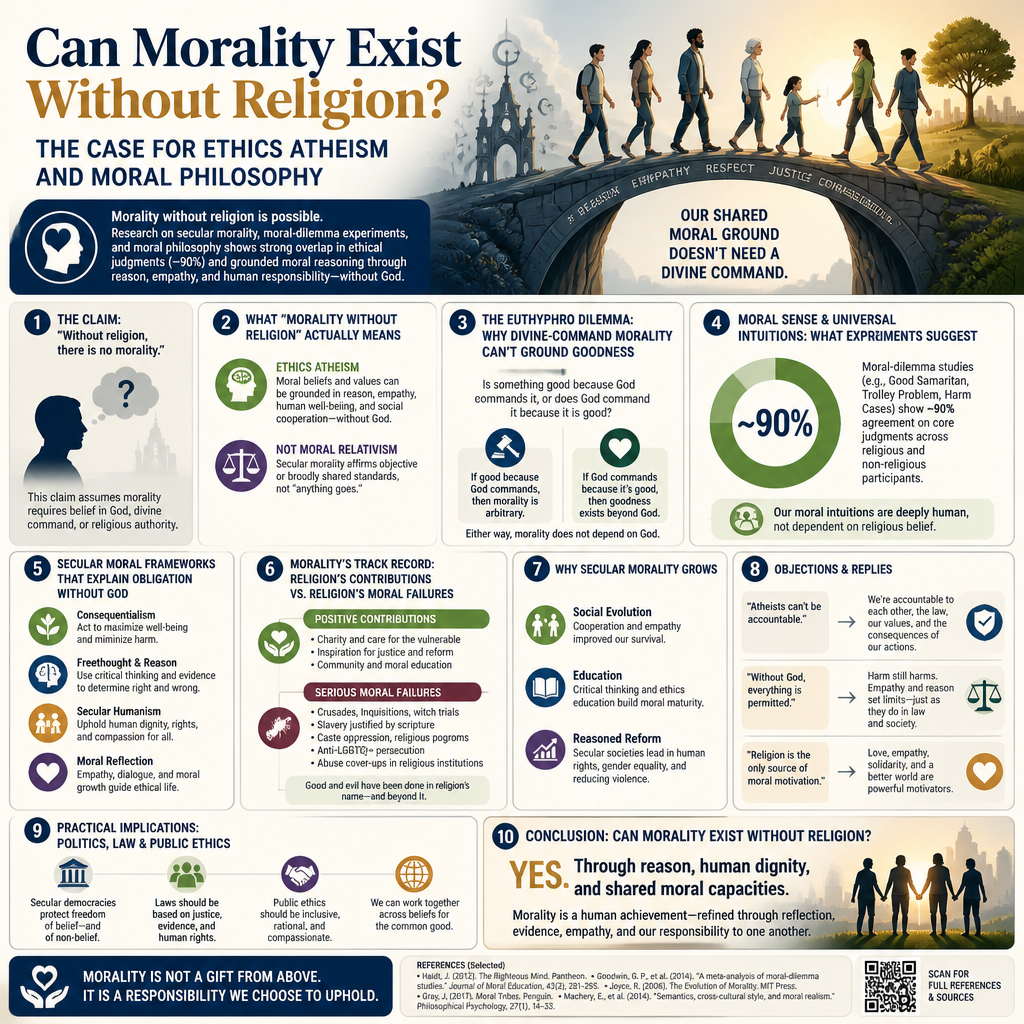
1) The claim: “Without religion, there is no morality”
The argument usually comes in one of two forms:
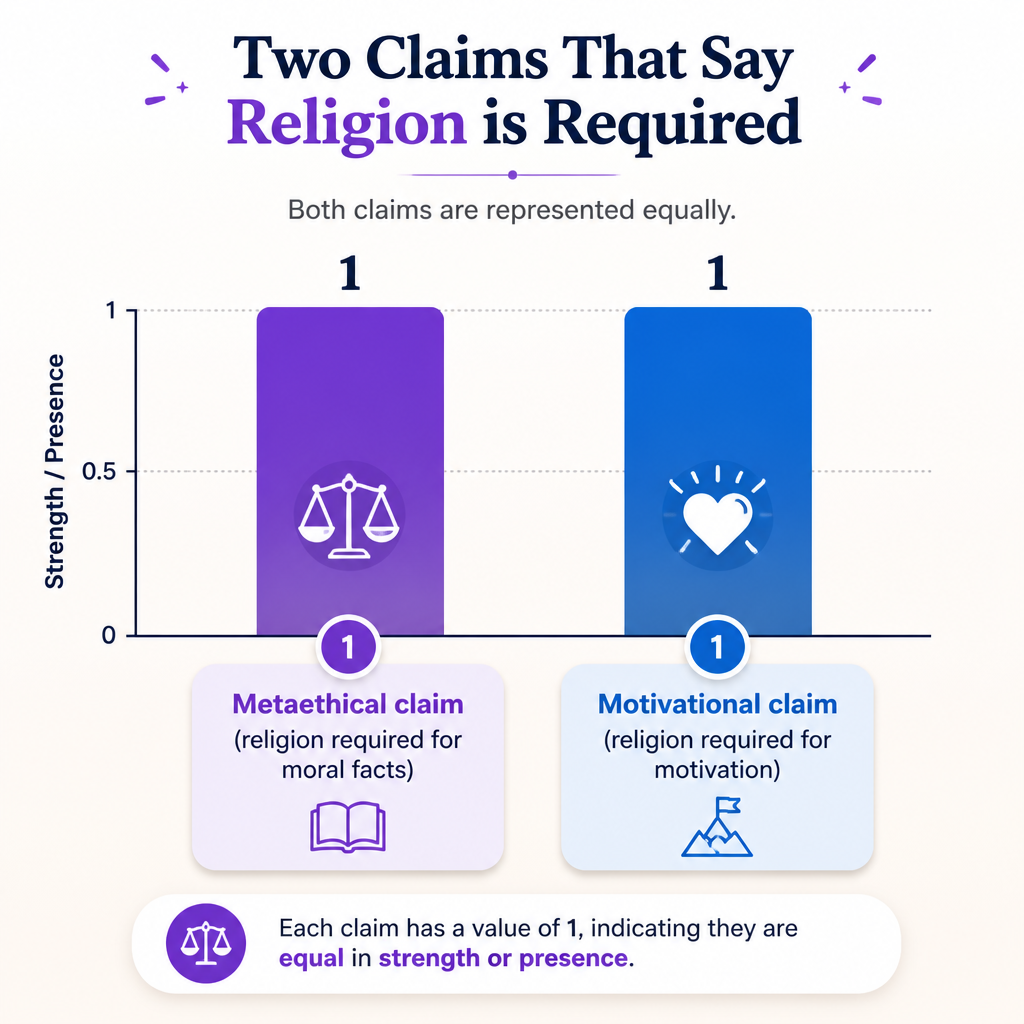
- Metaethical claim: Religion is required for moral facts or moral “truth” to exist.
- Motivational claim: Without religion, people lack reasons to do good or resist wrongdoing.
Even when people agree about behavior (e.g., “we should not torture children”), they may disagree about the source of morality: divine command vs. human responsibility.
The central question becomes: Do we need God to justify goodness, or do we need humans to reflect carefully about what humans owe one another?
2) What “morality without religion” actually means
“Morality without religion” doesn’t have to mean “anything goes.” It can mean several things:
- Ethics atheism (or ethics without theism): ethical reasoning does not assume God exists.
- Non-reliance on revelation: moral principles are justified through reason, experience, and evidence rather than sacred authority.
- Anti-relativism: even without God, some values can be more justified than others (e.g., because they protect well-being and respect persons).
So the debate is not “Are morals allowed?” It’s “Where do morals come from, and how are they justified?”
3) The Euthyphro dilemma: why divine-command morality can’t ground goodness
One of the oldest critiques of divine-command ethics comes from Plato’s Euthyphro dilemma. It targets the idea that morality is grounded in what God commands.
Ask:
- Option A: God commands things because they are good already. Then goodness doesn’t depend on God. God is not the source of morality—goodness is.
- Option B: God commands things and they are good only because God commands them. Then “good” becomes arbitrary: if God could command the opposite, the moral facts would change with divine preferences.
Either way, divine-command morality struggles to explain why some actions are genuinely good rather than merely “approved.” This is a problem not only for philosophers who doubt God, but for the logical structure of the theory itself.
4) Moral sense and universal intuitions: what experiments suggest
Suppose someone says: “Sure, we can talk about morality logically. But without religion, atheists and believers wouldn’t share the same moral judgments.”
Research on moral dilemma judgments challenges that assumption. In work on morality without religion, researchers such as Marc Hauser and Peter Singer describe experiments where participants from different backgrounds evaluate morally loaded scenarios (for example, choices involving harm, rescue, and wrongdoing).

One recurring result reported across these studies is striking: religious and non-religious participants often show very similar core judgments—frequently around ~90% agreement on key moral dilemmas. That overlap suggests that moral judgment is not simply “downloaded” from religious teaching.
Instead, humans appear to possess a moral capacity shaped by our social nature—something more like a “moral sense” than a set of commandments that must be supplied by theism.
5) Secular moral frameworks that explain obligation without God
Even if moral intuitions are shared, the next question is: can we justify ethical obligations and refine them without religion? Moral philosophy says yes. Several major approaches can support ethics atheism and moral philosophy without appealing to divine authority.
5.1 Consequentialism (and utilitarian reasoning)
Consequentialism judges actions by their outcomes—often framed as promoting well-being and reducing suffering. Even if you don’t believe in God, you can argue that:
- we should predict consequences of actions,
- we should weigh harm against benefits,
- and we should consider everyone affected.
That produces moral constraints that don’t evaporate when religious belief is removed.
5.2 Freethought and evidence-based moral reflection
Freethought emphasizes reason, skepticism, and openness to evidence. In moral contexts, that means:
- challenging dogma,
- testing claims about what is harmful,
- and updating our moral views when better reasons appear.
This isn’t moral chaos; it is moral improvement.
5.3 Secular humanism (human dignity and responsibility)
Secular humanism grounds ethics in human value, human responsibility, and the conviction that we must build a good life for real people.
On this view, morality is not optional—it is part of what it means to live with others who can suffer and flourish. Duties follow from our shared moral status and from what we learn about human needs.
Notably, secular frameworks can also preserve accountability:
- We can be held responsible because we are agents with reasons—not because God has issued commands.
- We can criticize wrongdoing because harm and disrespect remain intelligible reasons even in a secular world.
6) Morality’s track record: religion’s contributions vs. religion’s moral failures
One of the strongest pro-religion responses is: “Religion has produced saints, charity, and compassion.” True—many religious people motivate themselves to serve others.
But acknowledging religion’s moral contributions doesn’t settle the metaphysical question. A fair evaluation includes both:
- religion at its best (inspiring service), and
- religion at its worst (justifying cruelty, oppression, or violence).
Research summaries often highlight historical cases where religious justifications were used for atrocities. Think of episodes sometimes associated with the Crusades and Inquisition, or broader patterns of violence framed as divinely authorized.
Meanwhile, moral progress has also come from secular agents and non-believers—for example, activism associated with abolition of slavery and later expansions of rights and equality through rational reform.
So religion is not a unique generator of moral insight. It is one source among others, and its moral output can vary dramatically depending on interpretation, context, and power.
7) Why secular morality grows: social evolution, education, and reasoned reform
Kenan Malik, in a discussion of “morality without God,” argues that rooting morality in God can reduce human agency: if the good is defined by divine will, moral responsibility becomes partly displaced.
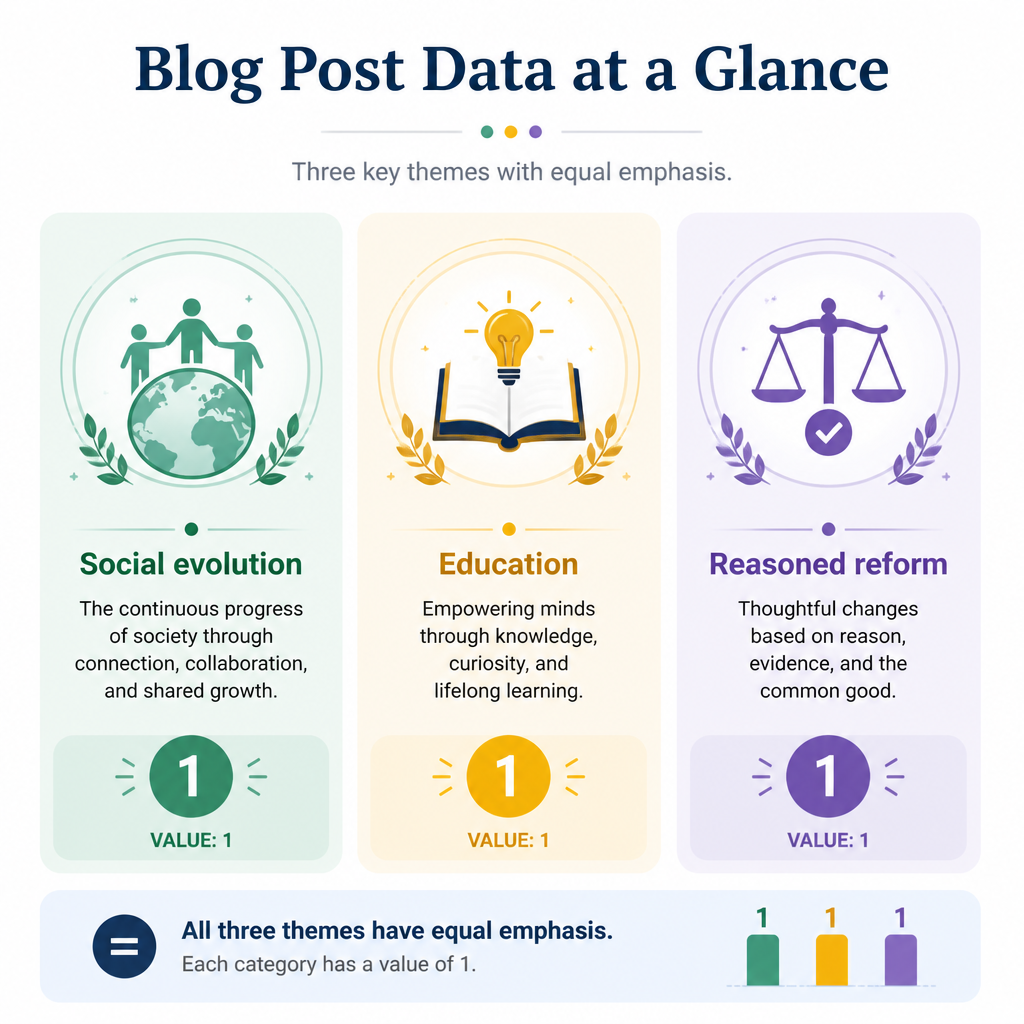
Secular morality grows, rather, through:
- social evolution: human communities develop norms that coordinate cooperation and reduce harm;
- education: moral claims become testable and discussable;
- reasoned reform: societies revise values when new evidence or better arguments show old practices are wrong.
Many norms that were once widely defended “because God said so” are now rejected—even by many religious people. This pattern suggests that moral understanding is responsive to human reflection and changing knowledge, not only to theology.
8) Objections and replies
8.1 “Atheists can’t be accountable.”
Reply: Accountability depends on whether people can understand reasons, foresee consequences, and respond to criticism. Belief in God is not required for moral agency. In fact, secular legal and ethical systems already work without divine verification: we hold people responsible because they act intentionally and we can justify punishment or prevention by reference to harm and fairness.
8.2 “Without God, everything is permitted.”
Reply: This confuses moral justification with moral license. Even if God is not the source of morality, humans still have reasons to avoid cruelty, keep promises, and protect others. Consequences, empathy, and respect for persons can constrain behavior strongly enough to rule out “anything goes.”
8.3 “Religion is the only source of moral motivation.”
Reply: Motivation can come from many places: compassion, belonging, integrity, fairness, conscience, and a desire for a better world. Religious communities often cultivate these motives, but they are not exclusive to believers. Moral motivation can be cultivated through secular education and community life as well.
9) Practical implications: politics, law, and public ethics
If morality without religion is possible, what does that mean for public life?
- Public justification: in pluralistic societies, laws often need reasons that everyone can assess—religious premises may not be universally shared.
- Rights and duties: ethical frameworks based on human dignity can support protections regardless of worldview.
- Dialogue: understanding that moral capacity is shared makes constructive debate easier; disagreement moves from “you have morals / you don’t” to “which reasons best justify this policy?”
In other words, morality without religion doesn’t weaken public ethics—it can strengthen it by focusing on reasons that cross belief boundaries.
10) Conclusion: Can morality exist without religion?
Yes. Morality can exist without religion through:
- reasoned moral philosophy (not divine commands),
- shared human moral capacities evidenced by moral judgment overlap,
- secular frameworks such as consequentialism, freethought, and secular humanism, and
- ongoing reform based on evidence, empathy, and human dignity.
Religion may inspire many people to do good, but it is not required to justify why we should treat others with care. Morality without religion is not only possible—it is already lived by millions, and it can be argued for with rigor.
References (selected):
- Wikipedia contributors, “Secular morality.” https://en.wikipedia.org/wiki/Secular_morality
- Marc Hauser & Peter Singer, “Morality without Religion.” https://www.qcc.cuny.edu/socialSciences/ppecorino/ETHICS_TEXT/Chapter_2_Moral%20Development/Reading-Morality-without-Religion.htm
- Kenan Malik, “Morality Without God” (Five Books interview and related resources). https://fivebooks.com/best-books/kenan-malik-on-morality-without-god/