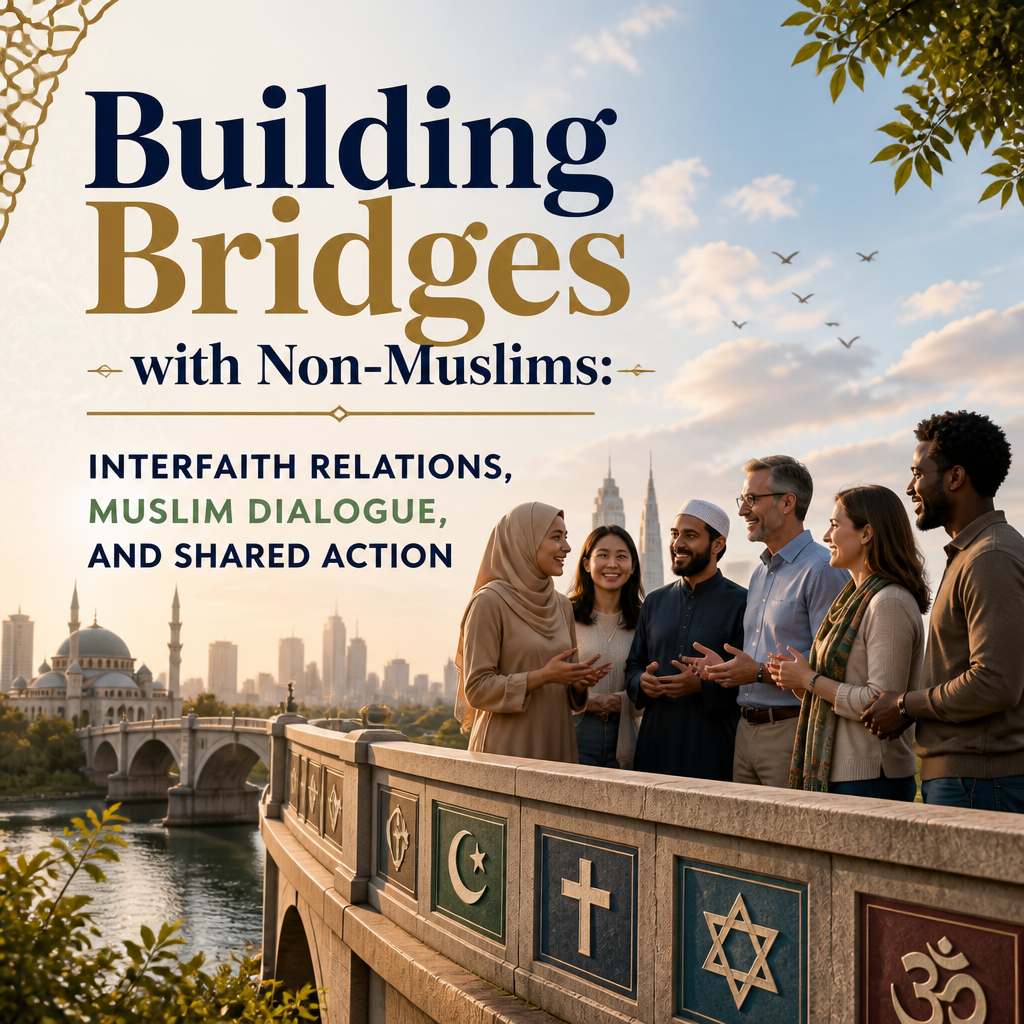
Building Bridges with Non-Muslims: Interfaith Relations, Muslim Dialogue, and Shared Action
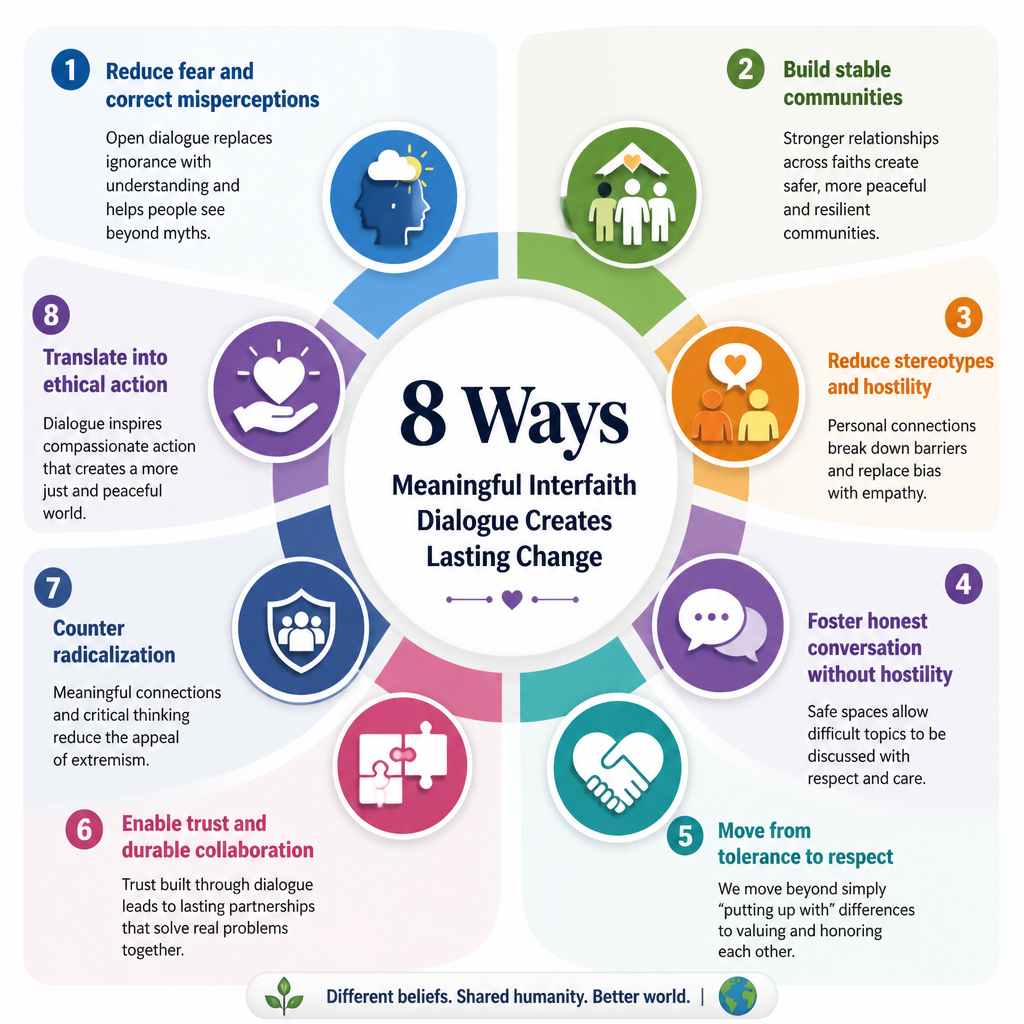
1. Why interfaith relations matter now
In many places, people live side by side—but without real knowledge of one another. Misunderstandings can harden into stereotypes, and stereotypes can become policies, prejudice, or hostility. That’s why interfaith relations are not just “nice to have.” They are a practical spiritual responsibility and a civic necessity.
For Muslims seeking to live faithfully in plural societies, muslim dialogue is one of the most direct ways to reduce fear, correct misperceptions, and build stable communities. Dialogue doesn’t mean abandoning faith convictions. It means refusing to treat the other as an enemy.
2. Start with a shared moral grammar (Abrahamic roots and human dignity)
A helpful first step is to recognize a shared moral grammar—a set of values that many Abrahamic communities understand: the dignity of the human person, the importance of truthfulness, mercy, worship of the one God, and responsibility toward neighbors.
When we emphasize shared roots, we move from “I tolerate you” to “I respect you.” This creates a foundation where conversation can be honest without becoming hostile.
One practical effect is psychological: people feel safer when they are treated as fellow human beings rather than caricatures. From there, interfaith relations can become relationship—not performance.
3. Islamic foundations for muslim dialogue: Quranic principles and prophetic models
Islam is not indifferent to diversity. It offers guidance for how to speak, argue, coexist, and cooperate. Several Qur’anic principles can shape modern muslim dialogue:
- Diversity is purposeful: Human differences exist by divine design, and they can be a means of learning and moral accountability (e.g., references to recognition and testing righteousness).
- Dialogue with wisdom: The Qur’an repeatedly ties respectful engagement to knowledge, clarity, and good manners.
- Coexistence and justice: Ethical behavior toward others is not optional—justice, kindness, and keeping commitments remain central.
Historically, Islam also provides models of coexistence. A famous example is the Constitution of Madinah, which established practical structures for multi-faith governance with rights and responsibilities. Another illuminating episode is hosting delegations and welcoming them with dignity—showing that religious difference does not require social exclusion.
4. Etiquette for intellectual engagement: wisdom, clarity, and avoiding compulsion

Effective muslim dialogue is not just about what you say—it’s about how you say it. The best conversations follow a prophetic style:
- Begin with wisdom: Choose timing and tone. Avoid “debate-first” interactions that turn dialogue into combat.
- Use clarity, not confusion: Speak plainly. If something isn’t understood, clarify rather than escalate.
- Avoid compulsion: Faith is not coerced. Persuasion should be respectful; guidance should not be forced.
- Don’t reduce people to beliefs: A person has a story. Learn the person behind the label.
- Be honest about conviction: Respect doesn’t require pretending to agree. It means presenting your view truthfully while honoring theirs.
This approach supports interfaith relations by preventing dialogue from becoming either propaganda or surrender.
5. From tolerance to acceptance: relationships that outlast conversations
Many societies can achieve simple coexistence—people share space without deep connection. But the goal of meaningful interfaith relations is acceptance.
Acceptance means:
- You recognize the other as fully human.
- You expect good faith from them and act accordingly.
- You allow relationships to grow beyond the topic that first brought you together.
Acceptance is also a defense against radicalization. When communities know one another personally, extremist narratives become less believable. Dialogue builds trust; trust makes violence harder to justify.
6. A practical toolkit for building bridges with non-Muslims
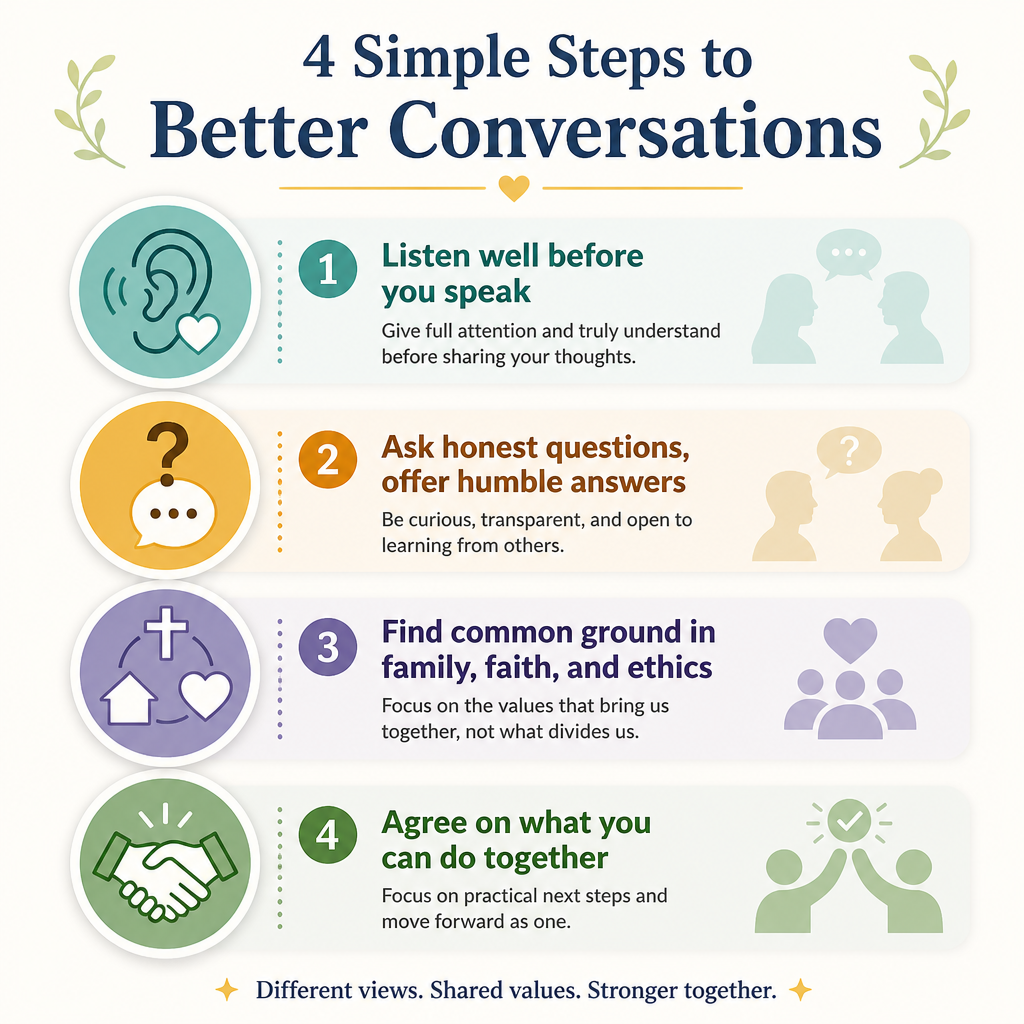
Here are concrete habits that transform “interfaith talk” into real muslim dialogue.
Listen well before you speak
Ask: “What do you think is most important here?” Then reflect back what you heard. Listening signals respect and reduces defensiveness.
Ask honest questions, offer humble answers
Good questions are not traps. They show curiosity. At the same time, present your own beliefs with humility—confident, but not contemptuous.
Find common ground in family, faith, and ethics
Many shared values show up in daily life: raising children with integrity, supporting the vulnerable, honoring parents, caring for neighbors. Start there.
Agree on what you can do together
When conversation is difficult, collaboration provides a different path forward. If you share concern for justice, safety, education, or compassion, you can work together even while questions remain.
7. Shared meals and structured programs: learning by doing
One of the most effective bridge-building tools is simple: shared meals. Food is relational. It lowers barriers and creates a natural space for conversation that isn’t immediately theological.
Some interfaith organizations specifically design programs where participants eat together and build trust through recurring, structured experiences. This “learning by doing” method helps reduce prejudice because it replaces abstraction (“religions” or “groups”) with real people and real stories.
Whether your community is small or large, you can adapt the idea:
- Invite neighbors for a meal after community events.
- Organize bi-faith or multi-faith gatherings around holidays or service days.
- Create conversation circles with clear guidelines: respect, no mocking, and time for questions.
Over time, relationships become bridges that carry communities through disagreement.
8. Working together against real-world challenges (justice, human rights, environment)
Interfaith relations are strongest when they translate into ethical action. Many Abrahamic communities share deep concern for:
- Justice and fairness in daily life
- Human rights and the protection of vulnerable people
- Compassionate service for the poor and marginalized
- Environmental stewardship as a responsibility toward creation
When Muslims and non-Muslims cooperate on tangible goals, the dialogue shifts from argument to common purpose. That’s how trust becomes durable.
9. Leadership and community practices: educating against radicalism
Bridge-building does not happen automatically. It requires leadership and community habits that counter extremism and conspiracy thinking.
Effective practices include:
- Religious education that emphasizes moderation and accurate knowledge of others
- Training for constructive conversation (how to disagree without dehumanizing)
- Promoting credible voices who model respect and consistency
- Supporting youth and families with healthy outlets for identity and belonging
One key lesson across many contexts is that radical narratives thrive where people feel isolated. Interfaith relationships, by contrast, provide belonging in the real world.
10. Conclusion: be the “bridge” through consistency and compassion
Building bridges with non-Muslims is not a single event—it’s a way of life. Grounded in Islamic principles, strengthened by respectful muslim dialogue, and sustained through practical interfaith relations, bridge-building becomes a form of lived ethics.
When you listen, clarify with wisdom, avoid compulsion, and cooperate on shared human responsibilities, you become a bridge that outlasts disagreements. You show—through consistency and compassion—that faith can be both strong and respectful.