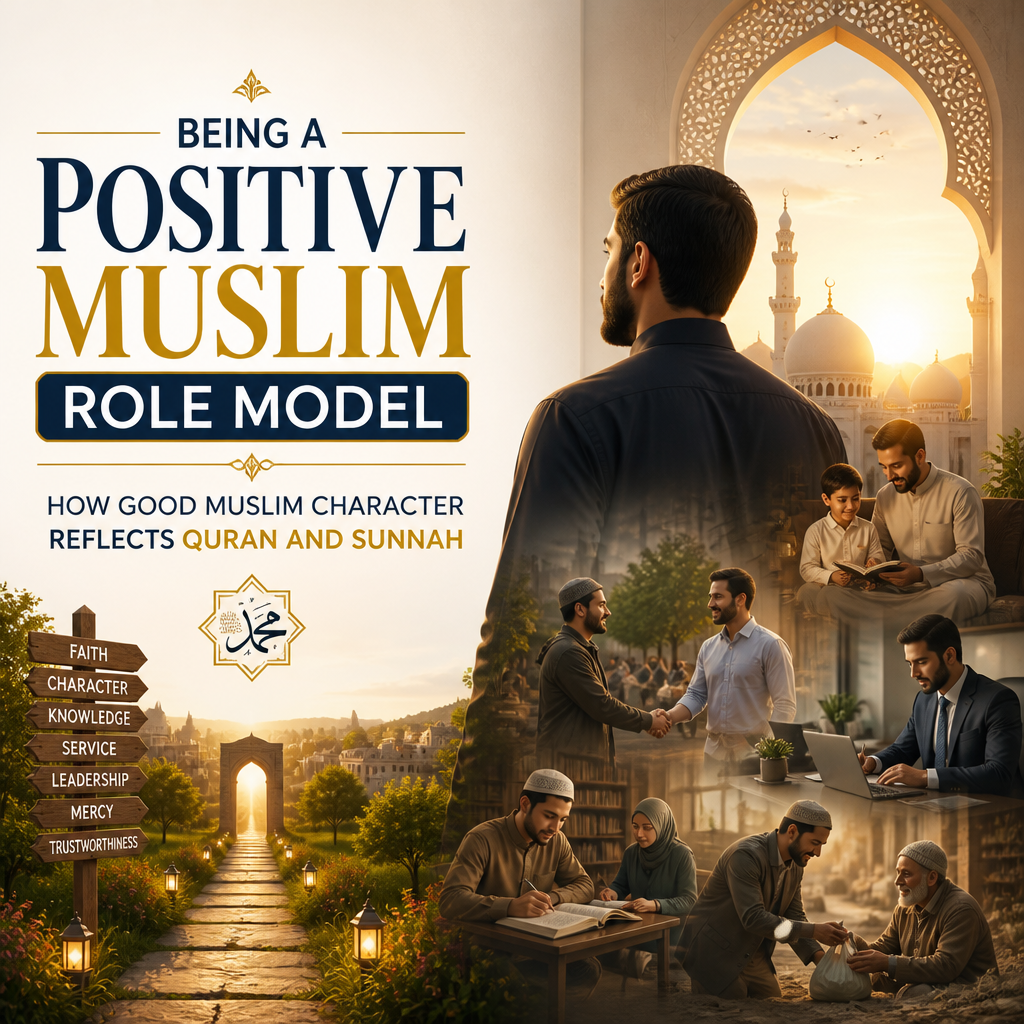
1. Introduction: Why “best Muslim role model” starts with character
People notice what we do, but they remember who we are. When we talk about becoming a muslim role model, we’re not only talking about public speeches or “looking religious.” We’re talking about character—the steady, day-to-day reflection of faith in speech, behavior, patience, and sincerity.
Islam teaches that faith is meant to show up everywhere: inside the heart, in the home, in the marketplace, and in how we treat strangers. A person with good muslim character doesn’t just “act nice.” They embody Quran and Sunnah so others can see a living example of Islam.
And the goal isn’t merely to gain approval. The ultimate aim is to please Allah, follow the Messenger of Allah (peace be upon him), and walk toward Jannah.

2. The Ultimate Example: Emulating Prophet Muhammad (PBUH)
If we want to be a positive muslim role model, the most direct way is to emulate Prophet Muhammad (PBUH)—not only in worship, but in the way he lived: how he spoke, forgave, dealt with people, led others, and carried responsibility.
Quran 33:21: The “excellent pattern”
Allah says in the Quran:
“Indeed, in the Messenger of Allah you have an excellent pattern…” (Quran 33:21)
This verse establishes the Prophet as a complete model. That means our role modeling isn’t random. It is meant to be rooted in revelation—Quran and Sunnah—so our character becomes consistent with divine guidance.
3. Self-Evaluation in Every Role
One of the most powerful traits of a true muslim role model is not perfection—it’s accountability. Before we try to influence others, we should ask: Who am I representing?
Quick self-check questions
- Intentions: When I act, am I doing it for Allah—or for praise?
- Consistency: Is my behavior aligned in private and public?
- Character: Do my words and manners match my claims of faith?
- Impact: Do people feel safe, respected, and hopeful around me—or stressed and judged?
Self-evaluation turns good intentions into ongoing transformation. It also protects us from becoming “performers” rather than sincere believers.
4. Being a Muslim Role Model With Allah
Our relationship with Allah is the foundation of everything else. If our worship is disconnected from our daily behavior, our character may look inconsistent. A strong connection to Allah shapes both our inner state and our outward conduct.
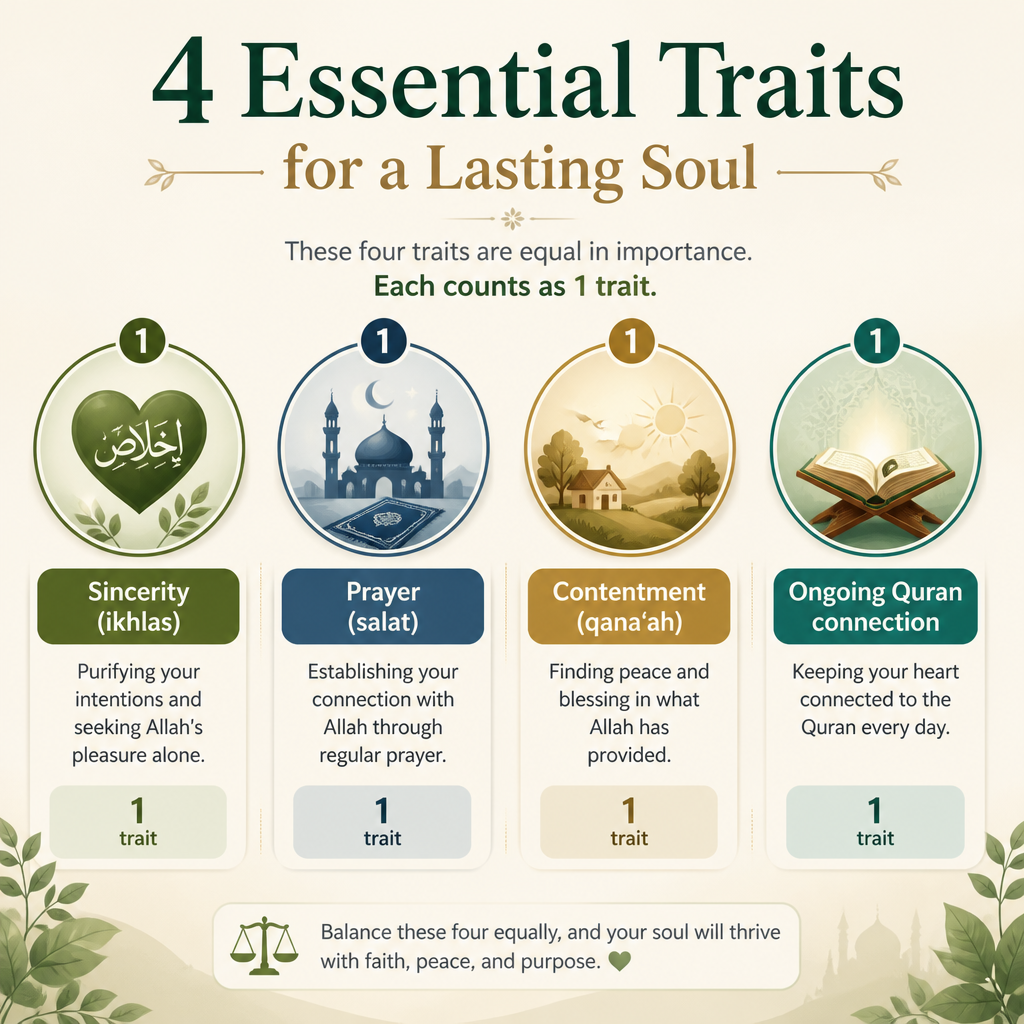
Key traits to practice
- Sincerity (ikhlas): Worship for Allah alone.
- Prayer (salat): Keep it on time and with presence.
- Contentment (qana‘ah): Avoid envy and complaining; accept Allah’s decree with trust.
- Ongoing connection to the Quran: Read, reflect, and apply—small daily habits matter.
When your heart is oriented toward Allah, your character becomes steadier. You’re less reactive. Less defensive. More forgiving. More truthful.
5. Being a Muslim Role Model With Yourself
Good character begins inside—especially in how we handle impulses, emotions, and desires. A muslim role model works to purify the self through disciplined habits and humility.
Inner integrity: modesty, chastity, patience, humility
- Modesty (haya’): Modesty influences speech, clothing, manners, and boundaries.
- Chastity and self-control: Protect dignity and relationships.
- Patience (sabr): Respond with calm rather than anger.
- Humility (tawاضع): Don’t boast, demean others, or assume you’re above correction.
People can sense when someone is “at peace” with themselves. That peace often comes from sincerity, self-discipline, and a realistic view of one’s own shortcomings—combined with hope in Allah’s mercy.
6. Being a Muslim Role Model With Others
Islam emphasizes that our outward character is a form of worship. When you deal with others truthfully and mercifully, you are embodying faith.
Truthfulness, mercy, forgiveness, trustworthy speech
- Truthfulness: Don’t exaggerate, betray confidences, or speak falsely—even when it’s tempting.
- Mercy: Show kindness to people in difficulty. The Prophet (PBUH) taught that mercy is a hallmark of believers.
- Forgiveness: Learn to let go when it’s reasonable and seek reconciliation when possible.
- Trustworthy speech: Be careful with backbiting, gossip, sarcasm, and harsh words.
Consider this: even if you can’t fix someone’s problems, you can still change how they experience life with you—through respectful speech and gentle behavior.
7. Being a Muslim Role Model in Your Family
Your home is where your character is most tested. A muslim role model doesn’t only perform goodness outside—your family sees your patience, your fairness, your emotional control, and your sincerity.
Kindness and spiritual nurturing at home
- Kindness: Make peace easier than conflict.
- Generosity: Give time, help, and support—not only money.
- Spiritual nurturing: Encourage prayer, Quran habits, and good values with gentleness.
Parental responsibility: being a “shepherd”
Islam teaches that parents are accountable. A parent is not just responsible for providing food and school fees, but for nurturing faith and character. When you guide children spiritually and morally, you’re fulfilling trust.
And even if you are not a parent, you can still be a stabilizing influence—through kindness to elders, support for siblings, and respectful conduct.
8. Being a Muslim Role Model as a Neighbor and Community Member
Community is where the “public meaning” of Islam becomes real. Your neighbors and fellow community members notice your reliability, fairness, and behavior.
Fair treatment and kindness
- Respect boundaries: Avoid invading privacy or causing harm.
- Be beneficial: Help when you can; don’t make life harder through gossip or negativity.
- Stand for justice: Don’t side with cruelty or dishonesty.
Often, the most powerful da‘wah (invitation to Islam) is not an argument. It’s a consistent example of honesty and respect.
9. Being a Muslim Role Model at Work and in Leadership
Your character isn’t limited to the masjid. Work reveals your discipline: how you handle deadlines, pressure, authority, money, and conflict.
Honest work ethic, justice, reliability
- Honest effort: Don’t cut corners or steal time.
- Reliability: Keep promises and meet commitments.
- Justice: Don’t exploit power; treat people fairly.
- Leadership with character: If you manage others, lead with integrity and respect—not intimidation.
When people experience integrity from you, they start to trust your values. And when trust is built, your influence increases.
10. Being a Muslim Role Model as a Student and Teacher
Knowledge is not only information—it’s responsibility. Islam encourages learning that improves character and benefits others.
Seek beneficial knowledge
- Study Quran and Sunnah with sincerity.
- Learn practical Islamic ethics for real-life situations.
- Keep growing—don’t become stuck in ignorance.
Teach what helps others
When you share beneficial knowledge, you reduce confusion and strengthen faith. The Quran promises dignity for those who learn:
“Allah will raise those who have believed among you and those who were given knowledge…” (Quran 58:11)
Teaching isn’t only for scholars. You can teach through mentorship, reminders, gentle guidance, and even sharing a helpful Quran verse or reminder at the right time.
11. “Character Is Worship”: Turning Daily Actions Into Ibadah
Here’s a central idea: good muslim character isn’t separate from worship. Your ethics become ibadah when they are done for Allah and in a way consistent with Sunnah.
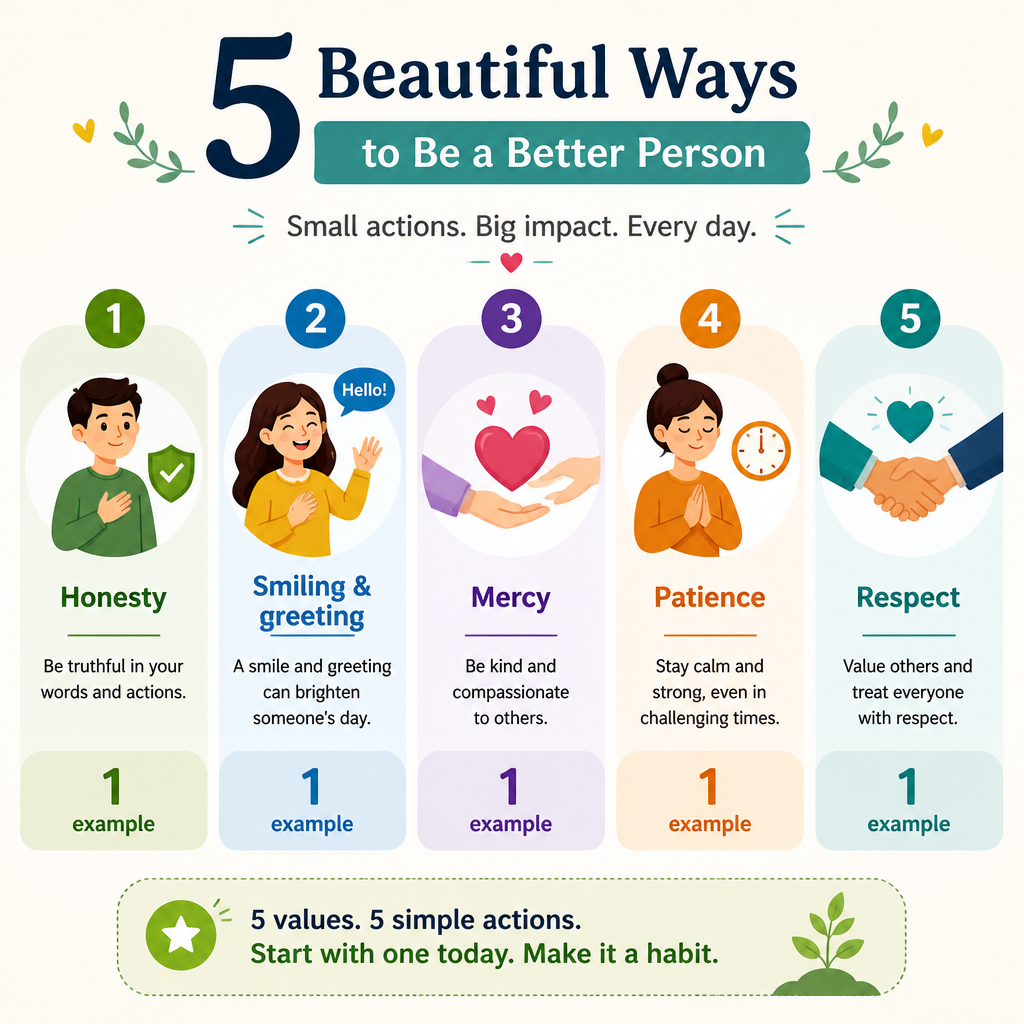
Examples of character as worship
- Honesty in transactions and conversation.
- Smiling and greeting others with warmth.
- Mercy to those in pain.
- Patience during stress and disagreement.
- Respect to elders and kindness to the young.
When you view character as worship, you realize you can earn Allah’s pleasure in countless moments—not only during formal acts of worship.
12. Conclusion: A Path to Jannah Through Good Muslim Character
Being a positive muslim role model means building good muslim character that reflects Quran and Sunnah in every relationship—yourself, your family, your community, your workplace, and your learning.
Begin with the ultimate example: Prophet Muhammad (PBUH) (Quran 33:21). Then make self-evaluation your habit. Connect deeply with Allah through prayer and Quran. Purify the inner self with modesty, patience, chastity, and humility. And reflect faith outward through truthfulness, mercy, forgiveness, and trustworthy speech.
Do this consistently, with sincerity, and your life becomes a signpost toward Allah—one that points others toward Islam and, by Allah’s mercy, a path toward Jannah.