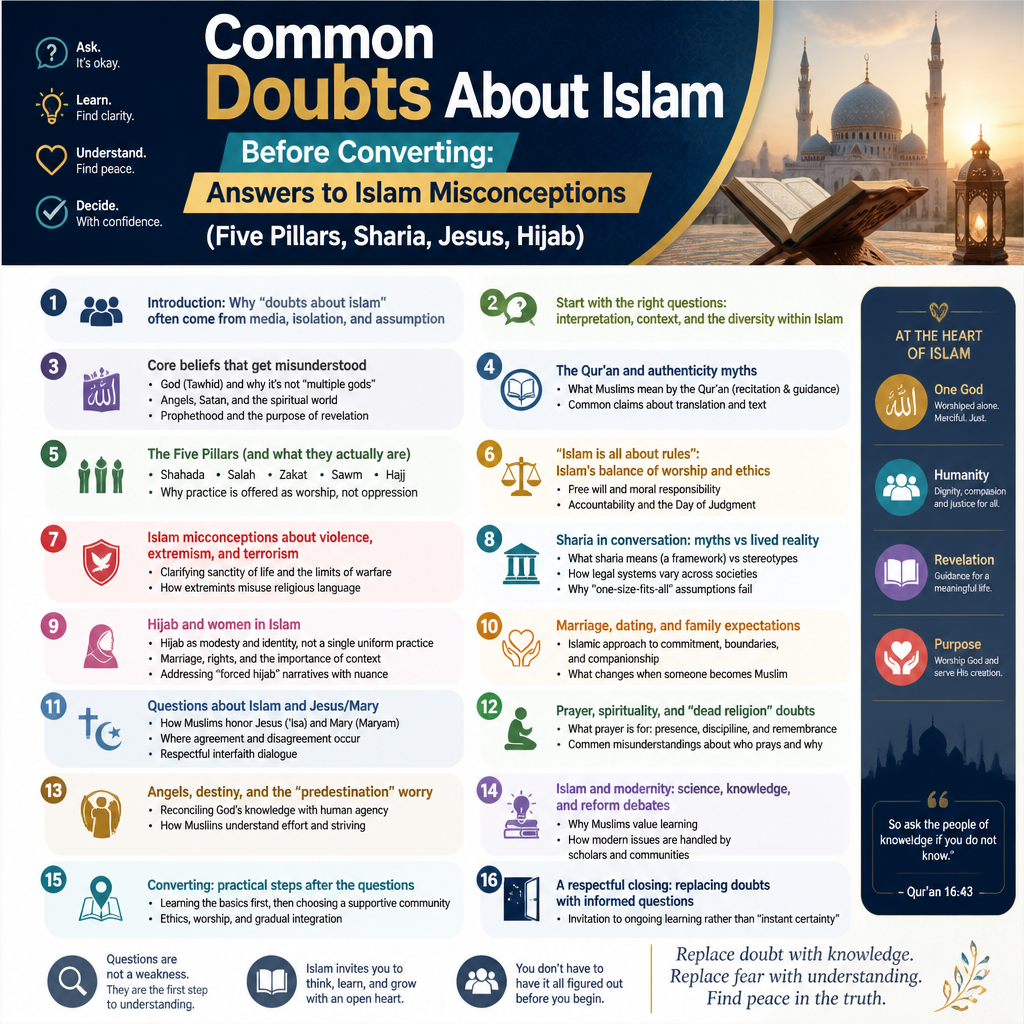
Introduction: Why “doubts about islam” often come from media, isolation, and assumption
Many people who are considering conversion don’t start with hatred or fear—they start with questions. If you have doubts about islam, that can be a sign of conscience: you want to understand what you’re embracing, not just react to slogans.
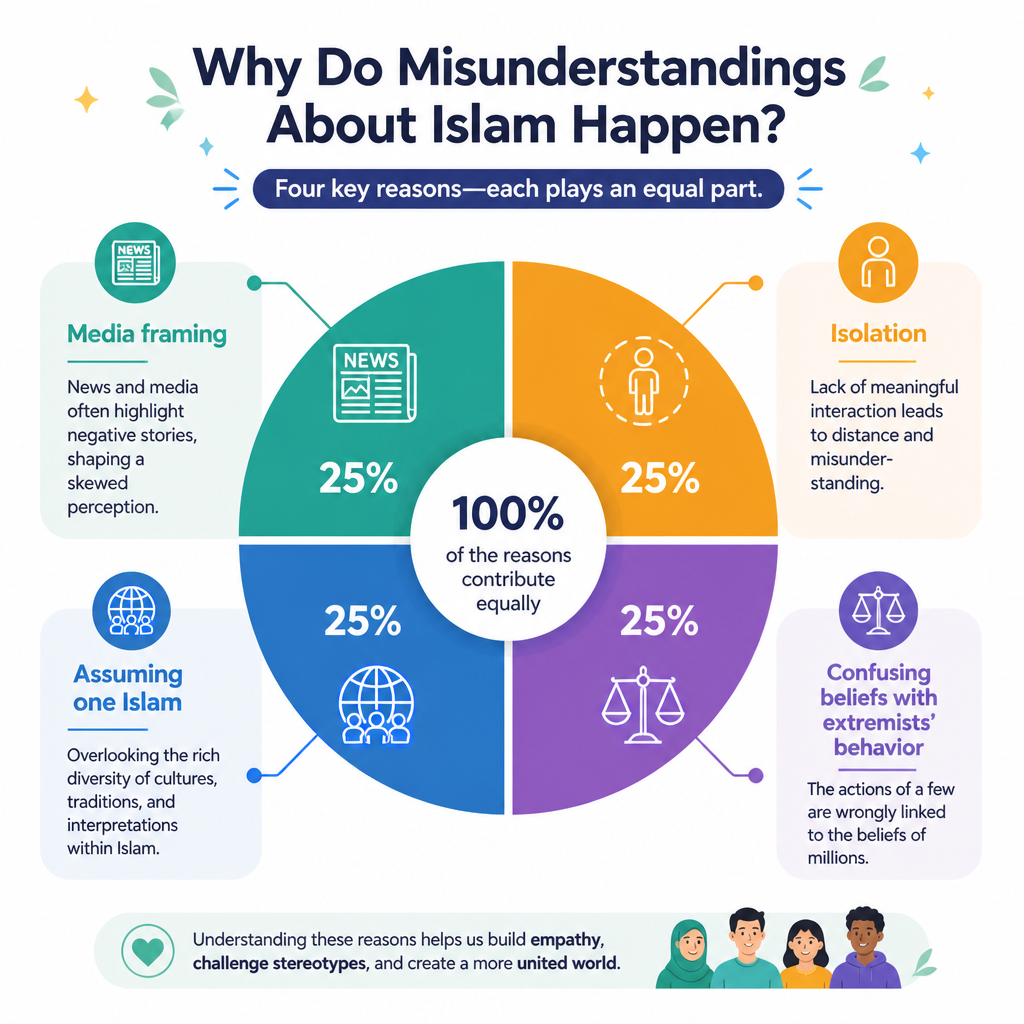
But doubts often form in predictable ways:
- Media framing: a few sensational clips can create sweeping conclusions about an entire religion.
- Isolation: learning about Islam only through debates (instead of through Muslims’ lived experience) can distort the picture.
- Assuming “one Islam”: Islam is practiced across many cultures and schools of thought, so stereotypes miss the real diversity.
- Confusing beliefs with extremists’ behavior: violence committed in a religion’s name is not proof the religion teaches violence.
In this article, we’ll address the most common islam misconceptions and questions about islam—clearly, respectfully, and with context.
Start with the right questions: interpretation, context, and the diversity within Islam
Before diving into topics like sharia or hijab, it helps to ask: What do Muslims mean by these words? and How are these teachings understood across different communities?
Islam contains a wide range of interpretations—scholars differ on details, and communities differ in how they apply principles. That doesn’t mean Islam is incoherent; it means people are applying guidance to real life using knowledge, learning, and humility.
Core beliefs that get misunderstood
1) God (Tawhid): it’s not “multiple gods”
A frequent doubt about islam is: “Isn’t Islam polytheistic?” In Islam, the concept of Tawhid means absolute oneness of God. Muslims do not worship multiple gods; they worship one Creator.
Some non-Muslims confuse Islamic language about God with images of “Gods” in other traditions. Muslims also use revered names and attributes for God, but that is not the same as worshipping other beings. Islam emphasizes that God is unique, not comparable, and worthy of worship alone.
2) Angels, Satan, and the spiritual world
Islam teaches that there is an unseen realm: angels carry out God’s commands, and humans are not alone in the story of morality. Satan (often discussed as Shaytan) is described as a tempter, not a rival deity.
A helpful way to frame this: Islam is both realistic and moral. It acknowledges human weakness and insists that guidance exists—through revelation, conscience, and accountability.
3) Prophethood and the purpose of revelation
Another common question about islam is whether Islam “replaces” previous prophets. Muslims believe God sends guidance through messengers to correct human distortion and remind people of worship, ethics, and the straight path.
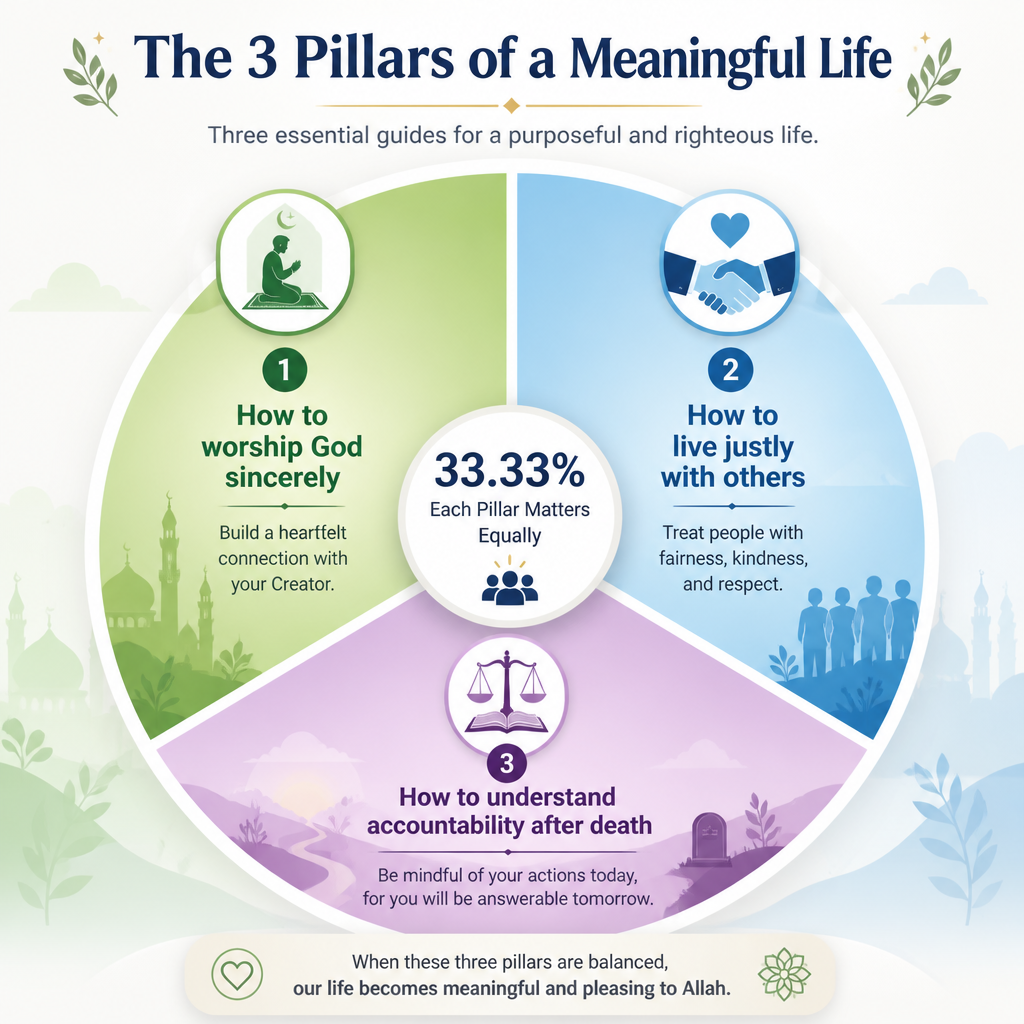
Prophethood in Islam is not random; it’s purposeful. Revelation addresses:
- How to worship God sincerely
- How to live justly with others
- How to understand accountability after death
The Qur’an and authenticity myths
4) What Muslims mean by the Qur’an (recitation and guidance)
Many Islam misconceptions start with misunderstanding the Qur’an itself. Muslims often describe the Qur’an with language of recitation and guidance. The Qur’an is not treated as a mere historical document; it is guidance for worship and daily life.
5) Common claims about translation and “changing the text”
It’s common to hear claims that the Qur’an is “corrupted” or unreliable. When people make such claims, they often compare translations (which are interpretations in another language) with the Arabic text (which Muslims memorize and recite).
Translation can never reproduce every nuance perfectly, so misunderstanding frequently happens when someone treats a translation controversy as if it were about the original scripture.
If you’re investigating, look for explanations that distinguish between:
- Arabic wording
- Translation work
- Different scholarly discussions
The Five Pillars (and what they actually are)
6) Worship as a structured relationship—not oppression
A common doubt about islam is that Islam is “just rules.” The Five Pillars are often misunderstood in exactly this way.
The Five Pillars are worship acts that shape a Muslim’s connection with God and with community:
- Shahada (testimony of faith)
- Salah (five daily prayers)
- Zakat (charitable giving)
- Sawm (fasting in Ramadan)
- Hajj (pilgrimage to Makkah for those able)
Why does Islam emphasize practice? Because worship isn’t only “belief in the head”—it’s discipline for the heart and ethics for the whole life.
“Islam is all about rules”: Islam’s balance of worship and ethics
7) Free will and moral responsibility
People sometimes hear about God’s knowledge and conclude that humans cannot choose. But Islam teaches both:
- God’s perfect knowledge
- Human responsibility and effort
The result is accountability. You’re not expected to be forced into goodness. Instead, Islam invites real intention, sincere effort, and repentance.
8) The Day of Judgment and accountability
Islam’s moral framework includes the belief in a final reckoning. That belief isn’t meant to terrify people; it’s meant to awaken justice and hope—justice for the oppressed, accountability for wrongdoing, and meaning for suffering.
Islam misconceptions about violence, extremism, and terrorism
9) Clarifying sanctity of life and the limits of warfare
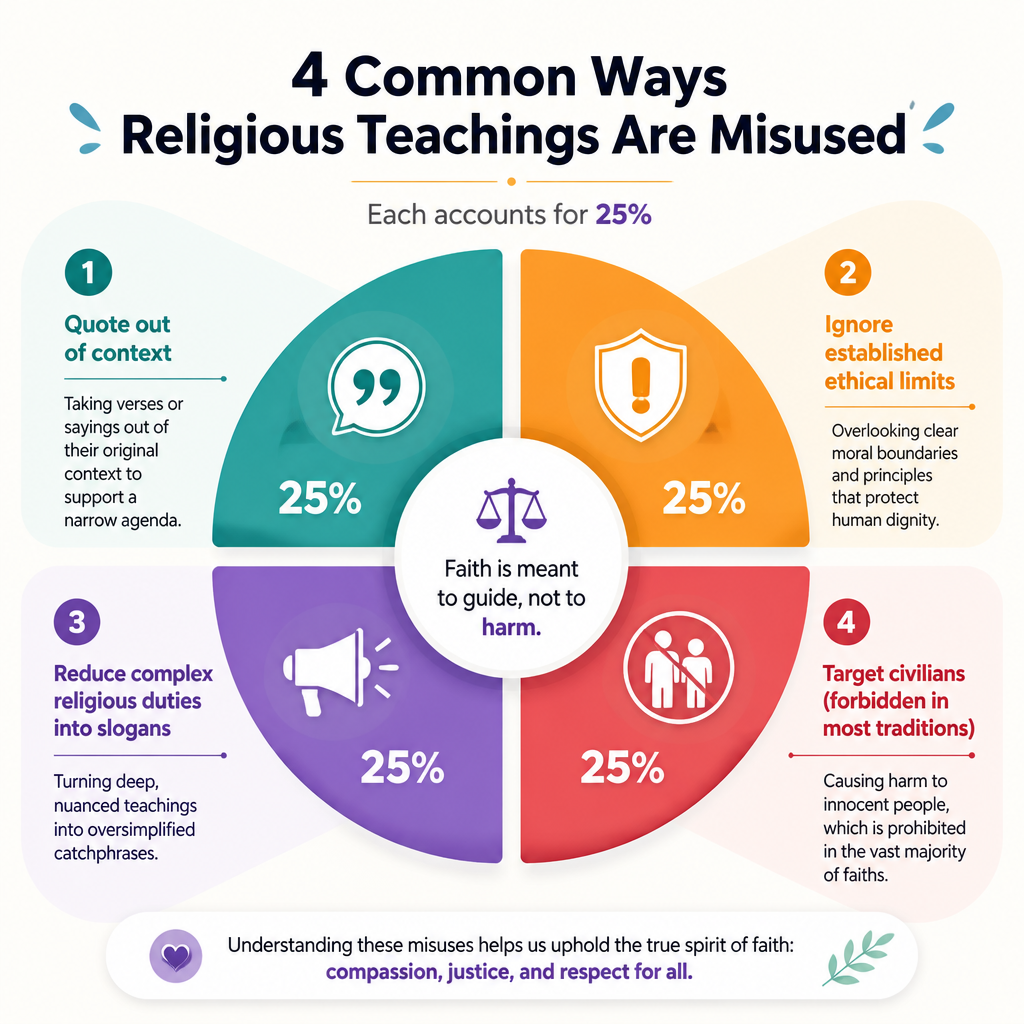
One of the most urgent questions about islam is violence. When you see extremist content online, it can feel like Islam “endorses” harm. But extremists often:
- Quote out of context
- Ignore established ethical limits
- Reduce complex religious duties into slogans
- Target civilians—something most Islamic legal traditions strongly forbid
Islam emphasizes the sanctity of life. Classical and contemporary scholars discuss warfare under strict conditions, with moral boundaries. Extremist propaganda usually aims to remove those boundaries.
10) How religious language is misused
Extremists often borrow sacred terms because sacred language increases fear and obedience. Islam, by contrast, trains believers to submit to God while protecting human dignity.
If you’re trying to reduce doubts about islam here, compare two things:
- What Islam teaches (through credible scholarship)
- What extremists do (through their actions and evidence)
Sharia in conversation: myths vs lived reality
11) What sharia means (a framework) vs stereotypes
“Sharia” is frequently misunderstood. Some people treat it as a single harsh code applied instantly everywhere. In reality, sharia refers to the guidance and principles derived from Islam—used for ethics, worship, and law in various ways depending on time and society.
Islamic legal thought is not one-size-fits-all; it includes different schools, different methods of reasoning, and debates about how to apply principles responsibly.
12) Legal systems vary across societies
Where Muslims live, the state’s legal structure differs. Some societies incorporate Islamic principles more directly, while others use mixed systems. This means stereotypes often fail because they ignore real-world complexity.
13) Why “one-size-fits-all” assumptions fail
If you heard about sharia from political speeches or viral posts, you may have heard a worst-case narrative. A better approach is to ask:
- What does sharia mean in theory?
- How have Muslim scholars historically applied legal principles?
- How do current communities interpret and implement guidance?
That shift—from rumor to scholarship—is one of the most powerful ways to replace islam misconceptions with informed understanding.
Hijab and women in Islam
14) Hijab as modesty and identity, not a single uniform practice
Questions about hijab and women in Islam are some of the most sensitive—and also the most misunderstood.
In general terms, hijab refers to modesty in dress and behavior. But modest practice varies among individuals and cultures. Islam’s emphasis is not simply on clothing; it’s on values: dignity, privacy, and respectful interaction.
15) Marriage, rights, and the importance of context
Women’s rights in Islam are complex, historical, and often debated. A fair investigation compares:
- Islam’s legal and ethical teachings
- How those teachings were interpreted in specific places and times
- How modern scholars address current challenges
When people speak as if Islam treats women as property, they usually ignore legal reforms and protections that Islamic jurisprudence includes in many contexts.
16) Addressing “forced hijab” narratives with nuance
Sadly, coercion exists in some societies—just like coercion has existed in other religions and cultures. But coercion is not automatically proof that a religion’s teachings require coercion.
A more accurate approach is to separate:
- Religious ideals
- Political enforcement
- Local cultural practices
Marriage, dating, and family expectations
17) Commitment, boundaries, and companionship
People often wonder what changes when someone becomes Muslim. Islam generally encourages clear boundaries, seriousness, and responsibility when forming relationships. Many Muslims value:
- Honest intention
- Respectful communication
- Family involvement (in many cultures)
Islam doesn’t aim to destroy love; it aims to protect it from harmful patterns and to align relationships with long-term responsibility.
18) What changes practically
For converts, the practical shift often looks like this:
- Choosing halal (lawful) ways of living
- Learning Islamic norms for marriage
- Communicating with family about expectations and beliefs
Conversion can be challenging, but it can also bring clarity and structure.
Questions about Islam and Jesus/Mary
19) How Muslims honor Jesus (‘Isa) and Mary (Maryam)
For interfaith seekers, it’s natural to ask about Jesus and Mary. Muslims honor both Jesus (‘Isa) and Mary (Maryam) with deep respect in scripture and devotional life.
However, Muslims and Christians also disagree on theological conclusions about who Jesus is in relation to God. A respectful discussion focuses on:
- What each tradition teaches
- Where they agree (reverence for prophets)
- Where they differ (doctrinal points)
20) Respectful interfaith dialogue
If you’re comparing beliefs, try to avoid “strawman” arguments. Instead of asking, “Who is wrong?” begin with, “What does each tradition mean by its words?”
Prayer, spirituality, and “dead religion” doubts
21) What prayer is for: presence, discipline, and remembrance
Some people assume prayer is empty ritual. But in Islam, prayer is meant to build real remembrance of God and to shape character over time.
Prayer provides rhythm: it reminds a believer that life is more than impulse. It creates pauses for reflection, humility, and gratitude.
22) Common misunderstandings about who prays and why
Prayer is not performed only by clergy. Muslims of different backgrounds pray. Even those who struggle spiritually are taught to return, learn, and keep going.
Angels, destiny, and the “predestination” worry
23) Reconciling God’s knowledge with human agency
Islam acknowledges that God knows everything, yet Islam also emphasizes human striving. This creates a tension that philosophers discuss, and believers live through practice.
In everyday terms: God’s knowledge doesn’t cancel your responsibility. Islam calls you to choose good actions and sincere intentions.
24) Effort and striving (not excuses)
If you worry you’ll be “stuck” because of destiny, Islam redirects that fear into hope: people are accountable, and they can grow. A major theme in Islamic spirituality is returning to God through repentance and improving one’s conduct.
Islam and modernity: science, knowledge, and reform debates
25) Why Muslims value learning
One surprising reality is that many Muslims take learning very seriously—religious and worldly knowledge alike. Historically, Islamic civilization contributed to mathematics, medicine, astronomy, and philosophy.
26) How modern issues are handled by scholars and communities
Modern questions—technology, finance, medicine, family law—are addressed through scholarship, interpretation, and ethical reasoning. This is not “blind tradition”; it’s guidance applied with thought.
Converting: practical steps after the questions
27) Learn the basics first, then choose a supportive community
If you want to convert responsibly, don’t rush past the questions. A practical path usually looks like:
- Learn the core beliefs (God, prophets, scriptures, accountability)
- Understand basic worship (especially prayer and fasting)
- Ask local Muslims about how they learn and grow
Then find a community—mosque, study group, or trusted teacher—where you can ask questions without mockery.
28) Gradual integration: ethics, worship, and a learning mindset
Converts often start where they are. You don’t become perfect instantly; you become sincerely committed to learning. Many Muslims will understand that your first months are a process of building habits.
A respectful closing: replacing doubts with informed questions
It’s okay to have doubts about islam before converting. In many cases, doubt is the beginning of sincere inquiry. The goal is not “instant certainty”; the goal is informed understanding.
If you want to keep moving forward:
- Ask questions directly to credible scholars or local Muslims.
- Study topics you’ve heard misrepresented (Five Pillars, sharia, hijab, Jesus/Mary).
- Evaluate claims based on evidence and context—not virality.
Quick resource (recommended)
Islamic Networks Group (ING): Answers to Frequently Asked Questions About Islam and Muslims. This resource addresses many common islam misconceptions with clear, accessible explanations and emphasizes diversity of interpretation.
Conclusion
If you’ve been searching for answers, you’re already taking a serious step. “Doubts about islam” can be replaced—over time—by learning what Muslims actually believe and how they live. If you keep asking informed questions, you’ll find that Islam is far more nuanced than the stereotypes you may have encountered.