
Misunderstood Muslim Stereotypes: How Public Perception of Islam Gets It Wrong—and How to Respond
It’s easy to absorb muslim stereotypes from headlines, TV dramas, or social media clips—and then assume those impressions explain real life. But stereotypes don’t just misdescribe Muslim people; they also shape public perception islam in ways that can influence how neighbors treat each other, how schools teach, and even how policies are supported.
This article separates portrayals from people. We’ll look at common myths (who Muslims “are,” what Islam “teaches,” and whether Muslims “belong”), then connect those myths to research findings on media effects and public attitudes. Finally, we’ll offer practical steps for responding as a neighbor, educator, or reader.

1) Why “muslim stereotypes” persist in society
Muslim stereotypes persist because they are:
- Simple: One label is easier than learning about diverse communities.
- Repeatable: Media and politics recycle the same storylines and assumptions.
- Emotional: Fear-based framing travels faster than nuanced explanation.
- Reinforced by distance: When many people know no Muslims personally, assumptions fill the gap.
In practice, that means the most visible examples—whether extremist acts, conflict news, or a single TV character—can become “evidence” for how all Muslim people should be understood.
2) Separate people from portrayals: “public perception islam” vs lived reality
A helpful rule of thumb is to distinguish between:
- Public perception islam: what people think based on stories, images, and repeated claims.
- Lived reality: what Muslim individuals and communities actually believe and do day to day.
Those two don’t always match. And when public perception is driven by stereotypes, it can lead to unfair suspicion—hurting relationships and limiting opportunities.
3) Myth vs fact: who Muslims are
Myth: “All Muslims are Arab or Middle Eastern.”
Fact: Muslims are a global population with diverse ethnicities, languages, and histories. According to ADL’s research summary on myths and facts, Muslims worldwide number around 1.8 billion. The United States has a Muslim population of about 3.45 million.
Critically, only about 20% of Muslims live in the Middle East. That means the stereotypical “Arab/Middle Eastern = Muslim” equation is not only inaccurate—it erases the majority of Muslim communities.
What this looks like on the ground: Muslim Americans include people whose families arrived generations ago, as well as recent immigrants. Muslim communities can be South Asian, African, Southeast Asian, European, Caribbean, and more.
Myth: “Muslims don’t really live in the U.S.”
Fact: Muslims have a growing presence in the U.S. Pew Research reports that since 2007 the Muslim adult population increased (for example, from about 2.35 million in 2007). Pew also notes that mosques more than doubled, reaching 2,769 by 2020.
In other words, Muslim life is not “far away.” It is local—at schools, workplaces, neighborhoods, and places of worship.
4) Myth vs fact: Islam and violence
Myth: “Islam is a violent religion.”
Fact: Extremist violence is real, and it deserves condemnation. But treating that violence as evidence that Islam itself endorses terrorism is a category error.
ADL’s myths-and-facts overview emphasizes that the overwhelming majority of Muslims reject extremism. Many Muslim leaders and communities condemn terrorism. Yet the public often sees a distorted pattern: extremist acts receive intense coverage, while the majority’s rejection of violence is far less visible.
Why hate incidents can rise even when hate crimes change
Even when broader hate-crime trends fluctuate, people can still experience heightened fear or targeted harm. ADL notes that hate crimes targeting Muslims increased (for example, from 135 to 154 during the 2013–2014 period mentioned in their summary), illustrating how stereotypes can produce real-world hostility.
So the key point is this: public perception islam can remain fear-driven long after “the facts” would suggest a more balanced understanding.
5) Myth vs fact: patriotism and belonging
Myth: “Muslims can’t be patriotic Americans.”
Fact: Many Muslim Americans strongly identify with the country they live in. ADL’s research summary highlights that Muslims serve in all sectors of public life, including the U.S. military and political leadership.
It’s also common for stereotypes to rely on a hidden assumption: if someone’s faith is Muslim, they must have “divided loyalties.” In reality, loyalty to family, community, and country is not cancelled out by religion.
6) Myth vs fact: women, family, and freedom
Myth: “Islam oppresses women.”
Fact: Stereotypes about women often ignore how Islamic texts and traditions are discussed and lived across cultures. ADL notes that the Quran is discussed in ways that support equality, and that Muslim women make varied choices—some wear hijab, others do not, and many engage in education, work, and community leadership.
ADL’s overview also references examples of Muslim-majority societies with female heads of state, which contradicts the blanket claim that Muslim cultures cannot support women’s leadership.
In short: generalizations about women erase both diversity and the ways Muslim communities interpret and apply religious values.
7) The media factor: how entertainment shapes attitudes
One reason stereotypes persist is that entertainment can normalize certain impressions. To understand this, consider experimental research summarized by ISPU (Islamic Sharia Policy?). Their report, Stereotypes on Screen, studied how different TV portrayals affect viewers.
What the research found
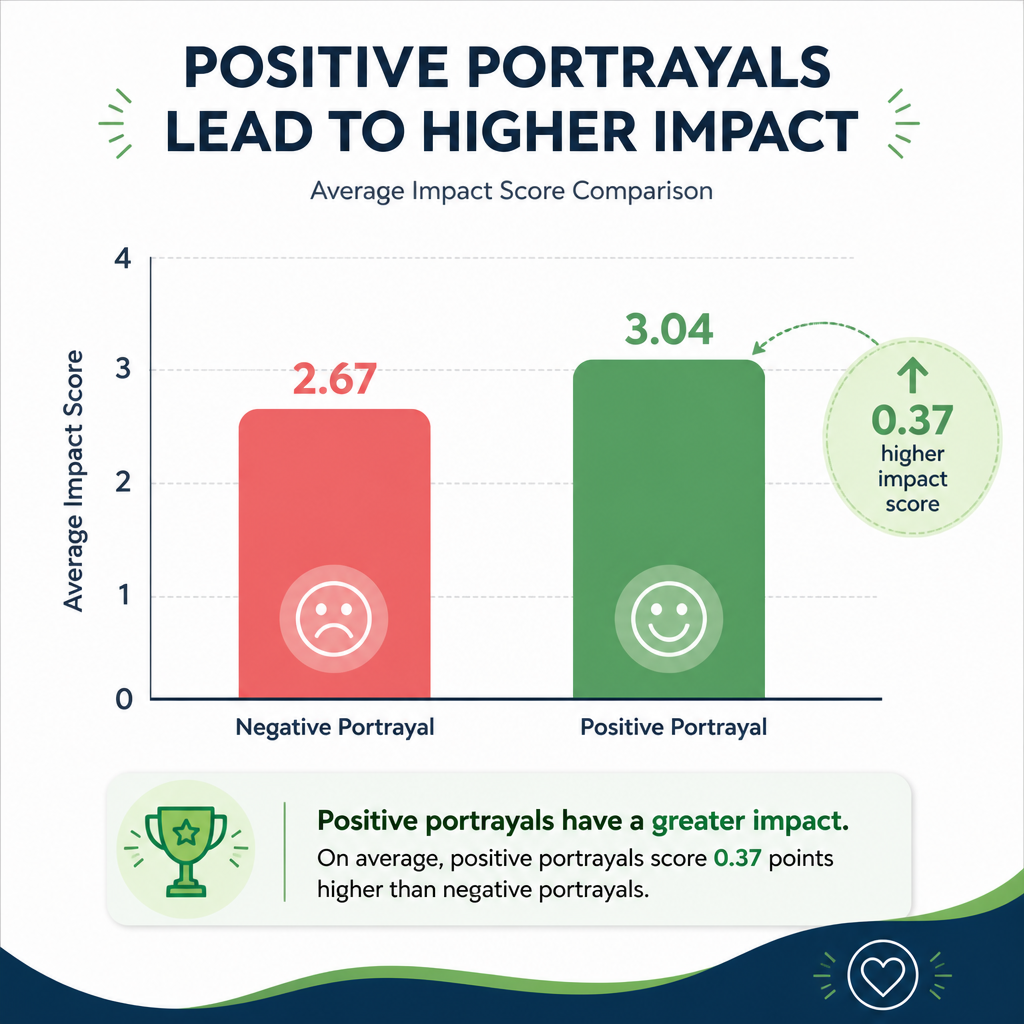
- Positive depictions reduce support for anti-democratic and anti-Muslim policies compared to negative portrayals.
- Positive portrayals increase warmth and identification, and decrease social distancing and the sense of symbolic threat.
- Key coverage pattern: terror attacks by Muslim extremists can receive disproportionate attention compared to the communities’ everyday realities.
In one summarized comparison, policy support averages differed between negative and positive viewing groups (for example, M=2.67 vs M=3.04 in the report’s summary). Warmth also differed (for example, M=65.02 vs M=60.34).
Importantly, the direction of effect matters: what viewers watch can influence how they feel and what they support.
8) The public sphere and discrimination experiences
Stereotypes don’t live only in imagination—they connect to experiences. Pew Research reports that 48% of Muslim adults reported experiencing discrimination in 2017 (as summarized in their analysis of public attitudes).
That matters because discrimination is not merely personal; it can shape trust, community safety, and willingness to engage publicly.
Why “not knowing anyone” fuels stereotypes
Pew also notes that 53% of Americans say they know no Muslims personally. When personal contact is absent, people are more likely to rely on stereotypes, news cycles, and secondhand stories.
So one practical lesson follows naturally: humanizing knowledge is a counterforce to stereotype-based thinking.
9) Partisan polarization: Islam and violence beliefs across political groups
Another reason stereotypes persist is political polarization. Pew’s research highlights that Republicans and Democrats differ in the extent to which they link Islam to violence (with Republicans more likely to make that connection, while Democrats are less likely—based on Pew’s summarized findings).
When beliefs align with party narratives, even factual corrections can struggle to change minds. That’s why respectful, evidence-based conversation is often more effective than direct confrontation.
10) Practical ways to respond as a neighbor, educator, or reader
You don’t need to become an expert on Islam to challenge stereotypes. But you do need strategies that reduce harm and increase understanding.
As a neighbor or coworker
- Ask better questions: “Where did you hear that?” “Is that describing a whole group or an extremist fringe?”
- Use “person-first” language: talk about individuals and communities, not labels.
- Notice overgeneralization: one incident ≠ a whole religion.
As an educator
- Separate religion from politics: teach that Muslim identity is diverse and cannot be reduced to current events.
- Use credible sources (and show students how stereotypes form): reference research summaries like ADL’s myths and facts and peer-reviewed media studies when possible.
- Build media literacy: help students recognize how repeated images can shape “common sense.”
As a reader and media consumer
- Balance your feed: seek stories that show daily life and community variety, not only conflict.
- Look for context: ask what proportion of an issue you’re seeing and what’s missing.
- Prefer measured claims: “some extremists” over “Islam causes…”
11) Toward a more accurate, humane public perception of Islam
Correcting muslim stereotypes is not about insisting everyone “must think the same.” It’s about making sure public perception is grounded in reality.
When we compare myths to evidence—global Muslim diversity, the majority rejection of extremism, real experiences of discrimination, and research on media portrayal—we see a clear conclusion:
Public perception islam improves when we replace fear-driven generalizations with context, contact, and credible information.
If you want to start small, choose one stereotype to challenge this week. Not with anger, but with facts, questions, and human respect.
References (Top sources used)
- ADL. Myths and Facts about Muslim People and Islam. https://www.adl.org/resources/tools-and-strategies/myths-and-facts-about-muslim-people-and-islam/archived
- ISPU. Stereotypes on Screen: The Effects of Muslim Portrayals in Entertainment Media. https://ispu.org/research-areas/stereotypes-on-screen-report/
- Pew Research Center. Muslims are a growing presence in U.S., but still face negative views from the public. https://www.pewresearch.org/short-reads/2021/09/01/muslims-are-a-growing-presence-in-u-s-but-still-face-negative-views-from-the-public/