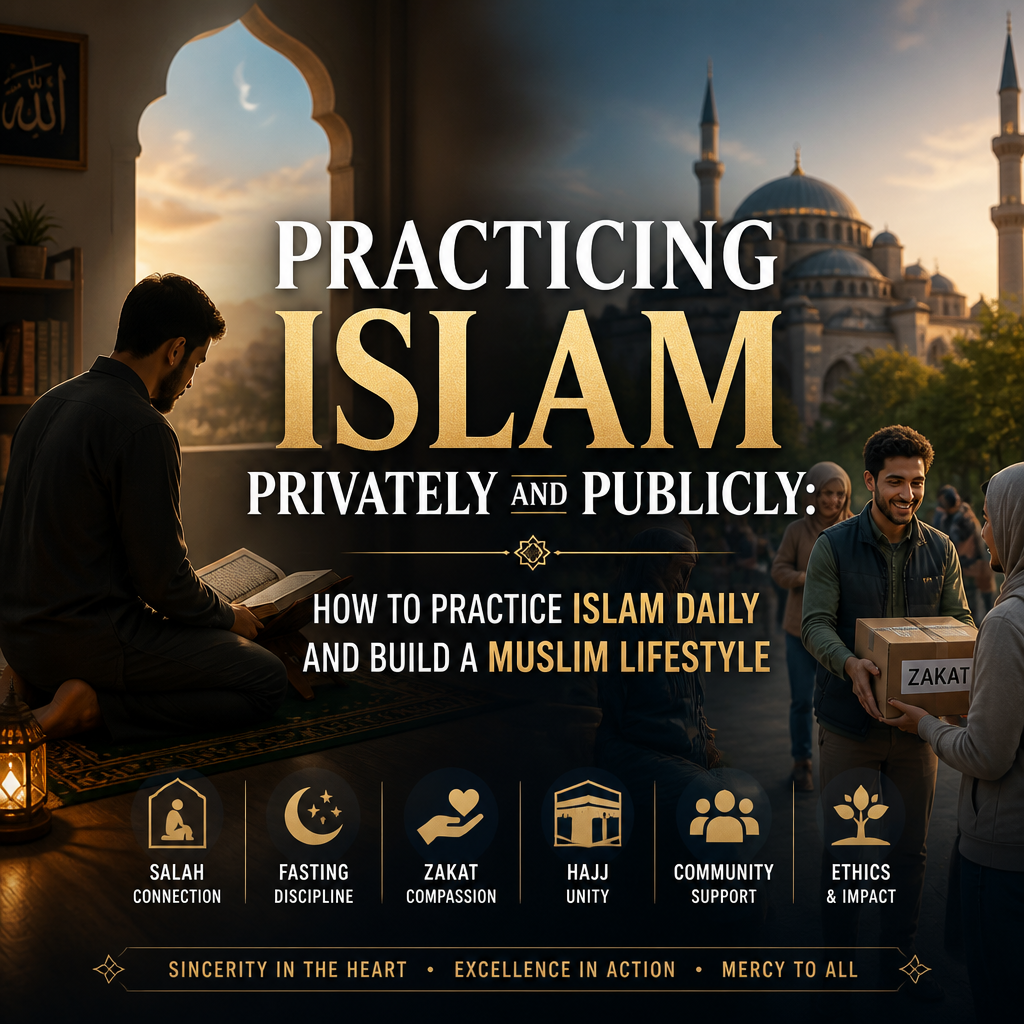
1. Introduction: One Faith, Two Arenas—Private Heart and Public Life
To practice Islam daily is not only to “do religious tasks.” It is to let faith shape your whole muslim lifestyle: your private heart when no one is watching, and your public life when your choices are visible. Islam is intentionally built with this balance. Some acts of worship happen quietly between you and Allah. Others happen in community, with other people seeing—and being influenced by—your manners, discipline, and compassion.
When you understand both arenas, consistency becomes clearer. You don’t wait for the “right mood” or perfect circumstances—you create a rhythm that carries your worship from your home into your daily interactions.
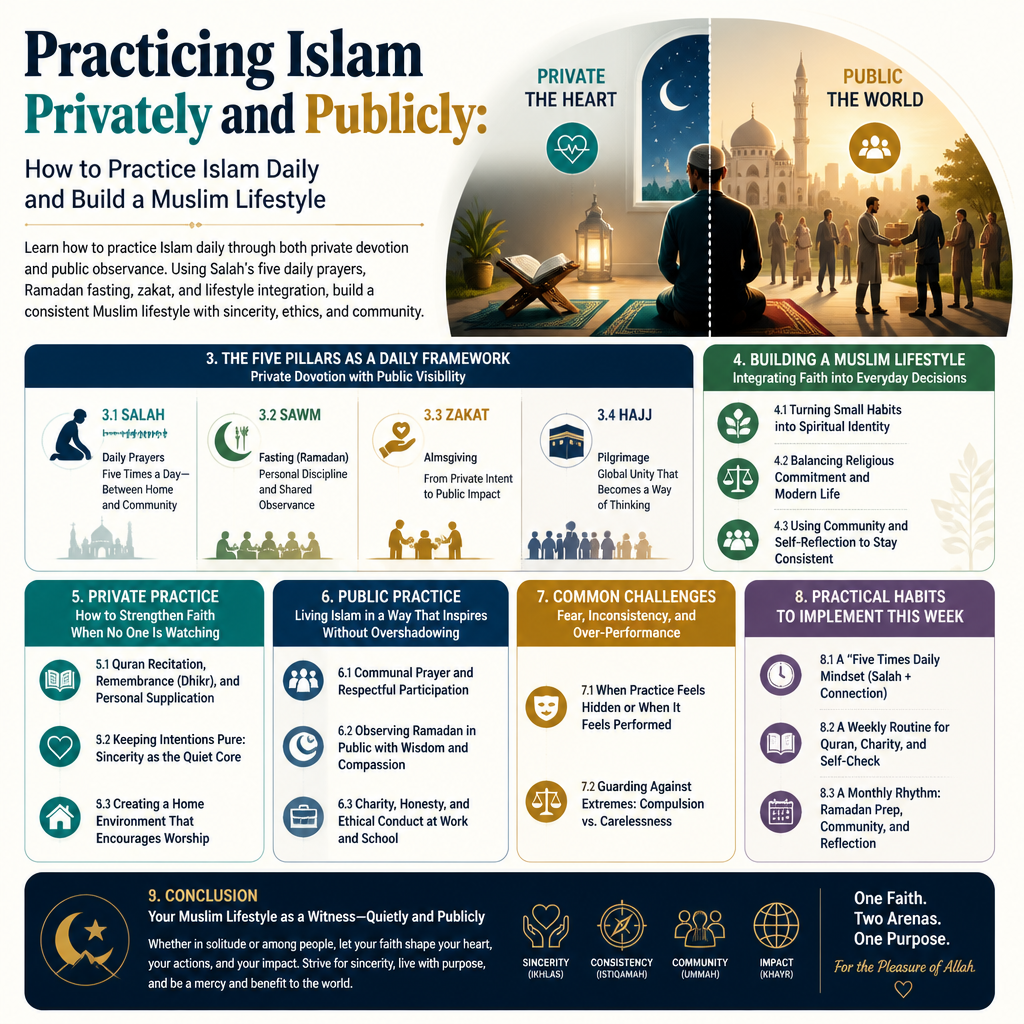
2. What Counts as “Practicing Islam Daily” (and Why It Matters)
“Practicing Islam daily” means turning belief into ongoing habits. At minimum, it centers around the commitments many Muslims call the Five Pillars: daily prayer (Salah), fasting (Sawm), charity/obligatory giving (Zakat), and pilgrimage (Hajj), along with Islamic faith and ethical living.
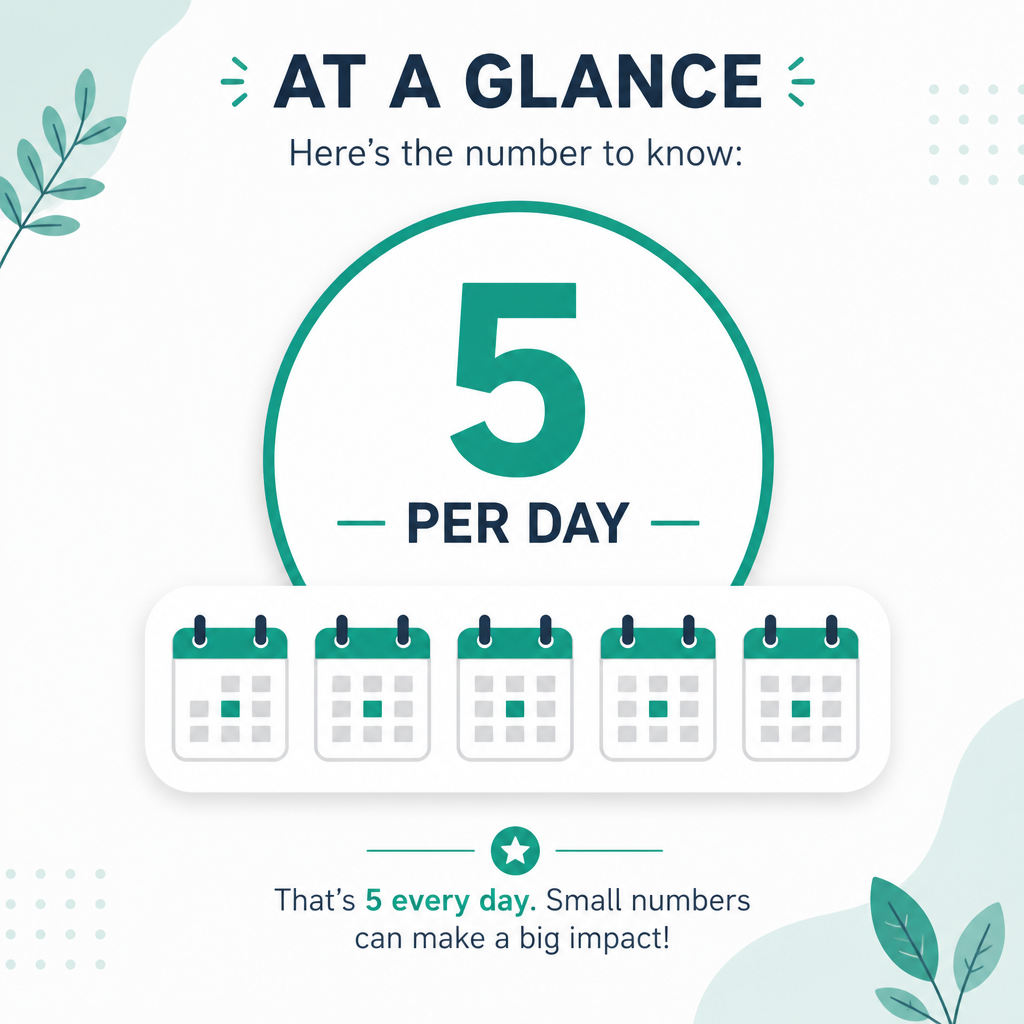
But daily practice is bigger than completing obligations. It includes:
- Intentions (niyyah): doing actions for Allah, not for appearances.
- Remembrance (dhikr): keeping Allah’s presence real throughout the day.
- Character: honesty, kindness, patience, and justice in how you speak and work.
- Consistency: returning to worship even when life gets busy or you slip.
In a world where faith can be treated like a part-time hobby, daily practice protects your identity. It becomes the spiritual “base layer” that steadies every other layer of life—school, work, family, and community.
3. The Five Pillars as a Daily Framework: Private Devotion with Public Visibility
The Five Pillars structure Muslim life in a way that naturally connects the private and public dimensions. They train the soul, discipline the body, and also create visible rhythms that others recognize.
3.1 Daily Prayers (Salah): Five Times a Day—Between Home and Community
Salah is often described as the most practical daily “connection” between worship and routine. Muslims pray five times daily, and each salah can be performed with sincerity in private, but it also has a public/communal dimension—especially when prayer is offered in congregation.
Private angle: Salah anchors you when you’re alone. You stand, bow, and prostrate not to perform for people, but to remember Allah constantly. Even when nobody sees you, your relationship with Allah becomes real.
Public angle: Salah in congregation trains unity and respect. It places faith into shared space—masjids, prayer areas at school, or community gatherings—where your discipline becomes a quiet message.
How to practice Islam daily through Salah:
- Choose a consistent time window for preparation (wudu, clothing, mindset).
- If you miss a prayer, return immediately—don’t delay in shame.
- During the pause between salah times, do short dhikr and reflect on what you’re about to do.
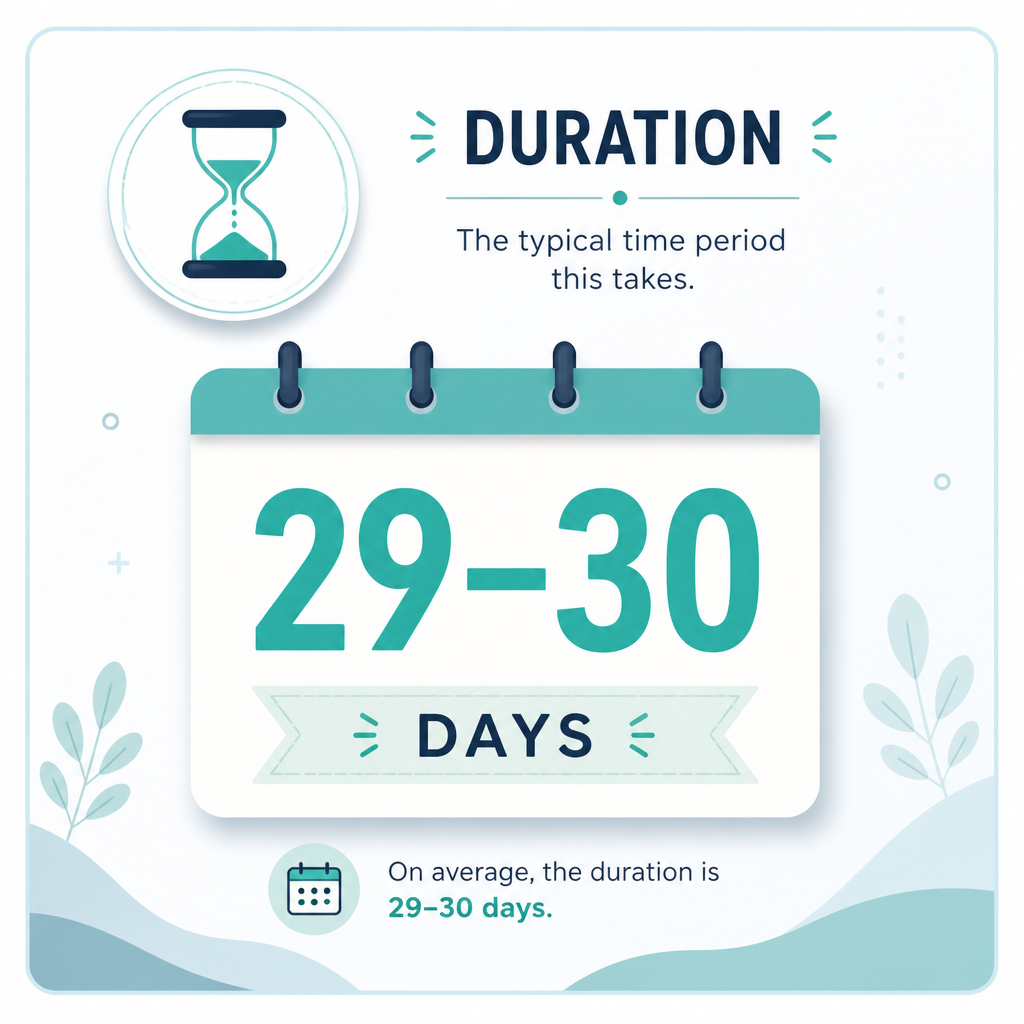
3.2 Fasting (Sawm): Ramadan’s Personal Discipline and Shared Observance
Fasting is private in its inner discipline, but public in its collective impact. During Ramadan, Muslims typically fast for 29–30 days depending on the lunar cycle.
Private angle: The essence of fasting is restraint for Allah—controlling appetite and behavior, strengthening self-awareness, and leaning on dua.
Public angle: Ramadan changes the atmosphere of neighborhoods and workplaces. It teaches patience, empathy, and sensitivity to others’ hunger and fatigue. It’s also a month when community bonds intensify.
Wisdom for balance: You can observe Ramadan with visible dignity—without turning it into self-promotion. Your restraint becomes a lesson to others only when paired with good manners.
3.3 Almsgiving (Zakat): From Private Intent to Public Impact
Zakat begins in the heart—your intention, your awareness of what you owe—but it lands in the community. It turns wealth into responsibility.
Private angle: Zakat is not “charity to feel good.” It is worship. It trains your soul to detach from excess and remember that provision comes from Allah.
Public angle: Giving supports those in need, reduces injustice, and strengthens social trust. The act is visible even when the giver’s identity is not.
Practice tip: Track your giving like you track your obligations—so it remains consistent, not occasional.
3.4 Pilgrimage (Hajj): Global Unity That Becomes a Way of Thinking
Hajj is not part of every day, but it reshapes the daily mindset of a Muslim who prepares for it—or for those who already completed it.
Private angle: The inner transformation includes humility, repentance, and a renewed focus on worship.
Public angle: Hajj demonstrates one ummah (community) across languages, cultures, and backgrounds. That unity teaches Muslims to avoid superiority and embrace brotherhood.
Even when you’re not on pilgrimage, you can live its lesson: treat others with respect and remember that Allah’s honor is the real measure of status.
4. Building a Muslim Lifestyle: Integrating Faith into Everyday Decisions
A true muslim lifestyle is not limited to the masjid calendar. It influences everyday choices: how you speak, what you buy, how you manage time, and how you treat people at work, at school, and at home.
Guides to “being Muslim” as a lifestyle often emphasize a simple principle: faith should permeate all aspects of life rather than remain compartmentalized. Small consistent habits build identity over time.
4.1 Turning Small Habits into Spiritual Identity
You don’t need dramatic changes to begin. Focus on small actions that repeatedly remind you of Allah:
- Start daily tasks with a brief remembrance.
- Keep your phone and social media use aligned with your values (avoid harmful content, be mindful with time).
- Make your meals and routines intentional—gratitude is worship.
4.2 Balancing Religious Commitment and Modern Life
Modern life can make worship feel “scheduled” rather than lived. Balance comes from integrating Islam into your routine:
- Plan around salah times rather than squeezing worship after everything else.
- Use commutes, breaks, or waiting times for short Quran reading and dua.
- Let halal and ethical decision-making guide purchases, work choices, and relationships.
This approach prevents religion from becoming guilt and instead turns it into structure.
4.3 Using Community and Self-Reflection to Stay Consistent
Consistency improves when you don’t practice in isolation. Community provides reminders, support, and shared rhythms. Self-reflection prevents you from drifting.
Try this weekly check-in:
- What did I do for Allah recently (not just what I attended)?
- Where did my character fall short?
- What’s one habit I can improve this week?
5. Private Practice: How to Strengthen Faith When No One Is Watching
Private worship is where sincerity is protected. It’s also where you build spiritual strength so public practice doesn’t become fragile.
5.1 Quran Recitation, Remembrance (Dhikr), and Personal Supplication
When you’re alone, you can make worship personal:
- Read a small amount of Quran daily (even 5–10 minutes).
- Do dhikr after salah and before sleep.
- Make dua specific: ask for guidance in your real struggles.
Private practice turns Islam into a living relationship rather than a daily checklist.
5.2 Keeping Intentions Pure: Sincerity as the Quiet Core
A big challenge in modern life is performing goodness. The solution is to check your intention often:
- Before acts of worship, ask: “Am I doing this for Allah?”
- Before helping others, ask: “Am I expecting praise?”
If your intention is sincere, your private worship becomes a shield against hypocrisy.
5.3 Creating a Home Environment That Encourages Worship
Your home strongly influences consistency. Practical steps include:
- Keep prayer items (or a small prayer space) ready.
- Reduce distractions during prayer times.
- Encourage family routines: Quran time, reminders, and respectful Islamic etiquette.
6. Public Practice: Living Islam in a Way That Inspires Without Overshadowing
Public practice is not about standing on a platform. It’s about embodying Islam with wisdom—so your faith is seen through your conduct.
6.1 Communal Prayer and Respectful Participation
When you pray with others, your manners matter:
- Be punctual and calm.
- Maintain cleanliness and respect for shared spaces.
- Assist others when possible—especially newcomers.
In public, your consistency becomes a form of da‘wah (invitation) through character.
6.2 Observing Ramadan in Public with Wisdom and Compassion
Ramadan is a test of self-control and empathy. A helpful approach is to:
- Be patient with those who are hungry or tired.
- Keep conversations respectful and avoid harshness.
- Make the environment kinder—Islam is not only abstaining from food; it’s also abstaining from harm.
6.3 Charity, Honesty, and Ethical Conduct at Work and School
If you want your muslim lifestyle to be real, it must appear in ethics. Practice Islam daily at work and school by choosing:
- Honesty in reports, assignments, and business dealings.
- Respect in speech—no slander, mocking, or humiliation.
- Fairness in teamwork and responsibilities.
Ethics is public worship. People may not always remember your words, but they notice your integrity.
7. Common Challenges: Fear, Inconsistency, and Over-Performance
Practicing privately and publicly is not always easy. Many people struggle for human reasons—fear, busyness, or uncertainty.
7.1 When Practice Feels Hidden or When It Feels Performed
Hidden struggle: Sometimes private worship can feel like it goes unnoticed, so motivation drops. Remember that Allah sees everything—private consistency is not “less valuable.”
Performed struggle: Sometimes public practice can feel like a stage. When that happens, return to private foundations: Quran, dhikr, and sincerity.
7.2 Guarding Against Extremes: Compulsion vs. Carelessness
Two extremes often appear:
- Compulsion: You try to force yourself with stress, leading to burnout.
- Carelessness: You delay worship until life becomes perfect—then you never start.
Islam calls you to a balanced path: consistent effort with mercy. Do what you can steadily, and build from there.
8. Practical Habits to Implement This Week (Daily Plan)
Here is a simple schedule designed to support both private devotion and public living.
8.1 A “Five Times Daily” Mindset (Salah + Connection)
- Before each salah: pause, make intention, and do basic dhikr.
- After each salah: recite a short dua or memorize a few verses over time.
- Between salah times: avoid one harmful behavior (lying, backbiting, wasting time).
8.2 A Weekly Routine for Quran, Charity, and Self-Check
- Quran: set a daily small target (5–15 minutes), or choose one consistent time.
- Charity: choose one weekly act—food for someone, help for a family, or planned giving.
- Self-check: once a week, review one flaw and one improvement.
8.3 A Monthly Rhythm: Ramadan Prep, Community, and Reflection
- Attend community gatherings when possible.
- Prepare for Ramadan in advance: schedule Quran time, plan healthier routines, and increase patience.
- Reflect: What kind of Muslim lifestyle do you want to build by next month?
9. Conclusion: Your Muslim Lifestyle as a Witness—Quietly and Publicly
To practice Islam daily is to build a muslim lifestyle that flows through two arenas: the unseen private world of sincerity and remembrance, and the visible public world of character, worship in community, compassion, and ethics.
When you ground yourself in Salah, Ramadan discipline, zakat responsibility, and Quran reflection, your faith becomes steady. And when that steadiness reaches other people—through honesty at work, kindness in conversations, and respectful participation in communal worship—you become a witness not by claiming authority, but by living Islam with consistency.
Start small, stay sincere, return after mistakes, and let your daily habits quietly shape who you are.
References (Top Resources Used)
- Pluralism Project — Islamic Practices: https://pluralism.org/islamic-practices
- Amaliah — Back to Basics: Being Muslim a Lifestyle Guide Part 1: https://www.amaliah.com/post/47623/back-basics-muslim-lifestyle-guide-part-1
- Deenin — Islamic Lifestyle Rules for Faith, Health, and Success: https://deenin.com/blogs/all-blogs/islamic-lifestyle-rules