
How to Stay Strong in Faith: Practical Ways to Strengthen Iman With Islam Faith Tips
Staying strong in faith isn’t about never feeling weak—it’s about knowing what to return to when doubt, stress, or temptation pull at your heart. Strengthen iman by rebuilding daily connection with Allah through worship, remembrance, truth-seeking, and sincere self-correction.
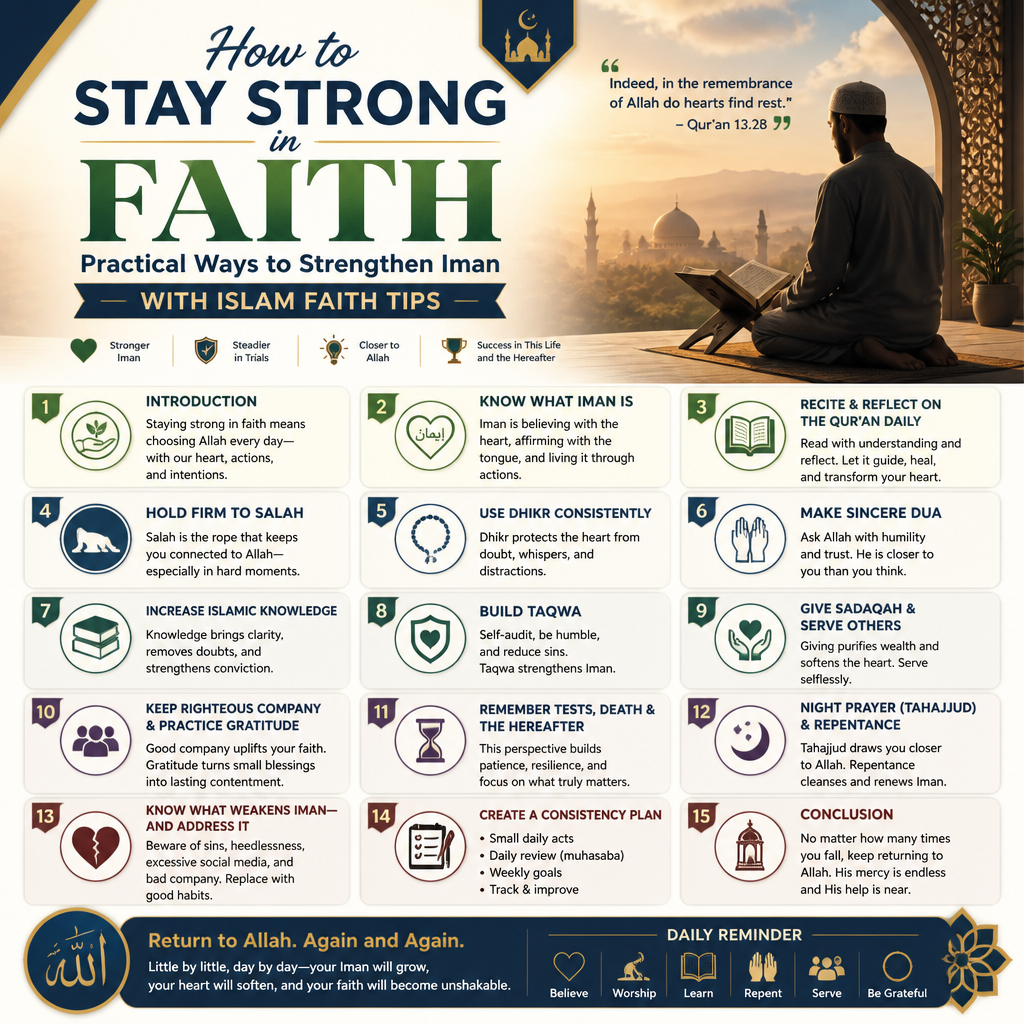
1. Introduction: What “staying strong in faith” really means
Faith grows and weakens like the body: it needs nourishment, protection, and consistency. In Islam, iman is not only an inner feeling—it is a living reality that appears through belief, words, and actions.
When you “stay strong,” you are not trying to be emotionally perfect. You are choosing a direction: returning to Allah again and again.
2. Strengthen Iman by knowing what Iman is (heart, tongue, and actions)
To strengthen iman, start with clarity. Iman includes:
- Heart belief: firm conviction in the unseen.
- Tongue affirmation: expressing faith sincerely.
- Actions: living what you believe through worship and character.
And iman is connected to the six pillars: belief in Allah, His angels, His books, His messengers, the Last Day, and Qadr (divine decree).
3. Recite and reflect on the Qur’an daily (build connection, not just habit)
If you want practical islam faith tips, begin with the Qur’an. Reading it isn’t only about finishing pages—it’s about letting its meanings reach your heart.
Try this simple method
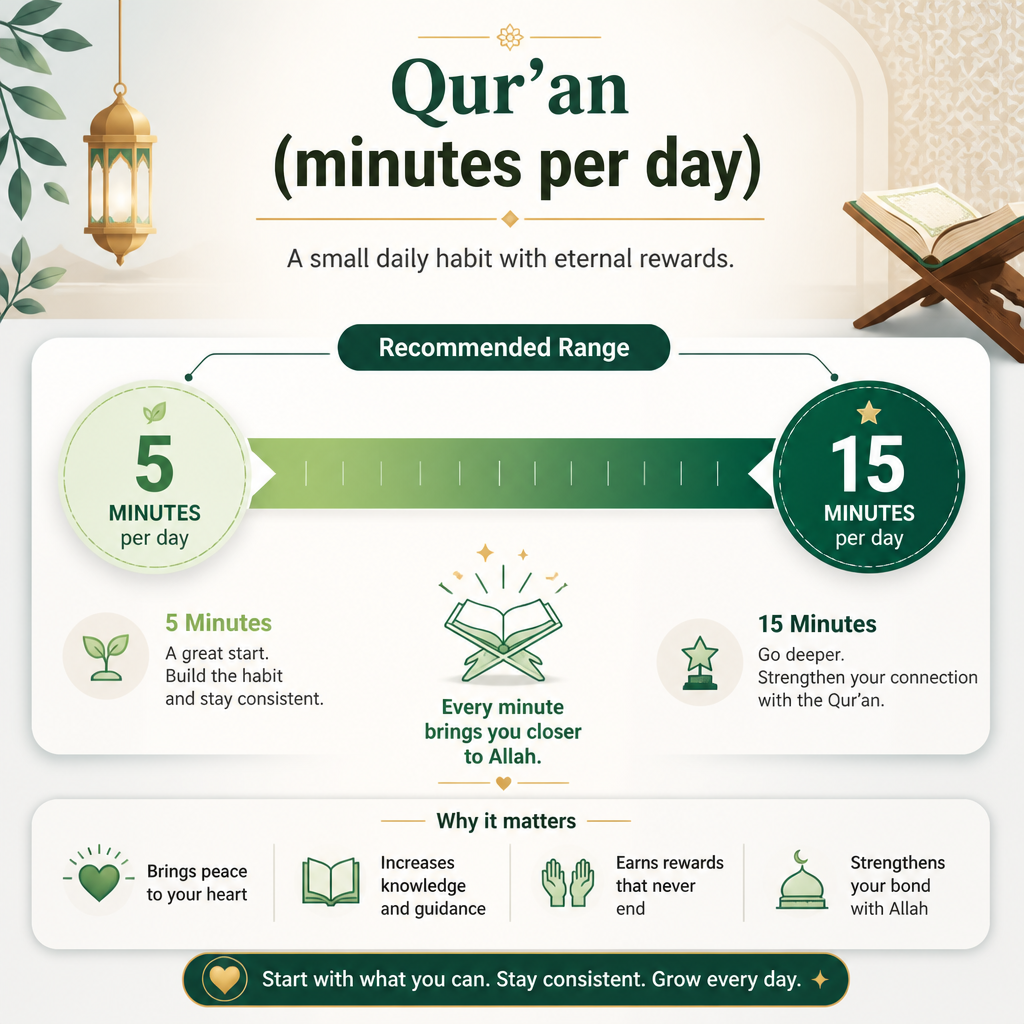
- Recite a portion daily (even a small amount).
- Reflect on 1–2 lessons: What does this remind me of? What should I change?
- Apply one action from that reflection today.
Over time, Qur’anic reflection replaces confusion with clarity and fear with hope.

4. Hold firm to salah—especially in hard moments
When life feels heavy, salah becomes your anchor. Many scholars mention that protecting the prayer is one of the strongest ways to stay steady during trials.
Don’t wait to feel “ready.” Go with what you have. Even when your heart is distracted, salah trains you to return to Allah.
Faith tip for real-life struggle
If you’re struggling to maintain focus:
- Shorten your recitation (without skipping salah) so you can concentrate.
- After salah, make a quick dua for sincerity and guidance.
- Review one verse you connected with to help your heart settle.
5. Use dhikr consistently to protect the heart from doubt and distractions
Dhikr is spiritual maintenance. It strengthens your heart against whispering doubt and softens the dryness that comes from neglect.
Choose remembrance you can keep:
- SubhanAllah, Alhamdulillah, Allahu Akbar
- Astaghfirullah (seek forgiveness)
- Short duas you can repeat throughout the day
Consistency matters more than quantity. One sincere habit done daily can outperform an occasional “big” burst.
6. Make sincere dua (and learn to ask Allah with trust)
Dua is faith in action. When you ask Allah sincerely, you are admitting you need Him—and that is strength.
How to make dua effectively
- Be specific about what you want: “Ya Allah, strengthen my iman,” not only “help me.”
- Call upon Allah with humility, knowing He knows your situation.
- Trust His wisdom: sometimes the answer is not immediate, but it is still mercy.
- Pair dua with action: don’t just ask—also correct what you can.
7. Increase Islamic knowledge to fight confusion and doubts
Doubts often grow in the dark. When you increase Islamic knowledge, you gain protection against misconceptions and emotional decision-making.
Focus on what directly supports your faith:
- Aqeedah (belief) to stabilize your understanding of Allah and the unseen
- Fiqh of worship to improve prayer and sincerity
- Seerah to connect your heart to Allah’s guidance through real lives
Knowledge also strengthens your confidence: you begin to recognize truth instead of chasing every fear online.
8. Build taqwa through self-auditing, humility, and reducing sins
Taqwa is God-consciousness. It protects iman by keeping your heart aware of Allah’s presence.
Self-audit questions (quick and practical)
- What sin am I repeating?
- What habit is pulling me away from Allah?
- Where did my prayer lose focus?
- What am I neglecting that I know is good?
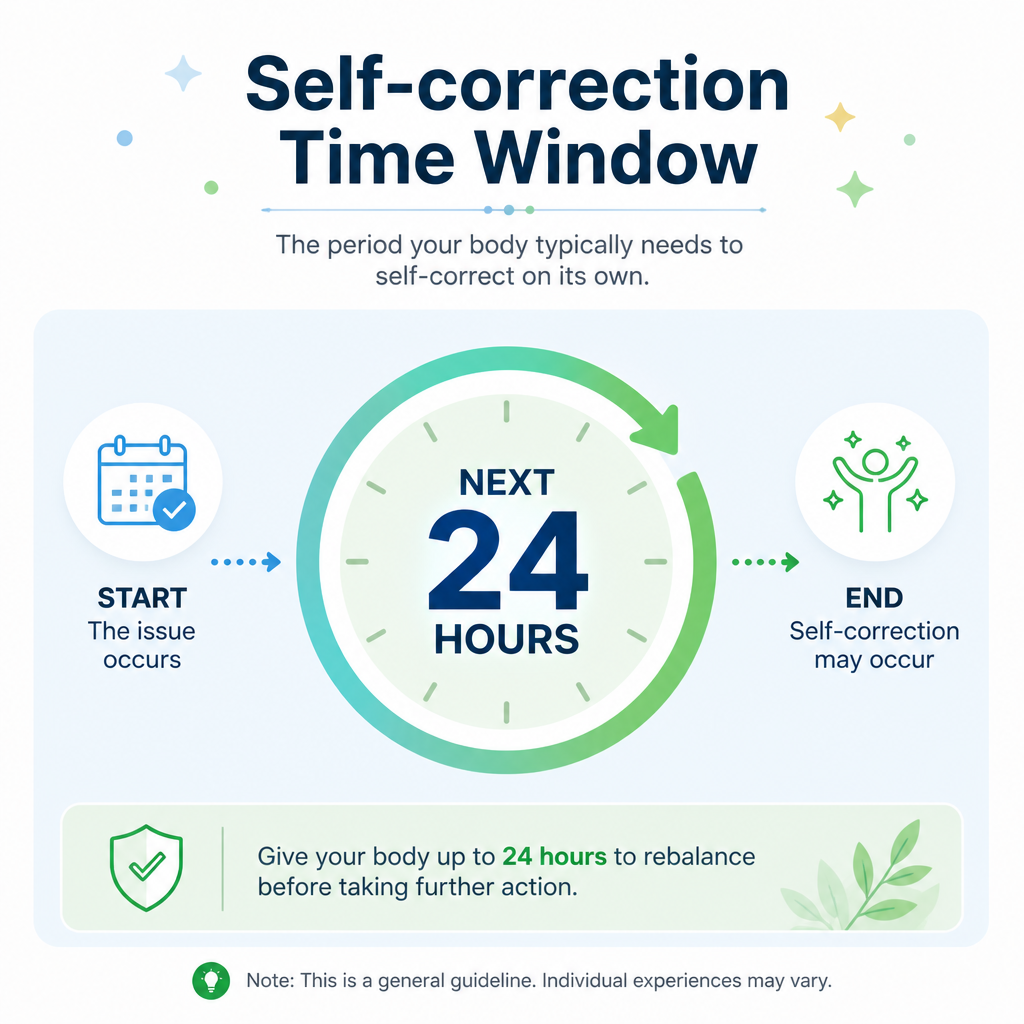
Then choose one improvement for the next 24 hours. Small corrections build strong iman.
9. Give sadaqah and serve others to purify the heart
Sometimes iman feels weak because the heart has become self-focused. Sadaqah and service reset your priorities.
Service can take many forms:
- Help someone financially if you can
- Offer your time—volunteer, assist a neighbor, or support a community need
- Speak kindly and forgive quickly
When you serve for Allah’s sake, your heart becomes softer and less trapped by fear or pride.
10. Keep righteous company and practice gratitude in small things
Belief grows in healthy environments. Surround yourself with people who remind you of Allah—not people who drain your spiritual resolve.
How to choose good company
- Look for those who are sincere, respectful, and consistent with worship
- Spend time in gatherings where you hear reminders of Allah
- Reduce time with influences that consistently pull you toward disobedience
Also, practice gratitude. In difficult seasons, the mind often focuses on loss. Gratitude turns your attention back to Allah’s mercy in small daily blessings.
11. Remember tests, death, and the Hereafter for resilience
One reason people lose strength is they forget the bigger picture. In Islam, hardship is not meaningless. It can be a test, purification, or a path to closeness with Allah.
Strengthen iman by remembering:
- Every trial has wisdom even if you can’t see it yet
- Life is temporary, and your final return is to Allah
- Patience and sincere worship matter beyond this world
This doesn’t erase pain—but it changes how you walk through it.
12. Night prayer (tahajjud) and repentance as “faith-strengtheners”
If you want powerful islam faith tips, add two “faith-strengtheners”:
Tahajjud (night prayer)
Night prayer is a special time for sincere conversation with Allah. Even if you can only do a short two rak‘ah, it can transform your relationship with the Creator.
Repentance (tawbah) as a daily reset
Repentance isn’t only for major sins. It’s also for the small betrayals of your heart: neglect, arrogance, and repeated distractions. Tawbah restores spiritual clarity and reduces the weight of guilt.
13. Common things that weaken iman—and how to address them
It helps to know what to avoid. Some common causes of weakening faith include:
- Neglecting salah or delaying it
- Unrepented sins that become “normal”
- Bad company or environments that encourage disobedience
- Excess distraction (endless scrolling, harmful content)
- Spiritual neglect (skipping Qur’an and dhikr for long periods)
How to address these issues:
- Start with the most immediate: protect your prayer first
- Choose one repentance target and one replacement habit
- Set boundaries on distractions
- Rebuild through small daily acts rather than waiting for motivation
14. Create a simple consistency plan: small acts, daily review, weekly goals
Strengthening iman is easier when you have a plan. Here’s a simple one you can apply immediately:
Daily (choose small and doable)
- Qur’an: 5–15 minutes with one reflection point
- Dhikr: a short routine (morning/evening or after salah)
- Dua: 1 minute asking Allah for steadfastness
- Repentance: one conscious act of tawbah (including a plan to change)
Weekly (review and adjust)
- Ask: What worked? What slipped?
- Pick one “upgrade” for next week (e.g., adding a tahajjud attempt or studying a short lesson)
- Remove one obstacle (e.g., reduce harmful content or protect your salah time)
When you fail
Don’t start from zero emotionally. Start from return. The stronger you become at returning to Allah, the stronger your faith becomes.
15. Conclusion: Stay steady by returning to Allah again and again
Strengthening iman is a journey, not a performance. Use practical islam faith tips—Qur’an reflection, steadfast salah, consistent dhikr, sincere dua, beneficial knowledge, taqwa, repentance, sadaqah, righteous company, gratitude, and remembering the Hereafter.
When faith feels weak, don’t panic. Return to Allah with small steps. And keep going—because every sincere return is a step toward a stronger heart.