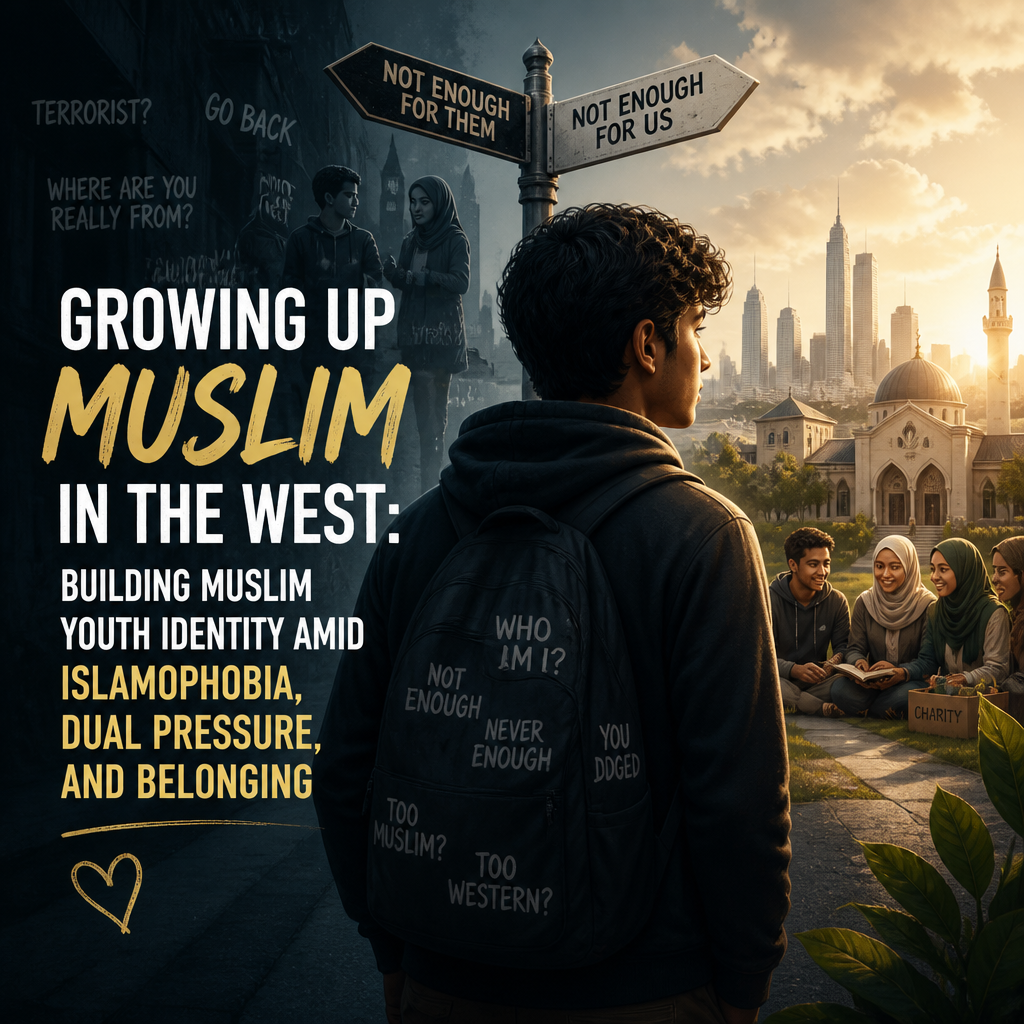
1. Introduction: What “muslim in the west” really feels like
For many young people, being a muslim in the west is not just a statement of faith—it’s a lived experience shaped by classrooms, workplaces, friendships, media narratives, and everyday micro-decisions. It’s waking up and choosing what to share, what to hide, and how to respond when someone assumes they “must think” a certain way.
Some days the struggle is obvious: Islamophobic harassment, suspicion at school, or the fear of being misunderstood. Other days it’s subtler: the feeling that you’re always being watched, always being measured, always representing more than yourself. The result can be exhausting—because the work isn’t only religious; it’s social, psychological, and cultural.
In this article, we’ll explore how muslim youth identity gets formed under pressure—especially in contexts where Islamophobia, stereotypes, and “dual identity” expectations collide. We’ll also offer practical strategies for building a confident, resilient identity that doesn’t require constant defense.
2. Dual identity pressure: “too Muslim to be British/American” vs “too British to be Muslim”
One of the most common tensions described by muslim youth identity stories is the sense of being pulled in two directions.
- “Too Muslim to be British/American”: Some young Muslims feel that public life—national identity, patriotism, cultural norms—requires distancing from religious practices.
- “Too British/American to be Muslim”: At home, mosques, or within community spaces, young Muslims may be accused of adopting “Western” habits or values.
This dual pressure can create isolation. When a teenager feels they belong fully to neither world, they may start splitting their personality—behaving differently depending on who is watching. Over time, that can weaken both faith and confidence.
What looks like “adaptation” from the outside can feel like internal fragmentation from the inside.
3. Being named by others: name as a religious identifier and everyday scrutiny
Identity doesn’t only live in beliefs—it also shows up in labels. For many muslims growing up in the west, a name, a surname, or even a first name can operate like a spotlight. People may assume your religion, your politics, or your “background story” before you’ve spoken.
When others treat your identity as a topic for commentary—at school assemblies, in casual conversations, or in online spaces—you can feel pressured to answer for Islam as if it’s a personal job. This is why some youth develop reluctance to disclose being muslim, even to friends or teachers they otherwise trust.
The problem isn’t curiosity. It’s the sense that curiosity is tied to judgment.
4. Stereotypes and misconceptions: learning Islam through observing individuals
Another reality of life for a muslim in the west is that non-Muslims often learn about Islam indirectly. Instead of reading, studying, or engaging with Muslims as individuals, they absorb “Islam” through the behavior of a few people—sometimes from media clips, sometimes from community misunderstandings, and sometimes from stereotypes that circulate online.
That creates a rigid expectation: one bad experience becomes proof of a whole religion. One heated moment becomes a permanent headline. One person’s practice becomes “what Muslims are like.”
Muslim youth then face a new burden: to correct misconceptions while also maintaining their own spiritual focus. That double task can distort how faith is experienced—turning Islam into a defensive response rather than a source of peace and growth.
5. Islamophobia’s psychological weight (using youth interview findings)
Research based on interviews with American Muslim youth offers a sobering look at the psychological impact of Islamophobia. In a study drawing on conversations with 30 Muslim young people (19 girls and 11 boys), researchers found patterns that help explain why muslim youth identity can become fragile under sustained pressure.
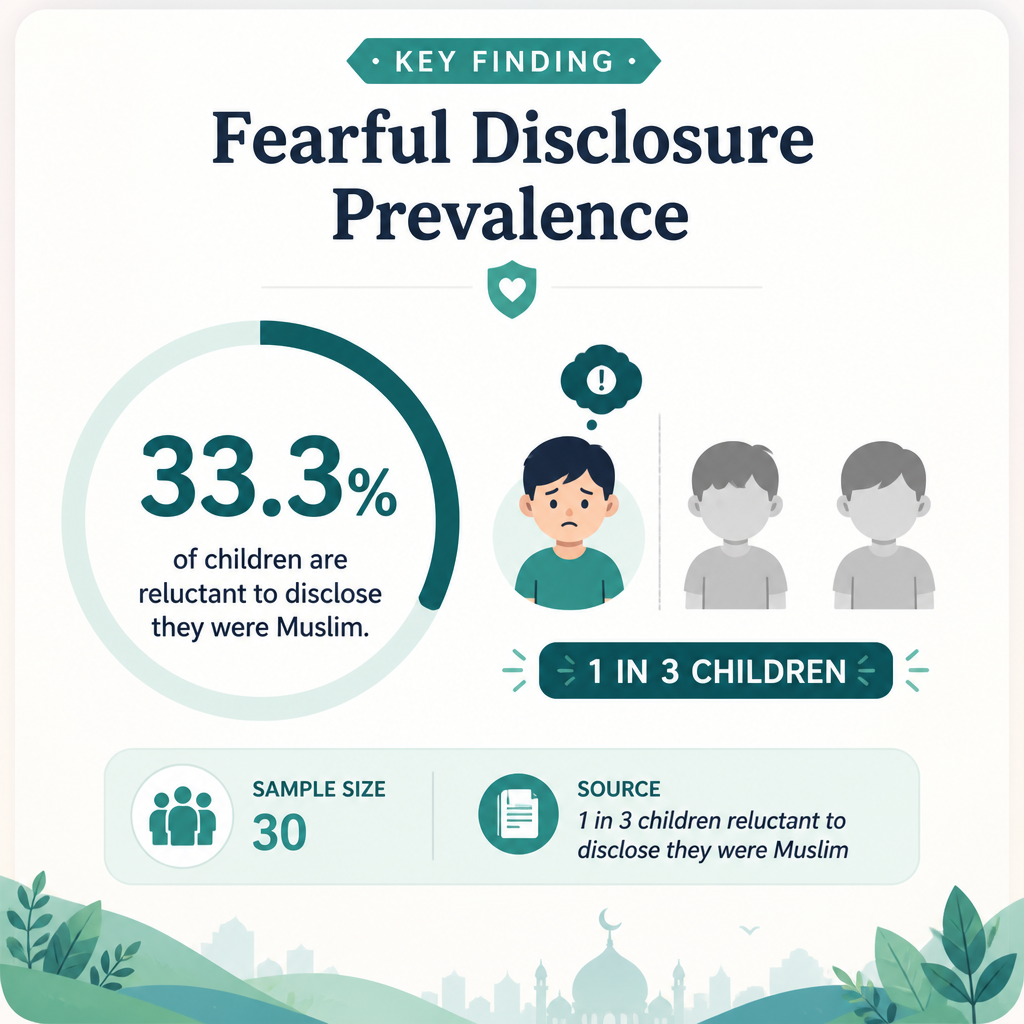
- Fear of disclosure is common: about 1 in 3 children said they were reluctant to disclose they were Muslim.
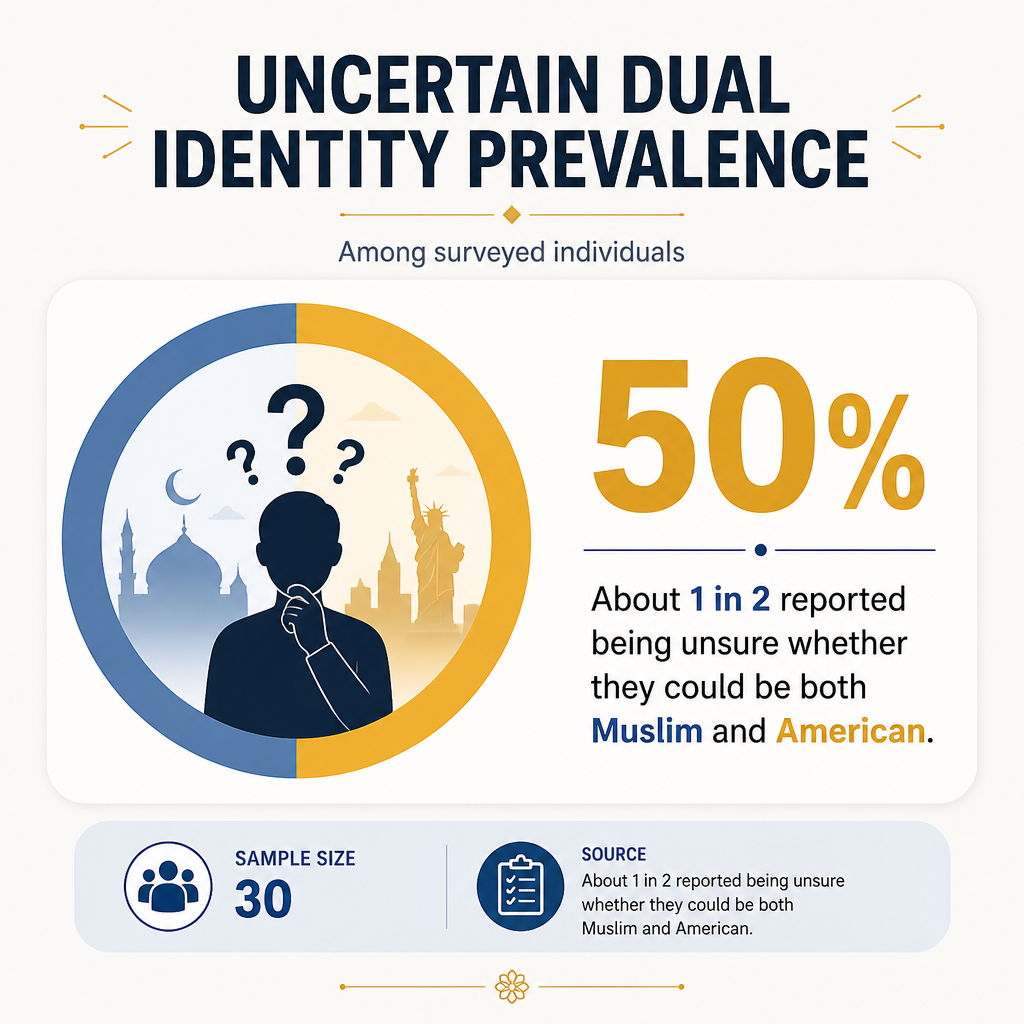
- Dual identity uncertainty: about 1 in 2 reported being unsure whether they could be both Muslim and American.
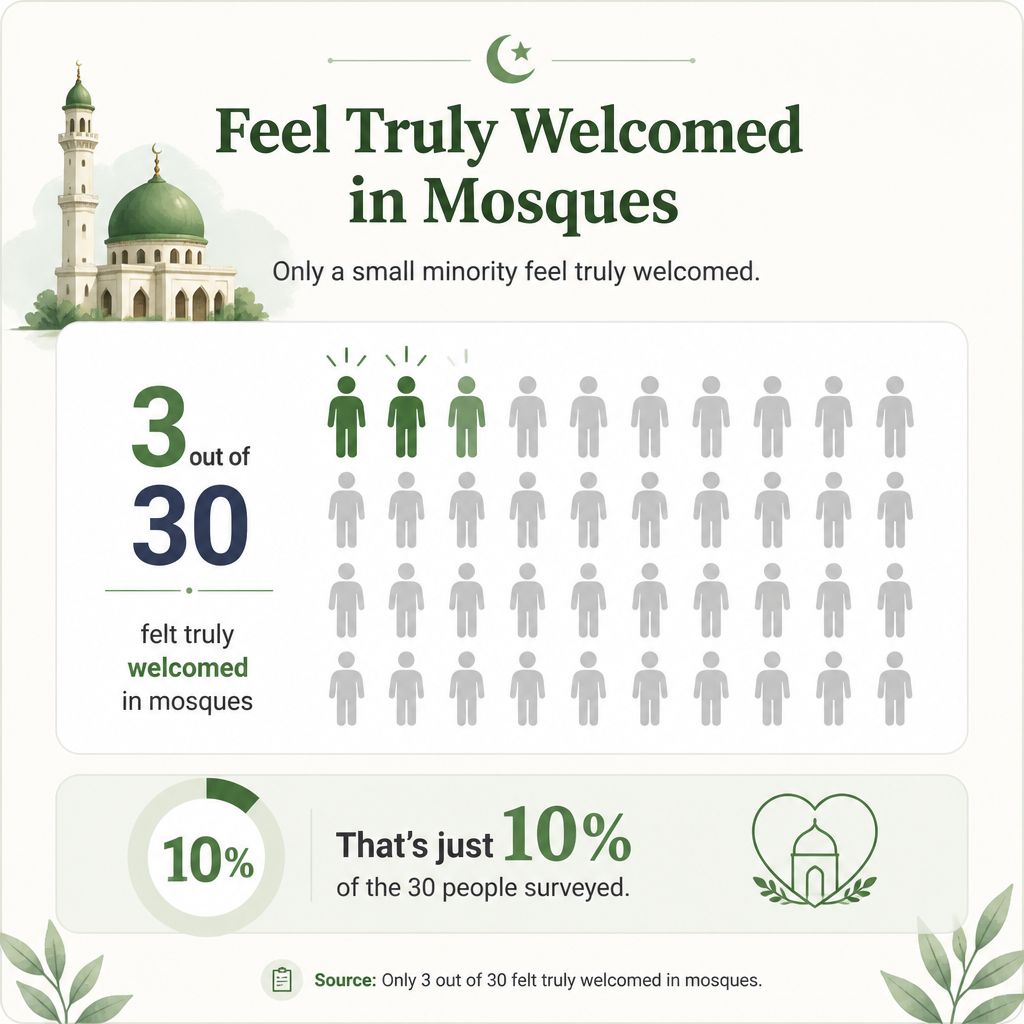
- Belonging gaps in mosques: only 3 out of 30 felt truly welcomed in mosques—suggesting that community spaces don’t always provide the emotional safety youth need.
These findings matter because identity formation depends on security. When youth constantly anticipate hostility—social, institutional, or verbal—self-expression becomes risky. Over time, that fear can shape how a young person prays, thinks, and chooses who they are allowed to be.
6. Hijab, gender, and disproportionate impact: when identity becomes a battleground
Islamophobia does not affect everyone equally. The study found disproportionate impact on women, especially hijabi girls.
- 23 out of 30 youth experienced Islamophobia (with girls reporting high rates).
- All 15 hijabi girls considered removing hijab at some point—indicating how public visibility can turn faith into a target.
This doesn’t mean hijab is simply “hard.” It means hijab can become a battleground where youth are forced to choose between two kinds of safety: safety from harassment and safety from spiritual compromise.
For many young Muslim women, the struggle is not only external. It includes internal pressure—questions like: Is my hijab a responsibility or a burden? Do I have the right to take off what protects me spiritually?
That’s why supporting muslim youth identity must include gender-sensitive understanding. Community programs, mentorship, and counseling should be designed with the lived realities of hijabi youth in mind.
7. Mosque experiences and belonging: why community welcome matters
It’s possible for a community to value faith yet fail to nurture belonging. When youth don’t feel welcomed in mosques—when they feel judged, ignored, or treated as problems to manage—they may interpret that as rejection from Islam itself, not merely from a specific person or program.
In the youth interviews mentioned earlier, only 3 out of 30 felt welcomed in mosques. That gap can push young people toward two unhealthy outcomes:
- Withdrawal: distancing from religious spaces to avoid discomfort.
- Performance: practicing Islam externally while emotionally disengaging, because the “home base” doesn’t feel like home.
Belonging is a spiritual need. When youth are treated with dignity—seen, heard, and supported—their identity becomes more stable.
8. Adapting “dual personalities” in school, work, and public spaces
Many muslim youth identity stories include an unspoken strategy: adopting different versions of yourself depending on context.
At school, a young Muslim might:
- downplay religious practice to avoid social friction,
- avoid certain conversations that invite stereotypes,
- watch what they say about politics or faith.
In public spaces, they might feel pressured to “prove” they’re reasonable, modern, and non-threatening. In more religious spaces, they might feel expected to be more pious, more knowledgeable, or more “proper” than they feel capable of being.
Dual personalities can appear as maturity, but they often carry a cost: emotional fatigue, reduced authenticity, and a weaker sense of internal coherence.
The goal shouldn’t be to remove all adaptation. The goal should be to reduce fragmentation—to help youth become whole, not just flexible.
9. Faith under pressure: increased spiritual struggle and assimilation temptations
Living in a western environment can intensify spiritual struggle. Not because Western culture is automatically incompatible with Islam, but because constant social pressure can create temptation toward assimilation—toward becoming “liked” rather than becoming faithful.
Some youth experience a spiritual pattern:
- They work hard to fit in socially.
- They grow tired of explaining themselves.
- They begin to wonder whether faith is worth the discomfort.
At the same time, pressure can also produce spiritual resilience. Youth who find mentors, community anchors, and meaningful ways to serve often report a deeper attachment to faith. The difference is usually not IQ or effort—it’s environment.
When Islam feels like a source of beauty and meaning rather than a constant controversy, it becomes easier to stay anchored.
10. Mental health and therapy challenges: when non-Muslim counseling can push youth away
Mental health challenges may arise from discrimination, isolation, identity confusion, and anxiety about safety. Many youth turn to therapy or counseling for support. But there can be a mismatch if therapists lack cultural and religious understanding.
In the youth interviews discussed above, researchers reported that some non-Muslim therapists influenced youth in ways that pulled them away from their faith—often unintentionally, but still harmfully. The problem is not professional expertise in psychology. The problem is when a clinician treats religious practice as “the issue,” rather than understanding it as part of the youth’s coping, dignity, and moral framework.
For muslim youth identity, effective support often includes:
- therapists who respect faith,
- space to discuss Islam without ridicule,
- help building resilience without demanding total assimilation.
If you’re a parent or youth seeking counseling, ask questions upfront: Do you have experience working with Muslim clients? Can we discuss faith as a meaningful factor in wellbeing?
11. What helps: charity, positive engagement, and identity strengthening supports
Despite the challenges, the research also points to solutions. Youth engagement in charity and positive community work was shown to strengthen identity and counter doubt.
Why charity matters:
- It builds confidence: youth see themselves as contributors, not only recipients of criticism.
- It reshapes identity: Islam becomes action, compassion, and service—rather than an argument.
- It creates belonging: shared purpose helps youth form bonds that go beyond fear.
Positive engagement with the wider community—when done authentically—can also reduce stereotypes. But the key is consistency: youth need experiences where they are treated with respect, not only tolerated.
12. Practical strategies for Muslim youth identity: language, community, mentors, and self-definition
If you’re a young Muslim navigating the complexity of being a muslim in the west, or if you’re supporting one, here are practical strategies that can help build a stable muslim youth identity.
A. Use language that builds coherence, not confusion
Try phrases that remind you of internal alignment, such as:
- “Islam guides my character and choices.”
- “Belonging doesn’t require abandoning faith.”
- “I can be fully myself without performing for others.”
B. Find mentors who model confident faith
Youth need more than lectures. They need relationships—with adults and peers who demonstrate that faith and Western life can coexist without contradiction.
- Look for mentors who listen first.
- Choose role models who show warmth, not only correction.
- Seek communities where youth are trusted with responsibility.
C. Build a community that welcomes, not merely tolerates
Ask yourself:
- Do I feel seen when I walk in?
- Are my questions treated respectfully?
- Am I encouraged to grow rather than blamed for discomfort?
If the answer is no, keep searching. The “right” community may be smaller than expected—but it should feel spiritually safe.
D. Turn faith into action through service
Whether it’s volunteering, supporting a local initiative, tutoring, or organizing community events, service makes identity tangible. It also helps youth experience Islam as lived goodness.
E. Practice boundaries around disclosure
It’s okay to choose when and how you share your faith. Identity doesn’t require oversharing. Boundaries protect mental wellbeing.
Over time, as you find respectful spaces, disclosure becomes less fear-based and more confidence-based.
13. Conclusion: moving from defensive survival to confident belonging
Growing up Muslim in the West can be challenging—filled with stereotypes, dual pressure, and moments where identity feels like a negotiation. Yet the most important takeaway is this: muslim youth identity doesn’t have to be built on fear.
When youth experience welcome, supportive mentorship, meaningful religious practice, and opportunities to serve, Islam becomes more than a response to Islamophobia. It becomes a home—one that makes room for the full person: faith, culture, confidence, and belonging.
From defensive survival toward confident belonging is a journey. But it’s a journey that communities, parents, mentors, therapists, and mosques can actively help youth take—by creating conditions where identity is not a battlefield, but a foundation.