Why Some People Reject God Completely: The Real Reasons People Become Atheists
1. Introduction: What it means to reject God completely
When someone “rejects God completely,” it usually means they do not believe in God’s existence—not just that they’re unsure, but that they conclude, for personal reasons, that God is not real (or not likely real). This is often called atheism. In contrast, agnosticism tends to mean “I don’t know,” whereas atheism is closer to “I don’t believe.”
Understanding why people become atheists matters for one simple reason: most people aren’t rejecting God because they woke up wanting to be evil or chaotic. They usually reject God because of a combination of experiences, emotions, intellectual judgments, culture, and community pressures.
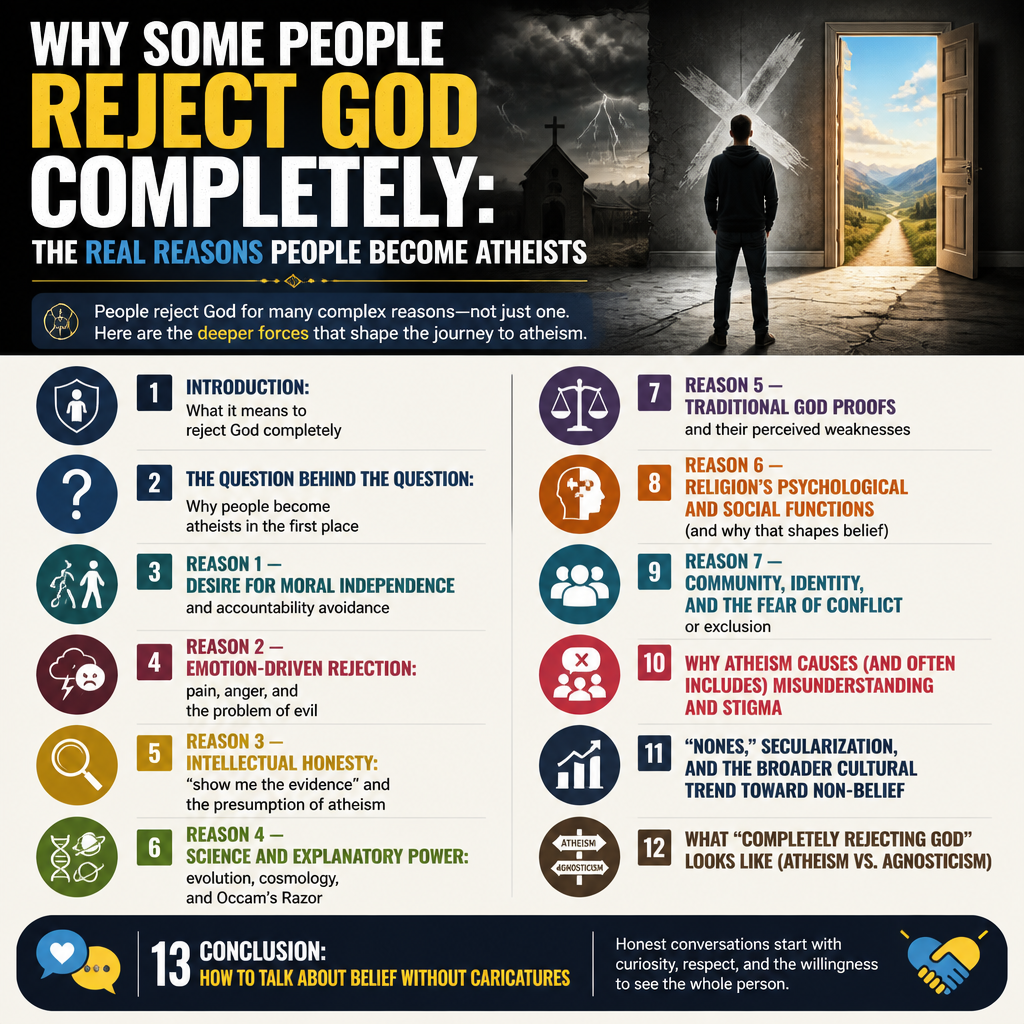
2. The question behind the question: why people become atheists in the first place
It’s easy to ask, “Why don’t they just believe?” But deeper questions often look like this:
- What standards of evidence do they think matter?
- What suffering or moral conflict have they experienced?
- What did their view of God—and religion—feel like in real life?
- What stories about belief and unbelief did their community teach them?
Below are several of the most common reasons people give for why people become atheists, including both intellectual and emotional factors.
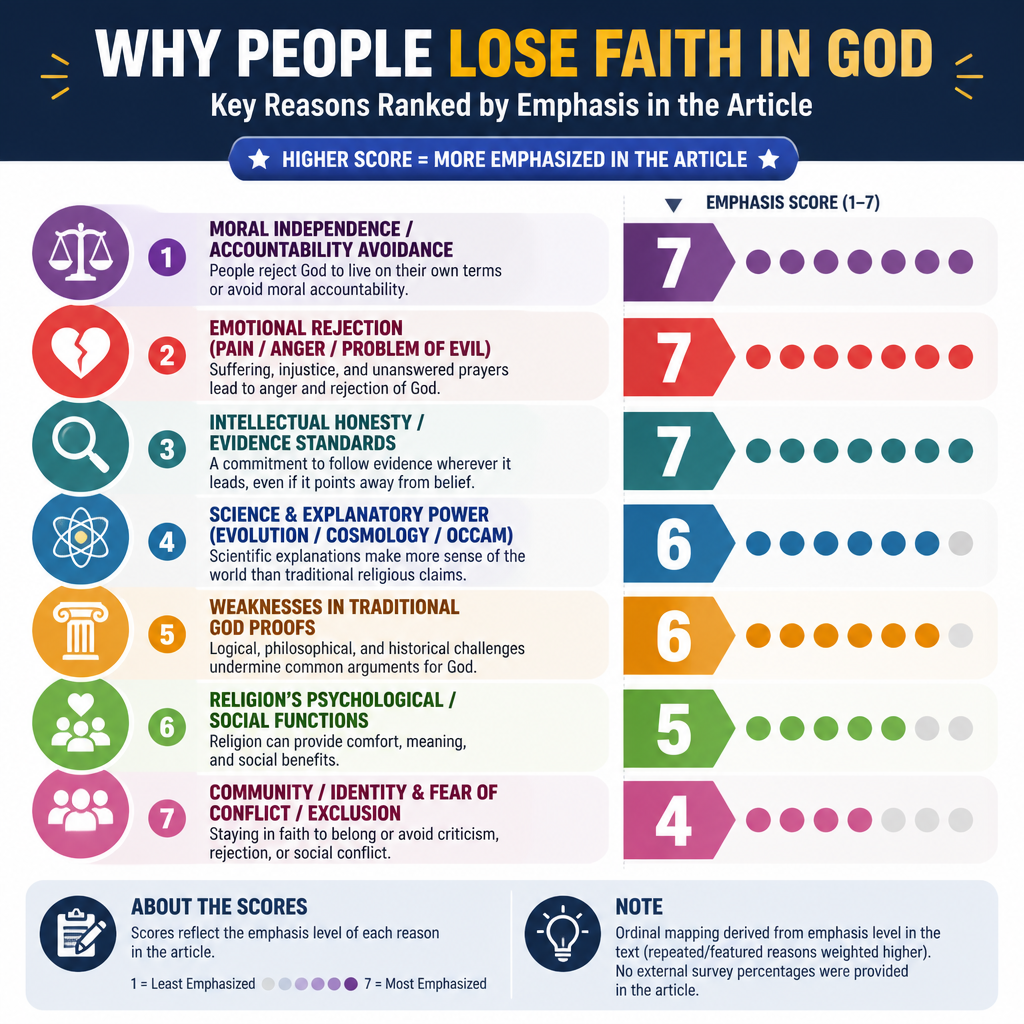
3. Reason 1 — Desire for moral independence and accountability avoidance
One of the most talked-about (and sometimes misunderstood) reasons is the desire to live without the feeling of divine accountability. Some people feel that belief in God includes a moral “audit” over their choices—thoughts, habits, sexuality, money, pleasure, and power. If they believe God is real and judges them, then certain actions feel not only risky, but wrong.
This can lead to a painful question: Do I want truth—or do I want freedom? For some, the answer feels like it requires rejecting the source of the accountability.
From an apologetics perspective, this raises a challenge: if moral truth depends on God, then moral responsibility may not disappear just because someone wants it to. But for the person rejecting God, the motivation is often simpler: they want life without guilt, fear of judgment, or constraint.
4. Reason 2 — Emotion-driven rejection: pain, anger, and the problem of evil
Many atheists point to the emotional weight of suffering. When people experience loss, abuse, injustice, or seemingly pointless tragedy, the belief that an all-powerful, all-good God should allow it can feel unbearable.
This is frequently discussed through what philosophers call the problem of evil: how can an omnipotent and benevolent God coexist with a world full of cruelty? Even when the issue is intellectually debated, it often begins emotionally. People reject God not only because arguments fail—but because their lived experience makes God feel unjust, absent, or indifferent.
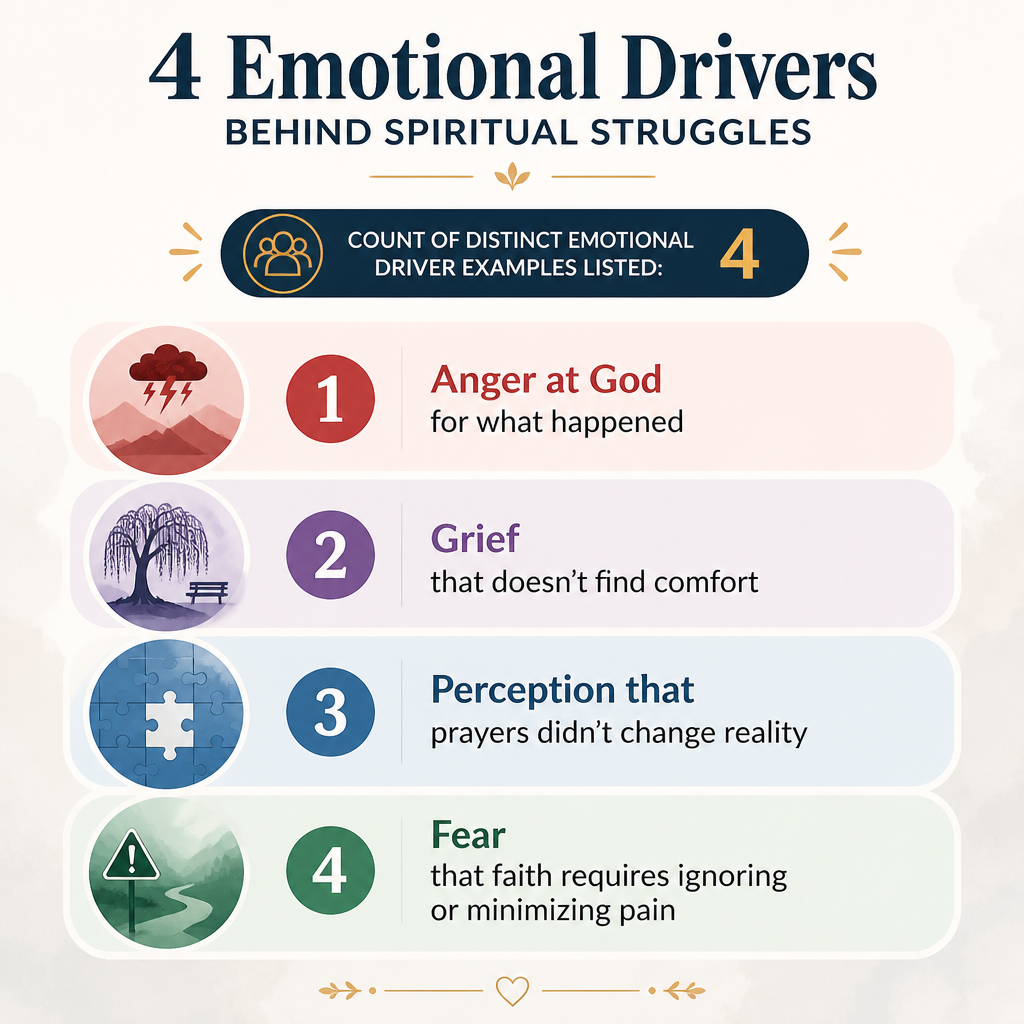
That doesn’t mean every unbeliever rejects God only through emotion. But emotion often sets the stage:
- Anger at God for what happened
- Grief that doesn’t find comfort
- Perception that “prayers” didn’t change reality
- Fear that faith requires ignoring or minimizing pain
In other words, the problem of evil isn’t just a theoretical puzzle. It’s a personal wound for many.
5. Reason 3 — Intellectual honesty: “show me the evidence” and the presumption of atheism
Another major driver for why people become atheists is a strict view of evidence. Some believers feel God is obvious or self-evident. Some atheists disagree, believing that extraordinary claims require clear proof.
In this framework, the default position is not “God exists,” but rather “I don’t accept a claim without good reasons.” Some atheists describe this as intellectual honesty: if there is not enough evidence, they won’t pretend.
It’s also why many atheists revisit their beliefs repeatedly—asking whether they actually understand what they were told, and whether they can justify it under pressure.
6. Reason 4 — Science and explanatory power: evolution, cosmology, and Occam’s Razor
For many, science offers coherent explanations that reduce the need for a supernatural cause. Evolution, geology, cosmology, and neuroscience provide mechanisms—often without requiring God as an ongoing explanation.
Some atheists frame this in a classic way: Occam’s Razor, the idea that among competing explanations, the simpler one is often preferred (all else equal). If a natural explanation can account for the data, then adding God as an extra explanation can feel unnecessary.
It’s important to note: not all religious people reject science, and not all atheists deny that science is limited. But science can still shape belief because it changes what counts as a convincing explanation.
When people think, “Why add God when nature already explains so much?” they may move toward atheism—not as a rebellion, but as a conclusion drawn from an explanatory model they trust.
7. Reason 5 — Traditional God proofs and their perceived weaknesses
Arguments for God—such as claims based on design, first causes, or moral foundations—can be compelling to some. But many people find traditional “God proofs” unconvincing, because they see gaps between:
- “There must be a cause” and “therefore it is the God of a specific religion”
- “The universe had a beginning” and “that supports my theology”
- “We have morality” and “therefore God exists”
Some also note that these arguments often don’t resolve deeper questions like the nature of God, the existence of evil, or the problem of religious disagreement. If multiple religions produce different conclusions using similar reasoning, the certainty of the argument can feel weaker.
In practice, this means that why people become atheists can include “I tried the arguments, and they didn’t move me.”
8. Reason 6 — Religion’s psychological and social functions (and why that shapes belief)
A common alternative to “religion is true” is “religion is useful.” Some atheists argue that religion can be explained by human psychology and social needs:
- Comfort in the face of death
- Community belonging and identity
- Meaning when life feels chaotic
- Social cohesion within groups
- Authority structures that guide behavior
Historically, thinkers have proposed different models—such as religion being rooted in projected feelings, social bonding, or power dynamics. Whether or not you accept these theories, the basic pattern is the same: religion can “work” without proving God exists.
This leads to a subtle but powerful shift. If religion meets emotional and social needs, a person might conclude: “Even if religion feels meaningful, that doesn’t prove it’s true.” That conclusion can gradually become a worldview.
9. Reason 7 — Community, identity, and the fear of conflict or exclusion
People don’t build beliefs in a vacuum. They inherit narratives from families, schools, and communities. Sometimes faith is connected to belonging. If a person doubts, they may fear conflict, rejection, or loss of relationships.
On the flip side, some people also reject God because they have experienced institutional harm—hypocrisy, judgment, or manipulation. If religion is associated with exclusion, then atheism can feel like reclaiming dignity and autonomy.
At this point, belief becomes identity. A person may decide: “I don’t just disagree—I want a life where my worldview doesn’t make me an outsider.”
10. Why atheism causes (and often includes) misunderstanding and stigma
The phrase atheism causes misunderstandings in many contexts. Some believers assume atheists are immoral, arrogant, or incapable of meaning. But atheists often report something different: they experience stereotyping, social pressure, or being treated as “less than” in certain spaces.
In some places, atheism is linked (fairly or unfairly) to hostility toward religion. In others, atheists face legal or cultural barriers. Even where discrimination is subtle, it can shape how people talk about belief and how safe they feel sharing doubts.
Stigma also works in reverse. Some atheists may “harden” their unbelief because they feel judged from the start. If a community communicates, “You are your disbelief,” then the person may respond, “Then I will fully step away.”
11. “Nones,” secularization, and the broader cultural trend toward non-belief
Many countries are experiencing secularization. Surveys commonly show a rise in people who identify as religiously unaffiliated—often called the “nones.” For these individuals, faith may not be actively anti-God; it may simply be absent, vague, or irrelevant to daily life.
Some of this trend comes from generational change, education, and alternative sources of meaning. But it’s also driven by experience—people trying religion and leaving after finding that it doesn’t answer their questions, or doesn’t match their moral and intellectual expectations.
So the move toward atheism can be gradual: a slow loss of certainty, followed by a decision to live honestly without belief.
12. What “completely rejecting God” looks like (atheism vs. agnosticism)
Not all skeptics reject God in the same way.
- Agnosticism: uncertainty about God’s existence; may say evidence is insufficient.
- Atheism: disbelief that God exists (sometimes “strong atheism” is explicit and firm).
- “Not enough evidence” atheism: belief driven by evidence standards.
- “Philosophical atheism”: belief driven by specific metaphysical conclusions (like naturalism).
When you understand these distinctions, you can talk with more accuracy. Some people who “reject God completely” may still care about ethics, meaning, and suffering. They’re not necessarily rejecting goodness—they’re rejecting a specific claim they can’t affirm.
13. Conclusion: how to talk about belief without caricatures
If you want to understand why people become atheists, start by recognizing that disbelief often arises from real reasons: moral desires, emotional injuries, evidence standards, scientific explanations, skepticism about arguments, and social experiences.
The goal shouldn’t be to “win” an argument by mocking a worldview. The goal is to ask better questions:
- What exactly would count as evidence for them?
- What suffering or experience shaped their view of God?
- What role does religion play in their life—comfort, control, or truth?
- How do they define morality and accountability?
When you treat atheists as thoughtful human beings (not strawmen), conversations become more honest—and more likely to lead somewhere meaningful.
Top references (for further reading)
- Brian Chilton, 4 Major Reasons Why People Become Atheists — https://crossexamined.org/4-major-reasons-people-become-atheists/
- Dr. Steve Wyre, Why People Become Atheists: A Defense of Non-Believers — https://medium.com/@AmericanPublicU/why-people-become-atheists-a-defense-of-non-believers-938ddd267ef0
- BBC Religions, Reasons people choose atheism — https://www.bbc.co.uk/religion/religions/atheism/beliefs/reasons_1.shtml