Common Misconceptions About Islam: 10 Islam Myths, Fast Facts, and What the Evidence Actually Shows
Misconceptions about islam spread quickly—often powered by headlines, partial quotes, and old cultural stereotypes. But when you look at the actual text of the Qur’an, the basic principles of Islamic law, and the lived reality of the world’s Muslim communities, the story looks very different.
This guide walks through 10 common Islam myths with clear, fast corrections, plus global context on who Muslims are and what most Muslims believe.
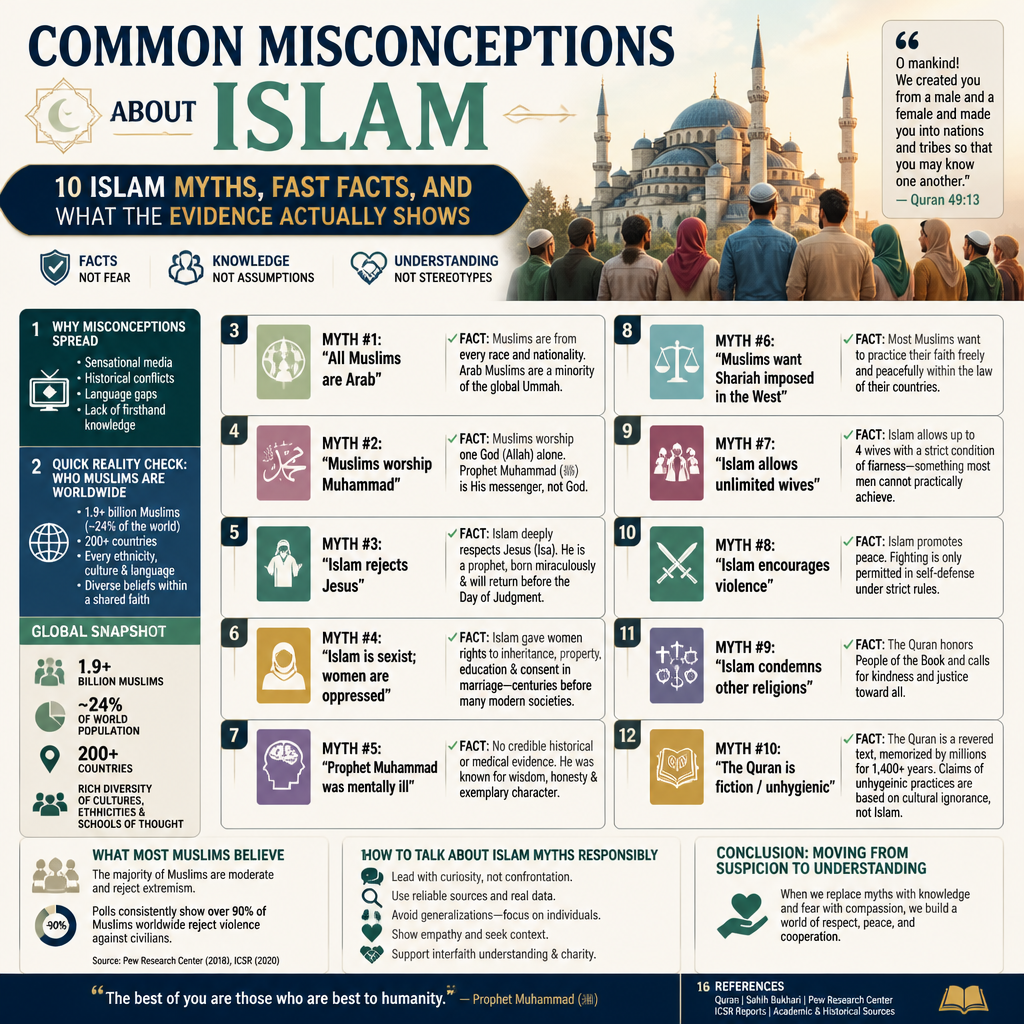
1) Why misconceptions about Islam spread (media, history, and language gaps)
Misconceptions about islam usually don’t come from Muslims teaching their neighbors wrongly—they come from how information travels.
- Media framing: violence or scandal gets amplified; everyday faith and scholarship rarely make headlines.
- Language and translation gaps: Arabic terms and religious concepts can be misunderstood when stripped of context.
- Historical bias and geopolitics: conflicts are sometimes treated as “proof” of what an entire religion believes.
- Generalizations: “some Muslims did X” is incorrectly turned into “Islam requires X.”
When people are unfamiliar with Islamic teachings, they may rely on stereotypes. The goal here is to replace suspicion with accuracy.
2) Quick reality check: who Muslims are worldwide (diversity of people and views)
One of the biggest islam myths is that Islam is tied to a single ethnicity or culture. In reality, Islam is a global faith.
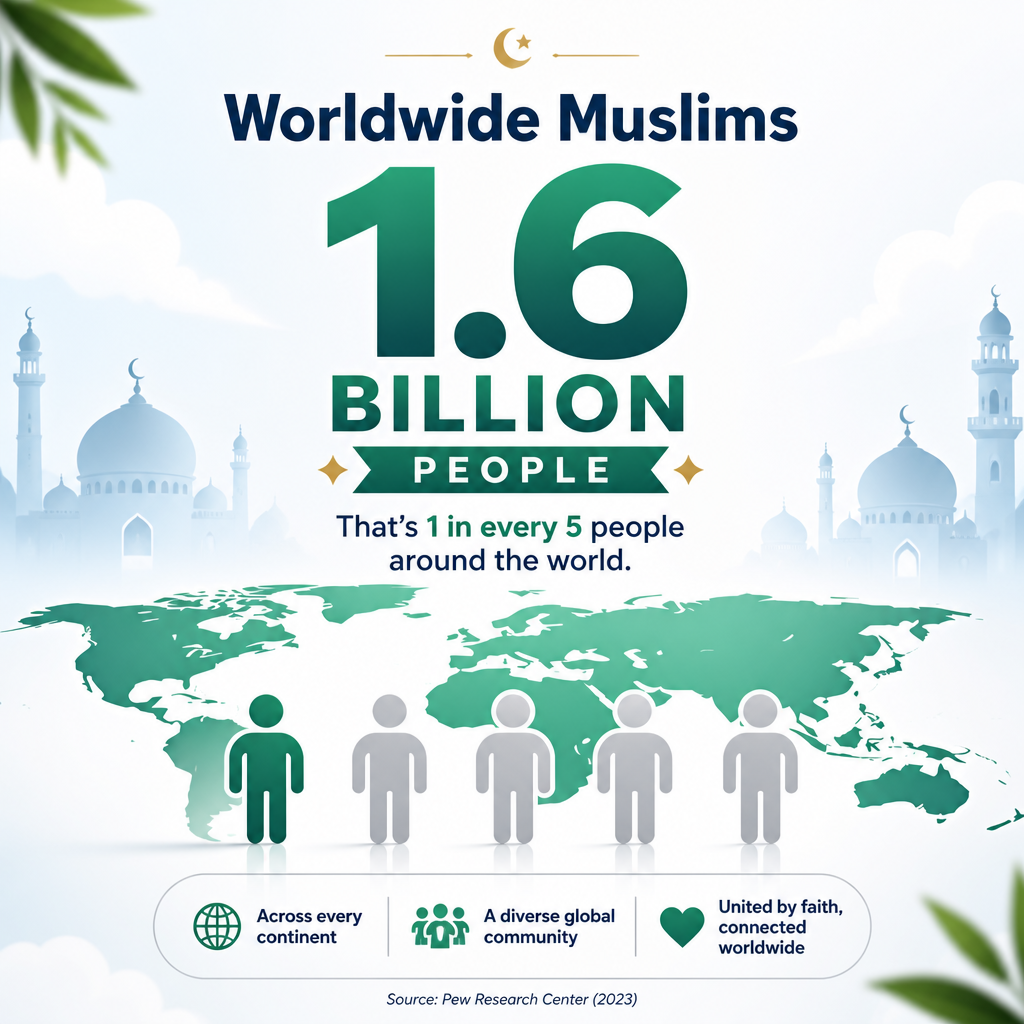

- About 1.6 billion Muslims worldwide (roughly 23% of the global population).
- Not even 20% live in the Middle East, according to referenced demographic summaries.
- Indonesia has the largest Muslim population.
- Muslims differ in language, culture, politics, and even how they interpret religious texts.
There is no single “Muslim look,” accent, or worldview—just like Christianity or Judaism includes many different communities.
3) Islam myth #1: “All Muslims are Arab”
Reality: This is one of the most common misconceptions about islam, but it’s also one of the easiest to disprove. Islam began in Arabia, yes—but it spread rapidly through many regions.
Today, Muslims are represented across Asia, Africa, Europe, and the Americas. Their traditions reflect local cultures: food, dress styles, languages, and community life vary widely.
Fast takeaway: Islam is not an ethnicity. It’s a religion followed by people from many backgrounds.
4) Islam myth #2: “Muslims worship Muhammad”
Reality: Muslims worship only Allah. Prophet Muhammad (peace be upon him) is honored as a messenger and role model—not as a god.
In mainstream Islamic belief:
- Muhammad is a prophet, similar in mission to other prophets across religious traditions.
- Worship is reserved for God alone.
- Calling on or attributing divine status to anyone other than Allah would contradict Islamic monotheism.
Fast takeaway: Misconceptions about islam often confuse respect for a prophet with worship—Islam explicitly rejects the latter.
5) Islam myth #3: “Islam rejects Jesus”
Reality: Islam affirms Jesus. Muslims consider Jesus (’Isa) to be a prophet and the Qur’an discusses him in detail.
Islam and Christianity overlap strongly in recognizing:
- Jesus’s virgin birth
- Jesus as a messenger of God
Where Islam differs is in the interpretation of crucifixion/divinity claims. But rejecting Jesus is not accurate—Islam treats him with reverence.
Fast takeaway: Muslims are not “anti-Jesus.” They view Jesus as a respected prophet.
6) Islam myth #4: “Islam is sexist; women are oppressed”
Reality: This misconception about islam is widespread, but it often ignores both the Qur’an’s principles and how cultural practices can differ from religious teaching.
The Qur’an emphasizes human dignity and moral equality. For example, it highlights equality in the sense of spiritual accountability and value.
Also, the meaning of dress practices like hijab is frequently misunderstood. Many discussions and educator summaries emphasize that:
- It is commonly tied to modesty and personal commitment
- In many contexts, it is chosen voluntarily rather than being universally coerced
Fast takeaway: Islam’s core teachings support dignity and responsibility; some harmful customs exist in certain places, but they are not the same thing as the religion itself.
7) Islam myth #5: “Islam teaches that Prophet Muhammad was mentally ill”
Reality: This is a stereotype that treats misunderstandings of religious experience as “evidence” of mental instability.
Prophet Muhammad’s credibility, integrity, and leadership are central to Islamic tradition. Educational resources that address this myth point out that:
- Islamic teachings view him as stable, trustworthy, and divinely guided
- His actions and character are presented as examples of moral soundness
Fast takeaway: The claim that Islam’s prophet was mentally ill is not a fair reading of Islamic biography or belief.
8) Islam myth #6: “Muslims want Shariah imposed in the West”
Reality: The idea that “Muslims want to impose Shariah everywhere” is often presented as if it’s the default goal. But Islam’s legal tradition is more complex—and today, Muslims live under many different legal systems.
Even references that address this myth emphasize that Islam is not a single political takeover script. Muslims can be:
- law-abiding residents
- citizens participating in their societies
- supporters of justice and ethical living in many civic forms
Fast takeaway: Disagreeing with a policy or worldview is normal; pretending all Muslims seek the same political agenda is not.
9) Islam myth #7: “Islam allows unlimited wives”
Reality: This misconception about islam is inaccurate in two ways: the number is limited, and the conditions are strict.
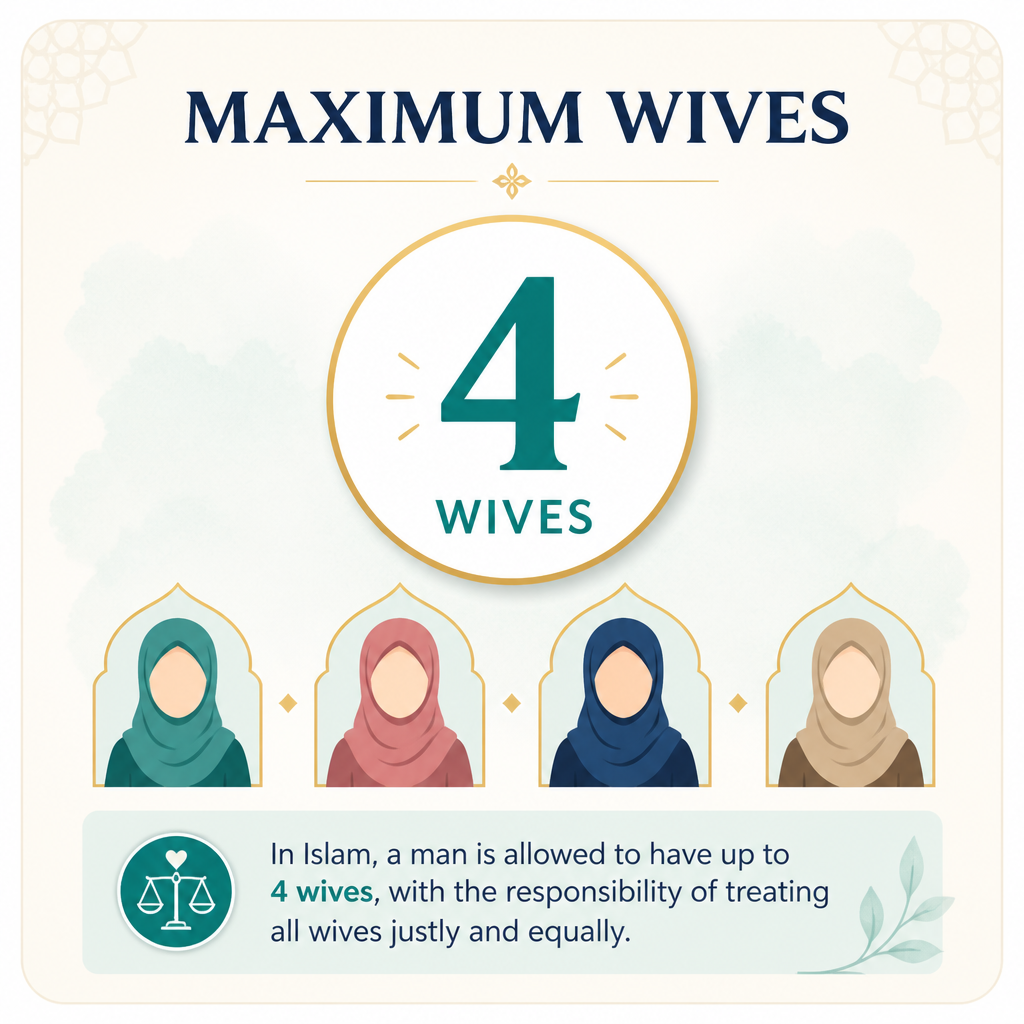
Islamic law (as widely summarized by educator-oriented references) traditionally allows up to four wives with strong requirements—including fairness and responsibility. Also, polygamy is far less common today than the myth suggests.
- Maximum: four wives
- Requirement: justice/equity in responsibilities
Fast takeaway: “Unlimited wives” is a caricature. The real rules are limited and challenging to fulfill.
10) Islam myth #8: “Islam encourages violence”
Reality: Most violence in history was not “Islam’s instruction.” Instead, Islamic sources distinguish between different kinds of conflict and emphasize justice, restraint, and protection of civilians.
Educational summaries commonly note that Islamic teaching includes:
- authorization of self-defense under specific conditions
- a strong emphasis on mercy and ethical conduct
- condemnation of wrongdoing beyond legitimate necessity
Fast takeaway: Islam’s moral framework is not “violence-first.” It’s accountable, principled, and conditional.
11) Islam myth #9: “Islam condemns other religions”
Reality: Another common misconceptions about islam is the assumption that Muslims are required to reject everyone else. In reality, Islam often emphasizes respect for other monotheistic traditions and moral accountability.
Many educator resources explain that Qur’anic and historical perspectives include:
- recognition of earlier prophets
- guidance to discuss respectfully
- prohibitions on oppression
Fast takeaway: Disagreement about doctrine is not the same as hostility toward people.
12) Islam myth #10: “The Quran is fiction / unhygienic”
Reality: This myth usually combines two different claims: one about authenticity (“fiction”) and another about hygiene stereotypes (“unhygienic”).
On authenticity: the Qur’an is a central sacred text in Islam, preserved and recited by communities for centuries, with intense scholarly attention to transmission and textual integrity.
On stereotypes: claims about “unhygienic” practices often come from sensational reporting, cultural bias, or misunderstandings—then get repeated as though they were religious requirements. In fact, Islamic religious practice includes:
- ritual cleanliness expectations
- daily hygiene practices connected to worship
Fast takeaway: Islam is not “unhygienic,” and the Qur’an’s authenticity is supported by longstanding scholarly and community traditions.
13) What most Muslims believe and how many reject extremism
When people say “Islam teaches violence,” they often ignore the most important data point: the majority of Muslims reject extremism.
Summaries based on educator and anti-hate resources report that a vast majority condemn extremist ideology. Many Muslim leaders and scholars have issued clarifications and fatwas (religious rulings) rejecting terrorist interpretations.
In other words: extremist groups are not representative of Islam as practiced by ordinary Muslims.
And religious identity doesn’t predict moral character—hundreds of millions of Muslims are teachers, engineers, doctors, parents, and neighbors committed to faith and ethical life.
14) How to talk about islam myths responsibly (charity, accuracy, and context)
If you want to reduce tension and misinformation, start with how you speak—not just what you say.
- Replace absolutes with specifics: say “some people” rather than “Islam requires.”
- Ask for sources: if someone shares a claim, check whether it’s quoting context or propaganda.
- Separate culture from religion: cultural practices can vary and may not represent Islamic teachings.
- Center lived reality: ask what Muslims themselves believe and how they interpret their own texts.
- Assume good faith first: many people are repeating misinformation, not trying to harm.
15) Conclusion: moving from suspicion to understanding
Misconceptions about islam thrive in uncertainty. But when you compare myths with the actual principles discussed by credible educational references, the picture becomes clearer.
Islam is a diverse, global faith. Muslims do not worship Muhammad; they revere him. Islam respects Jesus as a prophet. Teachings about women emphasize dignity and spiritual equality. Rules about polygamy are limited and demanding, not “unlimited.” And while there are real discussions about conflict and law, the majority of Muslims reject extremist violence.
If your goal is understanding, the best next step is simple: verify before you repeat.
16) References
-
ADL (Anti-Defamation League) – Myths and Facts about Muslim People and Islam (PDF). https://www.adl.org/sites/default/files/myths-and-facts-about-muslim-people-and-islam.pdf
-
Studio Arabiya – “10 Misconceptions About Islam”. https://studioarabiya.com/10-misconceptions-about-islam/
-
MMWConline – “Myths and Facts” (Understanding Islam). https://mmwconline.org/islam/understanding-islam.php