Welcome to Islam: what “new muslims” should expect
First—congratulations. Making the decision to embrace Islam is a sincere and life-changing step. The first days and weeks can feel like a “high”: new meanings, new prayers, new hope. And then—quite often—reality begins to settle in.
If you are looking for advice for new muslims, start here: Islam is joyful, but it is also a real journey. You are not just changing beliefs—you are changing habits, priorities, friendships, and (for many reverts) even how you talk and live day-to-day.
That doesn’t mean you’re doing anything wrong. It means your fitrah is awakening, and your mind and heart are adjusting. Expect both warmth and friction in the beginning.
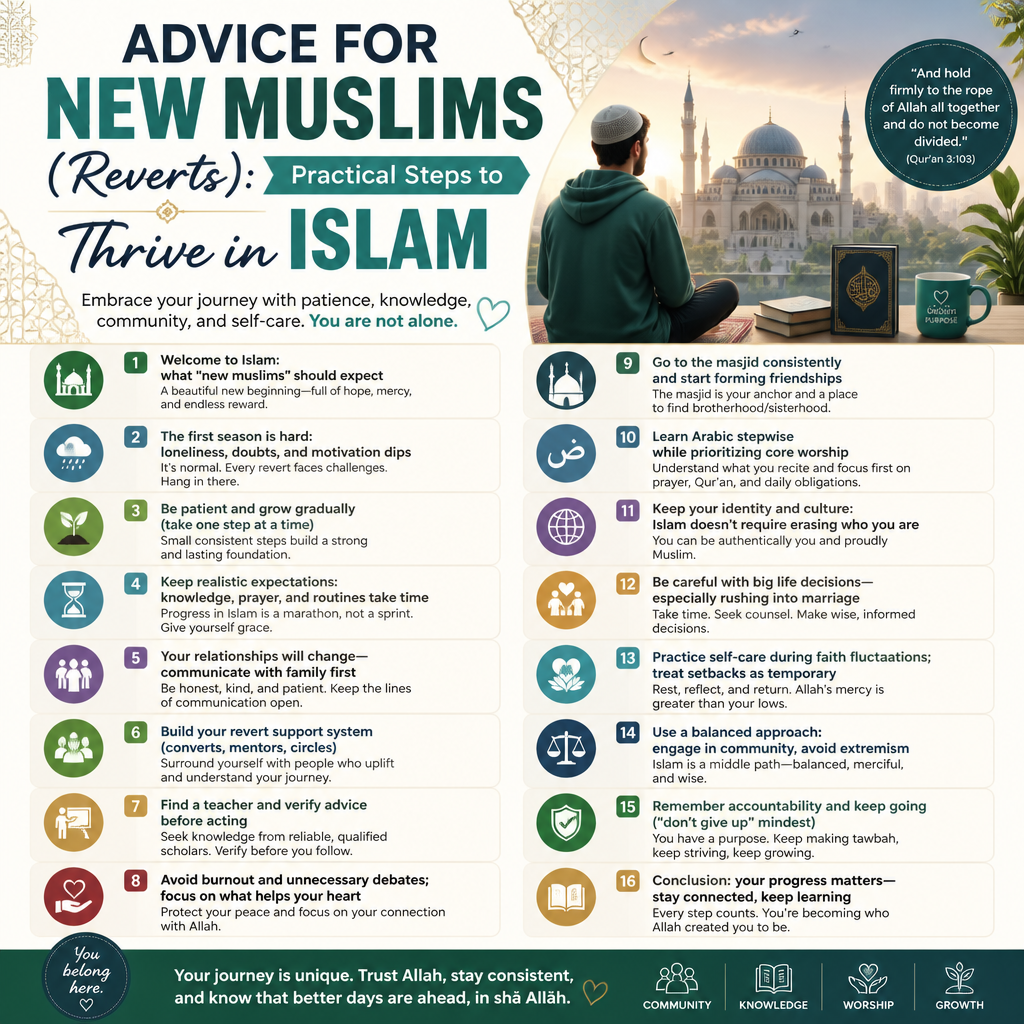
The first season is hard: loneliness, doubts, and motivation dips
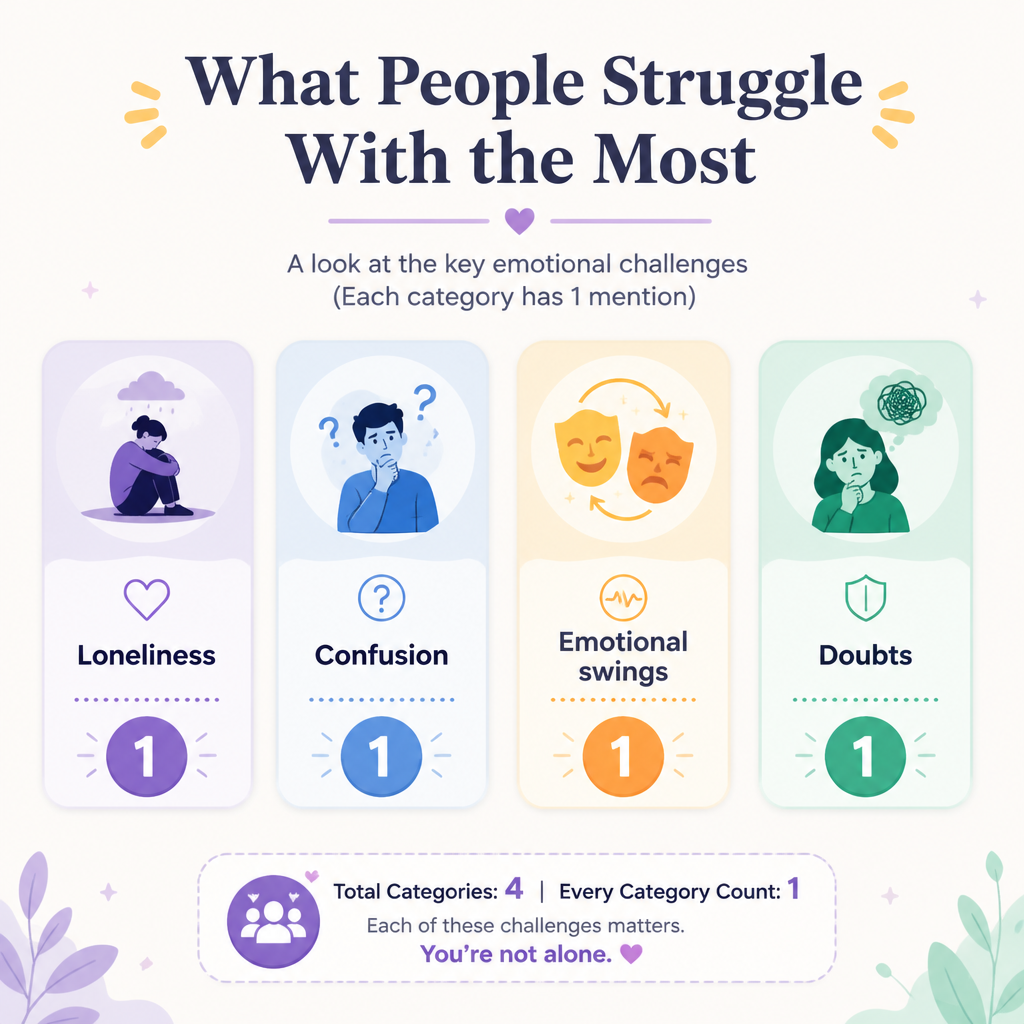
Many new Muslims experience a difficult “season” after the initial excitement. You may feel:
- Loneliness (especially if you don’t know other Muslims well yet)
- Confusion (too many new terms: wudu, salat, halal/haram, fiqh, etc.)
- Emotional swings (faith feels strong one day, weak the next)
- Doubts (sometimes about your ability to learn, not about Islam itself)
Know this: these ups and downs are common. Your task is not to “feel perfect” every day. Your task is to keep moving—with patience, worship, and support.
Be patient and grow gradually (take one step at a time)
A major piece of advice for new muslims is also one of the most practical: don’t try to become “fully Islamic” overnight.
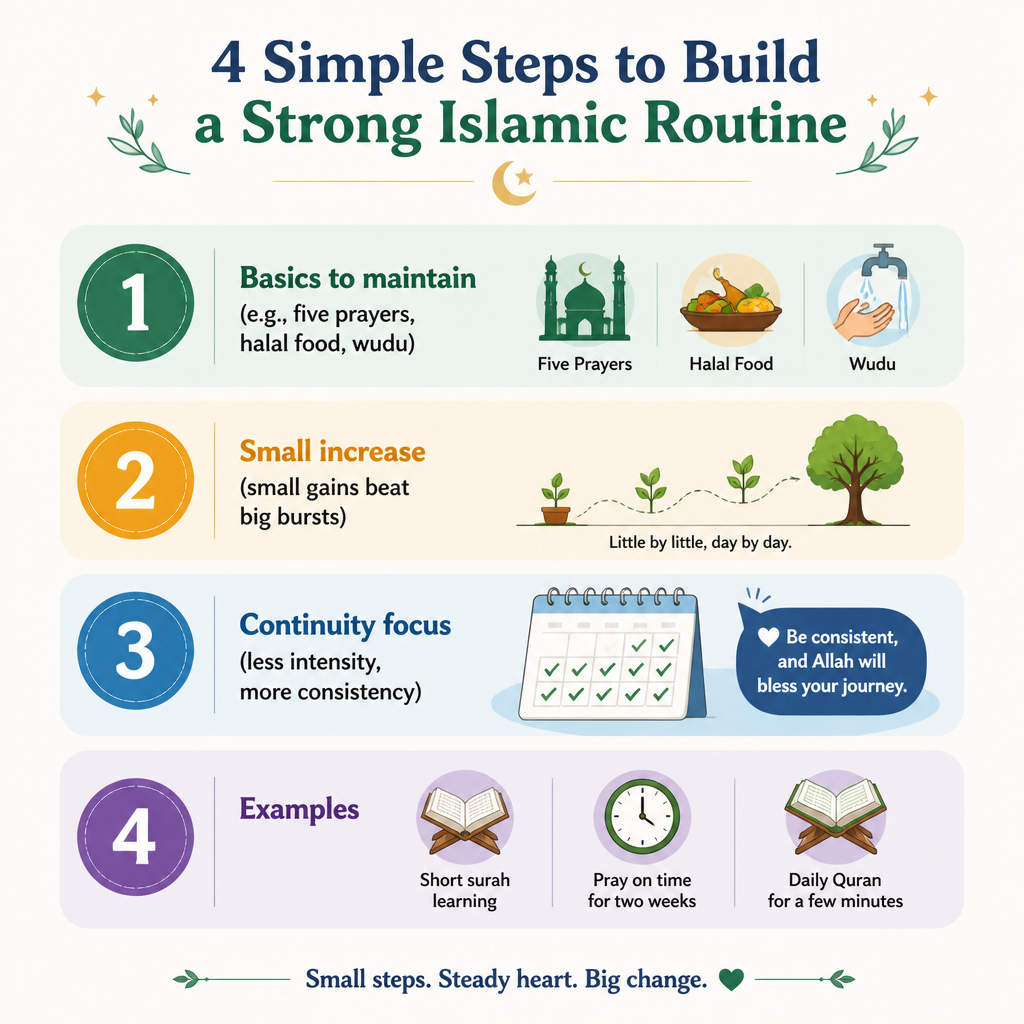
Try a gradual approach:
- Start with the basics you can maintain (for many: the five prayers, halal food, and learning how to make wudu).
- Increase step-by-step (small gains beat big bursts followed by burnout).
- Focus on continuity rather than intensity.
Think of faith like a ladder. You climb one rung at a time. One rung might be learning a short surah. Another might be praying on time consistently for two weeks. Another might be reading Quran daily—even for a few minutes.
Keep realistic expectations: knowledge, prayer, and routines take time
It’s easy to feel behind. There will always be people who seem more knowledgeable. But you’re not competing. You’re building.
Realistic expectations help you stay grounded:
- Prayer: learning the Arabic is a process; don’t shame yourself for being a beginner.
- Quran: reading slowly is still progress.
- Understanding: you don’t need to master everything today—just learn enough to practice properly.
- Habits: your routine will become easier as it becomes familiar.
When you treat your growth as “normal learning,” you avoid discouragement.
Your relationships will change—communicate with family first
Conversion affects relationships. Sometimes gently; sometimes dramatically. A wise approach is to communicate thoughtfully—especially with your parents and close family.
Consider these principles:
- Be respectful in your tone and actions.
- Explain with calm clarity (what you believe, why you made the choice, and what you’re doing now).
- Avoid heated debates early on. Early conflict often closes doors that patience could open.
Many reverts find that family reactions soften after they see consistency in prayer, good character, and steady learning.
Build your revert support system (converts, mentors, circles)
One of the most valuable forms of revert support is simply having people who understand what you’re going through. New Muslims face challenges that lifelong Muslims don’t always experience in the same way.
Build a support system with a few layers:
- A mentor or teacher you trust (someone who can answer questions responsibly).
- Other converts who “get it” emotionally and practically.
- A learning circle (online or in-person) to keep you accountable.
If you can, join reputable local groups or mosque programs. If not, look for structured online communities that focus on knowledge, manners, and real-life guidance—not sensational debates.
Find a teacher and verify advice before acting
Not all advice is equal. You’ll hear opinions, “cultural Islam,” and sometimes incorrect information. So here’s another key piece of advice for new muslims: verify before you commit.
Use a simple checklist:
- Does the advice align with Quran and authentic Sunnah?
- Is it backed by knowledge, not just vibes?
- Can you ask a local scholar or teacher for confirmation?
- Does the advice match what reputable scholars actually teach?
When in doubt, ask. When you’re offered strong claims, check. Your deen deserves careful guidance.
Avoid burnout and unnecessary debates; focus on what helps your heart
Some new Muslims get intense quickly—reading everything, watching everything, arguing everything. That can feel productive at first, but it can also drain you.
Try to protect your energy:
- Limit “doomscrolling” religious content if it makes you anxious.
- Choose one or two learning sources you trust.
- Prioritize worship over online arguing.
Debates rarely build a peaceful heart. Worship does. Character does. Consistency does.
Go to the masjid consistently and start forming friendships
Community is medicine for many reverts. If you can, try to attend the masjid regularly—not just once in a while. Even if you feel awkward at first, keep showing up.
Over time you will:
- feel more comfortable with the environment
- learn routines naturally
- meet people who can guide you
- begin building genuine friendships
One consistent habit can change your whole emotional trajectory: presence.
Learn Arabic stepwise while prioritizing core worship
Learning Arabic can be a motivating long-term goal. But prioritize the foundation: correct worship first, then gradual Arabic.
A stepwise plan could look like this:
- Learn how to do wudu correctly.
- Learn the essential prayer phrases in small pieces.
- Memorize short surahs with repetition.
- Only then expand into reading and deeper vocabulary.
This approach avoids frustration and helps you feel progress without pressure.
Keep your identity and culture: Islam doesn’t require erasing who you are
Many converts worry they must “become someone else.” Not true. Islam is not about erasing culture or personality. It is about aligning your life with Allah.
Islam does not require you to abandon your:
- name (unless it creates practical issues)
- language
- heritage and family traditions (as long as they are not haram)
- personal history
In fact, keeping your identity can help you relate to your community and share dawah naturally.
Be careful with big life decisions—especially rushing into marriage
This is sensitive, but it matters. Some reverts face pressure to marry quickly. The desire is understandable—companionship, shared faith, a sense of stability.
However, rushing can cause problems. Conversion is a major transition, and you need time to:
- build your worship routine
- understand Islam practically
- learn how your character changes under faith
- confirm that cultural expectations won’t be mistaken for religion
If you’re considering marriage, consult wise people, take your time, and choose with clarity—not emotional momentum.
Practice self-care during faith fluctuations; treat setbacks as temporary
Faith can feel shaky sometimes. Maybe you miss prayers, or you feel distant, or you get overwhelmed. This does not mean you failed permanently.
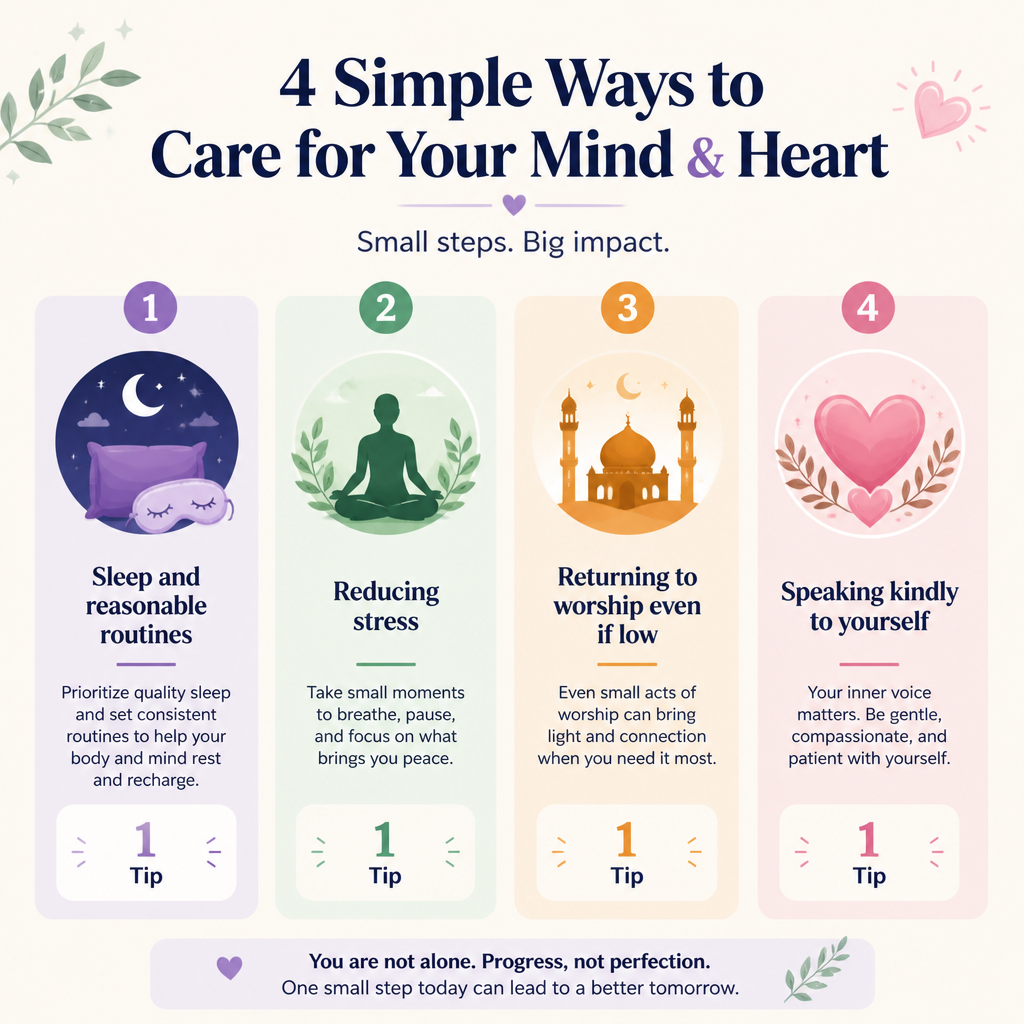
Self-care for new Muslims can include:
- sleep and reasonable routines
- reducing stress where you can
- returning to worship even if you feel low
- speaking kindly to yourself (you’re learning)
Setbacks happen. What matters is how quickly you return to Allah.
Use a balanced approach: engage in community, avoid extremism
Balance protects you. A healthy path includes:
- Community: masjid, classes, good circles
- Knowledge: learning from credible sources and scholars
- Humility: accepting you are still growing
- Safety: avoiding harshness and extremism
If someone makes you feel fear without wisdom, or guilt without guidance, step back and seek better support.
Remember accountability and keep going (“don’t give up” mindset)
Islam calls you to take responsibility for your choices. But it also promises that effort is not wasted. If you keep learning and practicing sincerely, Allah sees it.
Some practical mindsets to stay strong:
- Small good deeds count.
- Consistency beats perfection.
- Ask Allah for steadiness and make dua when you’re low.
Don’t give up. Your progress matters—even when you don’t feel it.
Conclusion: your progress matters—stay connected, keep learning
That’s the heart of the best advice for new muslims: be patient, grow gradually, build revert support, verify guidance, and protect your heart from burnout.
You don’t need to do everything today. Start with one small step that you can maintain. Then add the next step. And when the season gets hard, remember: you are not alone—Allah is with you, and help is available through sincere teachers, community, and the wisdom of experience.
Further resources (recommended starting points)
- Practical Advice for New Muslims from a Fellow Convert (Kate Lynn / AYEINA)
- 12 Tips for the Convert Muslim (Brother Alex / Virtual Mosque)
- Best Advice for a New Eager Convert to Islam? (Convert Counselor / AboutIslam)
May Allah make your journey easy, your heart steady, and your iman grow with time.