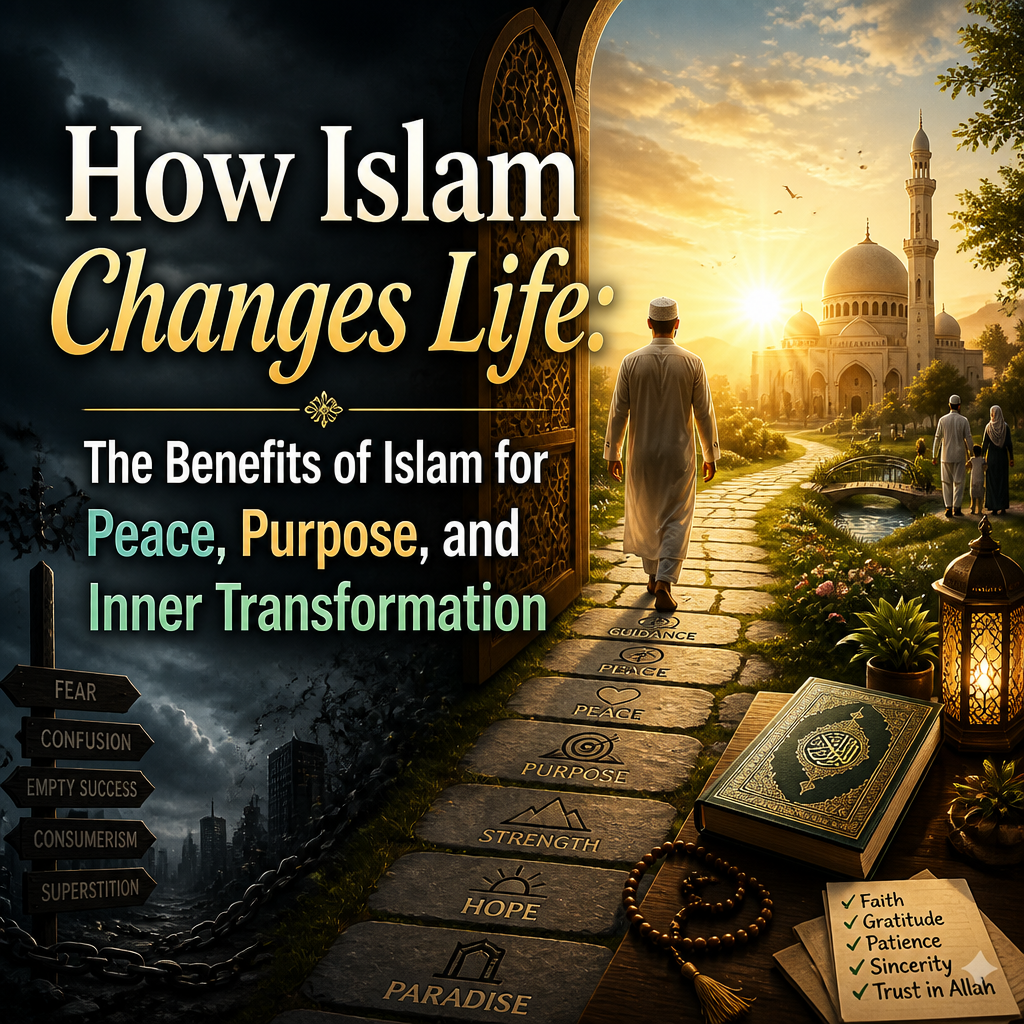
How Islam Changes Life: The Benefits of Islam for Peace, Purpose, and Inner Transformation
When people ask “how islam changes life”, they are often looking for more than religious information. They want a transformation they can feel: calmer hearts, clearer purpose, better character, and a path that connects today to the future. For many who embrace Islam—or deepen their practice—Islam becomes a way of life that reshapes the mind, the emotions, and even daily routines.
This article explains the benefits of islam in practical and spiritual terms, drawing from widely shared insights in conversion-focused resources and supported by Qur’anic guidance.
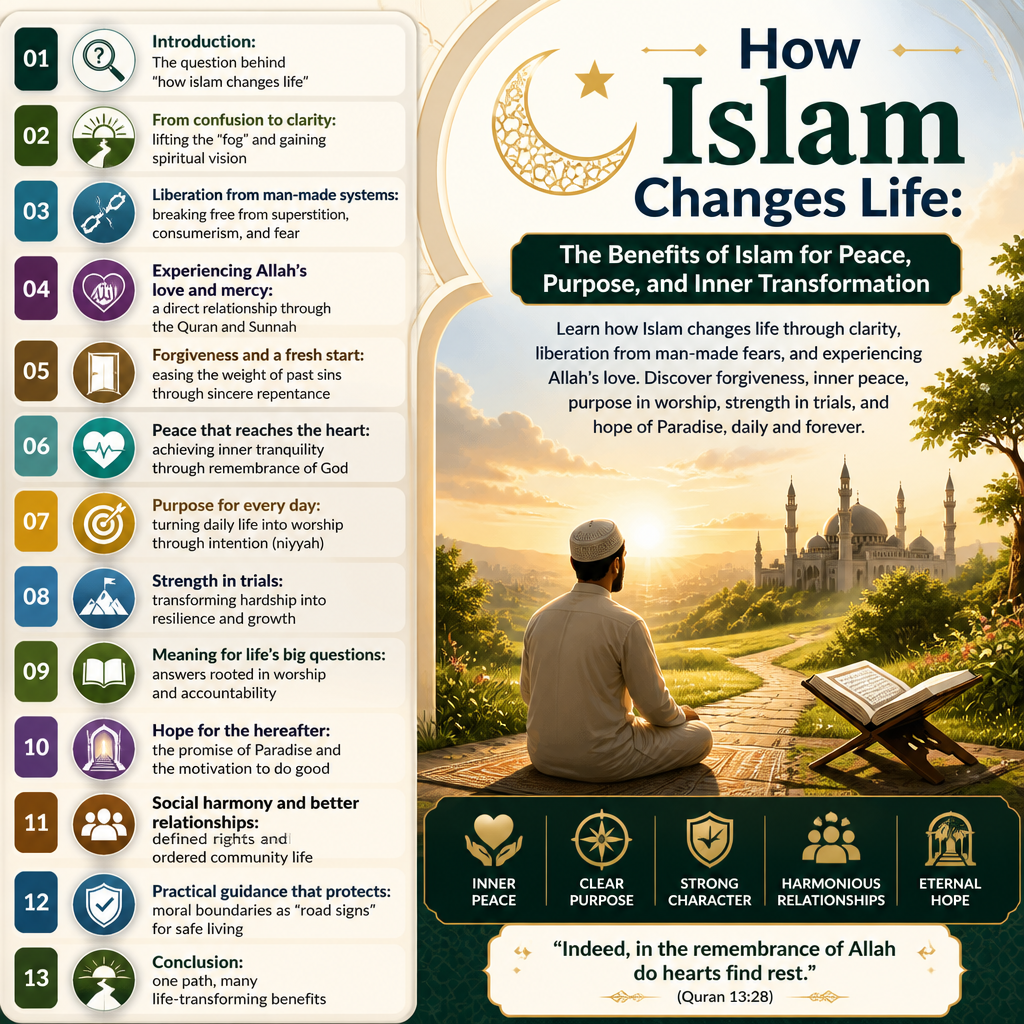
1. Introduction: The question behind “how islam changes life”
Islam is not only a set of beliefs; it is a comprehensive way to live. It addresses existential questions (Who am I? Why am I here?), moral concerns (What should I do?), and emotional needs (How can I be at peace?). That is why Islam is often described as both spiritual medicine and life guidance.
Many converts describe a turning point: life felt foggy—like the heart could not see the truth—until Islam offered clarity. The Qur’an speaks about hearts that are blinded, then illuminated: “So blindness of the heart is what they have” (Qur’an 22:46).
2. From confusion to clarity: lifting the “fog” and gaining spiritual vision
One of the most repeated descriptions of transformation is clarity. Before Islam, people may feel uncertain about right and wrong, or they might sense truth but cannot find a stable direction. After embracing Islam, many say the “fog” lifts:
- Truth becomes recognizable—not only intellectually, but emotionally.
- Guidance becomes concrete through Qur’an and Sunnah.
- Direction becomes steady because worship and accountability are built into daily life.
Islam’s guidance acts like a compass. It helps you interpret events (good or difficult) without losing your footing. This is part of why Islam is often described as seeing life more accurately rather than simply feeling happier temporarily.
3. Liberation from man-made systems: breaking free from superstition, consumerism, and fear
Another answer to how islam changes life is liberation. Islam reorients what you trust and what you worship. Instead of living under shifting human opinions—status, trends, and fear—Islam invites believers to submit to Allah’s wisdom.
Resources discussing conversion benefits commonly emphasize freedom from:
- Superstition and uncertainty about whether outcomes are truly in anyone’s control.
- Consumerism and social pressure (chasing what looks impressive rather than what is meaningful).
- Fear of the unknown, replaced by hope anchored in divine mercy.
Islam teaches that all events are connected to Allah’s knowledge and will, which changes how a person responds to hardship: the heart learns perseverance and thankfulness instead of panic.
4. Experiencing Allah’s love and mercy: a direct relationship through the Quran and Sunnah
Islam invites a personal, direct relationship with Allah. Many people previously had difficulty imagining God as close and compassionate. In Islam, Allah’s mercy is not distant—spiritual connection is cultivated through Qur’an, prayer, remembrance, and ethical living.
One Qur’anic verse frequently cited in discussions of conversion benefits is:
“Say, (O Muhammad): ‘If you love Allah, then follow me; Allah will love you…’” (Qur’an 3:31)
As a person follows Qur’an and the Sunnah, they are not merely adopting rules; they are learning how to approach Allah with sincerity. Over time, many experience a felt nearness that affects their emotional life: stress decreases, guilt becomes manageable through repentance, and hope becomes stable.
5. Forgiveness and a fresh start: easing the weight of past sins through sincere repentance
Guilt can be heavy. Even when someone wants to change, past mistakes may keep returning in the form of shame and despair. Islam offers a different story: repentance is real, and Allah’s forgiveness is wide.
Conversion-centered resources often describe the sense of being “reset”—as if a person is beginning again. The idea is not that wrongdoing was meaningless, but that remorse paired with sincere repentance can open a door to renewal.
This fresh start matters emotionally. Instead of living under the weight of “I can’t change,” the believer learns:
- Your past doesn’t have to define your future.
- Repentance is a process, not a one-time feeling.
- Growth is possible because guidance continues through the Qur’an and community practice.
6. Peace that reaches the heart: achieving inner tranquility through remembrance of God
Many people can achieve distraction, but Islam aims for inner peace—peace that holds even when circumstances are difficult. The Qur’an describes hearts finding rest:
“Verily, in the remembrance of Allah do hearts find rest.” (Qur’an 13:28)
Remembrance (dhikr) is more than repetitive words. It becomes a lifestyle of returning to Allah: before stress overwhelms you, after mistakes happen, and in moments of waiting or uncertainty.
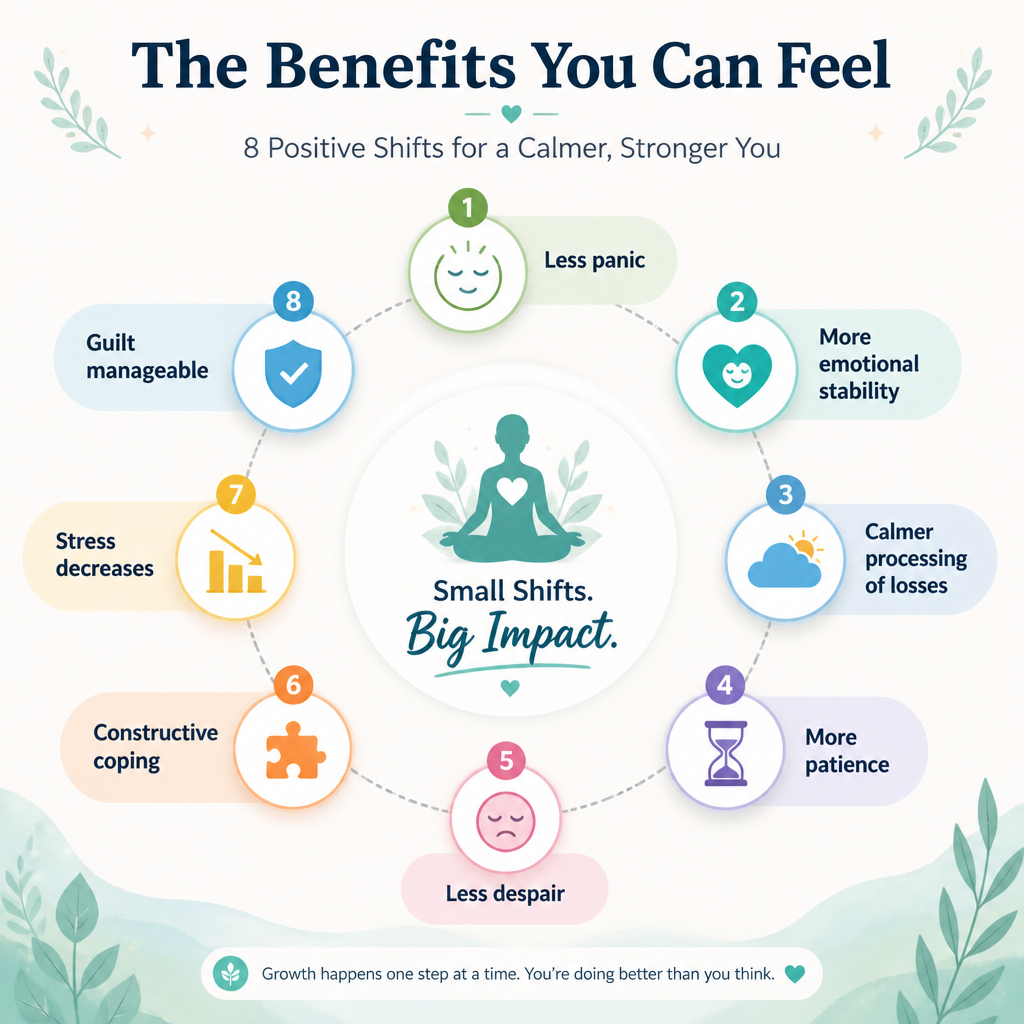
As a result, many believers describe:
- Less panic during challenges
- More emotional stability across seasons of life
- A calmer way to process losses and trials
7. Purpose for every day: turning daily life into worship through intention (niyyah)
Islam changes life not only by changing “spiritual hours,” but by transforming ordinary routines. A key concept here is intention (niyyah). Your daily actions can become worship when done for Allah’s sake and guided by ethical principles.
This answers a major human question: “What is the purpose of my life?” The Qur’an connects worship to meaning:
“And I did not create the jinn and mankind except to worship Me.” (Qur’an 51:56)
When purpose becomes clear, motivation changes. Goals like career, family, and personal growth remain important—but they stop competing with the ultimate direction of life.
8. Strength in trials: transforming hardship into resilience and growth
People often assume religion is only for comfort, but Islam also trains resilience. Trials are not “proof that Allah is absent.” Instead, Islam frames hardship as part of life and as a space where faith matures.
Qur’an 2:155 explains that believers will be tested, including through fear, hunger, loss of wealth, life, and fruits. The key difference is how faith changes the response.
When the believer remembers Allah, hardship becomes something they can endure with meaning rather than suffering in chaos. Over time, this produces:
- More patience
- Less despair
- More constructive coping (prayer, reliance on Allah, seeking help)
9. Meaning for life’s big questions: answers rooted in worship and accountability
Islam provides structured answers to the “big questions” that keep resurfacing in every human life:
- Who created me?
- What is right and wrong?
- Why do I face suffering?
- Does my life matter beyond my lifetime?
By grounding answers in Qur’an and accountability to Allah, Islam shapes how you interpret decisions. Even when you make mistakes, the path back is not hopeless—it is repentance, learning, and returning.
10. Hope for the hereafter: the promise of Paradise and the motivation to do good
Hope is powerful when it is honest. Islam links belief to ultimate reward. Many discussions of benefits of islam highlight that believers are promised Paradise and protected from severe outcomes.
For example, Qur’an 29:58 speaks of those who believe and do good deeds and are promised lofty dwellings. This type of promise changes the emotional direction of life:
- Good deeds are not “pointless.”
- Struggles do not only end in loss.
- Trials can become motivation to remain faithful.
Hope makes moral struggle feel meaningful rather than exhausting.
11. Social harmony and better relationships: defined rights and ordered community life
Islam’s transformation is not private only. It reforms how people treat one another. When Islam is lived sincerely, it encourages:
- Respectful family life (with rights and responsibilities)
- Justice in transactions and speech
- Mercy toward others
Conversion-focused articles often emphasize that Islam provides social order rooted in worship. Rather than building relationships only around convenience, believers learn to build around integrity and accountability to Allah.
12. Practical guidance that protects: moral boundaries as “road signs” for safe living
Islam does not only say “be good.” It provides a framework that helps people stay safe—spiritually and practically. Ethical limits in Islam can feel restrictive at first, but they often function like road signs that prevent dangerous turns.
For many, Islam’s boundaries protect them from harmful lifestyles and from the confusion of acting on impulse alone. When the believer follows Qur’an and Sunnah, they are not merely avoiding “no’s”—they are moving toward a healthier path.
In that sense, Islam’s rules can be experienced as mercy: direction for the journey toward success in this life and the hereafter.
Conclusion: One path, many life-transforming benefits
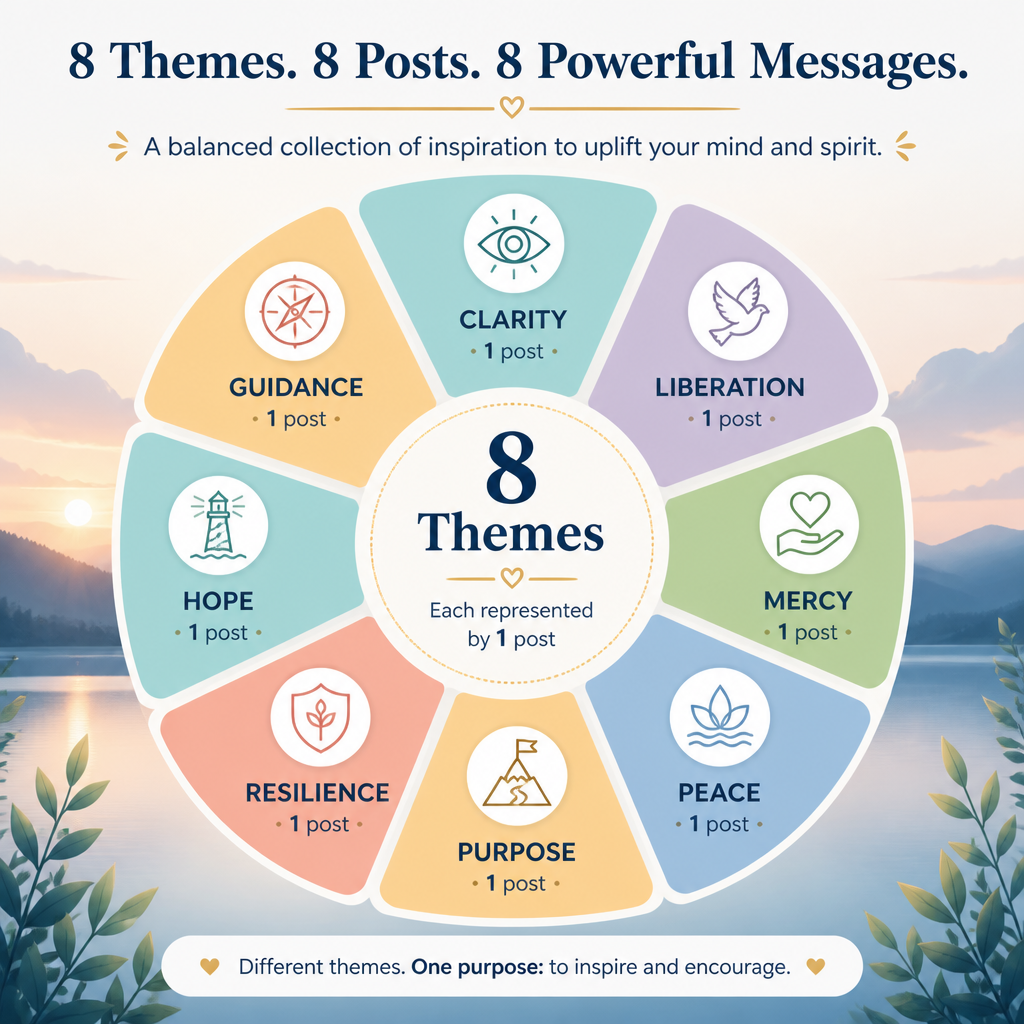
So, how islam changes life? For many people, Islam transforms life in layers:
- Clarity replaces confusion
- Liberation replaces fear of man-made systems
- Mercy eases the weight of the past
- Peace settles the heart through remembrance
- Purpose turns daily life into worship
- Resilience grows through trials
- Hope strengthens moral motivation
- Guidance improves relationships and safe living
In short, the benefits of islam are not limited to one moment of conversion. They continue to shape the believer’s choices, character, and future—day by day.
Sources (Top references used):