1) Introduction: Conversion Isn’t the Finish Line
If you’re researching the challenges of converting to Islam, you may already know a comforting truth: becoming Muslim is beautifully simple. The Shahada—sincere belief in Allah’s oneness and that Muhammad ﷺ is His messenger—is the entry point.
But Islam isn’t only a moment. It’s a path. And like any path, it comes with terrain—some smooth, some steep. For many new Muslims, the most difficult part doesn’t happen when they say the Shahada. It happens after—when reality, relationships, habits, and expectations begin to change.
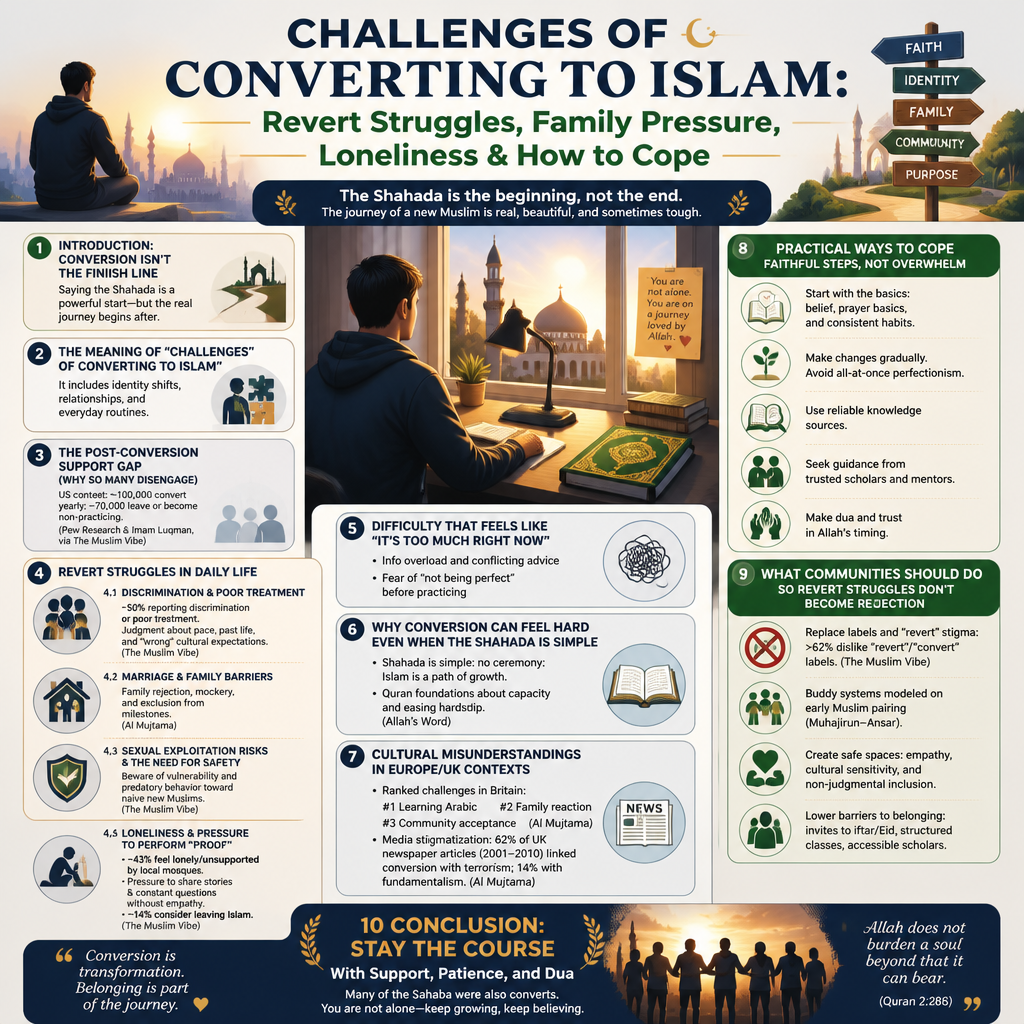
2) The Meaning of “Challenges of Converting to Islam”
When people say conversion is hard, they’re usually describing several overlapping pressures:
- Identity shifts: losing some old social ties, gaining new responsibilities, and renegotiating who you are.
- Relationship strain: family reactions, partner conflicts, and friend-group tension.
- Everyday routine changes: prayer times, learning basics, dietary adjustments, and managing new moral boundaries.
- Emotional needs: the need for belonging, reassurance, and safe guidance—not judgment.
In other words, these aren’t “proof” that Islam is wrong. They’re often proof that you’re living a real transformation in a real world.
3) The Post-Conversion Support Gap (Why So Many Disengage)
One of the most serious issues facing new Muslims is not a lack of sincerity—it’s a lack of ongoing support.
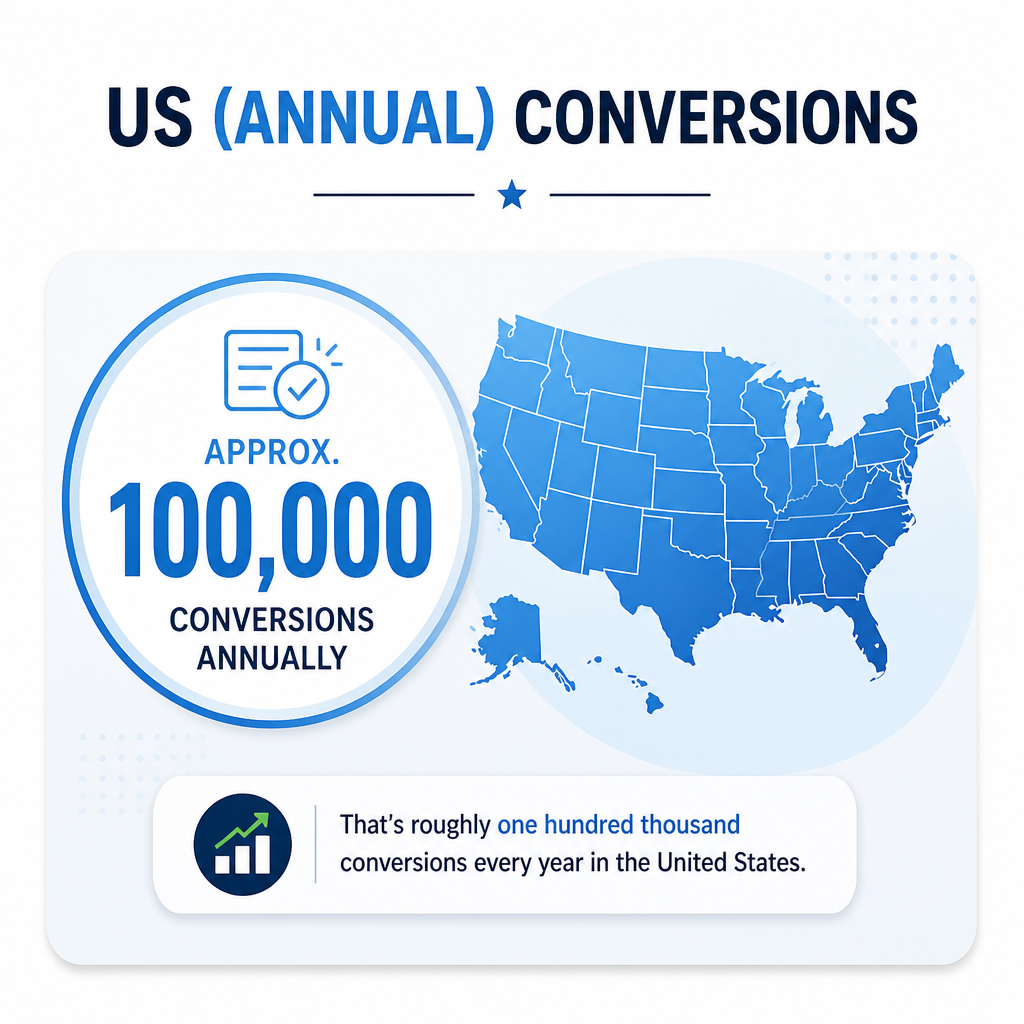
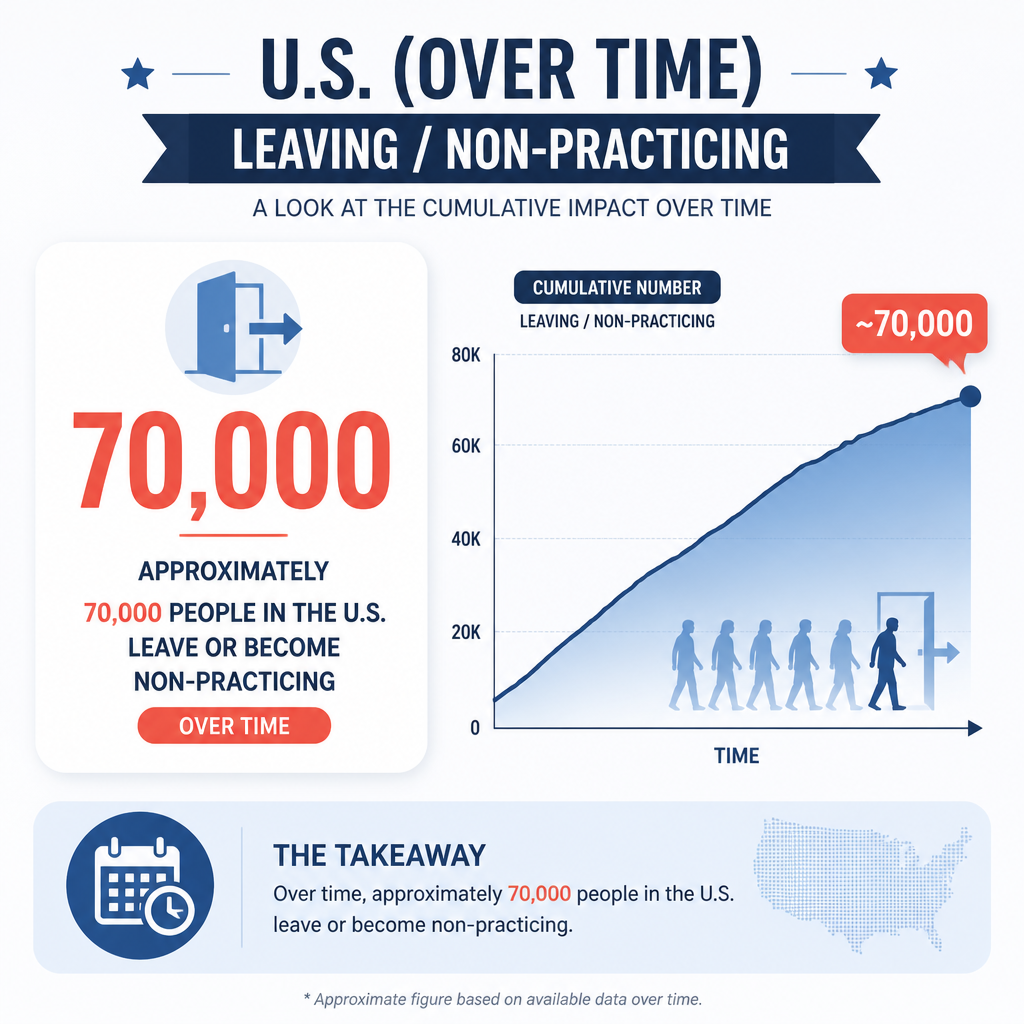
Research and community reporting indicate that while many people convert each year, a large number later leave Islam or become non-practicing. In the US context, sources cite approximately 100,000 conversions annually, with around 70,000 leaving or becoming non-practicing over time (Pew Research, discussed in The Muslim Vibe).
So what’s happening?
Common contributing factors include:
- Feeling judged instead of mentored
- Loneliness after the “new Muslim excitement” fades
- Family pressure escalating
- Misinformation (including conflicting advice found online)
That support gap is where revert struggles can quietly grow into discouragement.
4) Revert Struggles in Daily Life
4.1) Discrimination and Poor Treatment
Many new Muslims report experiencing unfair treatment—sometimes obvious, sometimes subtle. Community reporting notes that around ~50% of reverts report experiencing discrimination or poor treatment.
What does this look like?
- Judgment about pace: “You should already know more.”
- Judgment about past life: attempts to treat someone like their previous identity is a permanent stain.
- Unspoken cultural expectations: pressure to “fit in” to ethnic norms rather than learning Islam with compassion.
Some communities also struggle with language. One key point from community reporting: >62% of converts dislike labels like “revert” or “convert.” While many Muslim teachers use those terms respectfully, the deeper need is the same: treat the person with dignity.
4.2) Marriage and Family Barriers
Conversion can impact more than your personal worship—it can affect your future.
European community reporting highlights cases where converts face:
- Rejection in marriage proposals due to cultural differences and family concerns
- Exclusion from major family milestones
- Mockery of religious practice or interference in learning prayer routines
These barriers can force new Muslims into painful dual lives: practicing quietly at times while facing hostility at other times.
4.3) Sexual Exploitation Risks and the Need for Safety
Another painful reality is that vulnerability can be exploited. New Muslims may be:
- Trusting because they’re searching for sincerity
- Confused about boundaries, social norms, or Islamic rulings
- In need of guidance and attention
Community reporting emphasizes the importance of safe spaces and appropriate oversight. “Help” should never become access to someone’s loneliness, confusion, or naivety.
If you are a new Muslim (or supporting one), prioritize:
- Clear community structures
- Programs with transparency
- Mentors who are accountable and trustworthy
4.4) Loneliness and Pressure to “Perform Proof”
Isolation is not a minor issue. Community reporting notes that around ~43% of respondents feel lonely and unsupported by local mosques after converting.
Loneliness often gets worse when new Muslims feel pressured to:
- Tell their conversion story repeatedly to “prove” authenticity
- Answer many questions about hijab, prayer, halal food, or their past—without anyone asking how they feel emotionally
- Keep up with expectations before they can sustainably learn
In the same reporting, about ~14% consider leaving Islam. That’s a serious call to compassion and structure.
5) Why Conversion Can Feel Like “It’s Too Much Right Now”
Even with good intentions, conversion can become overwhelming when multiple stressors hit at once:
- Info overload: conflicting videos, fatwas without context, and “advice” that doesn’t match your real situation.
- Fear of not being perfect: “What if I don’t do everything right?”
- Grief for lost relationships: mourning what you had, even while you’re gaining what you need.
When the brain is stressed, learning slows down. And when you’re spiritually stressed, even simple prayer can start to feel impossible.
6) Why Conversion Can Feel Hard Even When the Shahada Is Simple
Let’s correct a common misunderstanding: the Shahada is simple, but a sincere heart still needs time, education, and gentle habit-building.
Islam does not require you to be “perfect” before entering. A practical guide for new Muslims explains that becoming Muslim requires sincere belief, and that perfection in prayer or hijab is not a prerequisite for conversion. Many people delay conversion until they feel “ready,” and that delay can become its own kind of hardship.
Islam also recognizes human capacity. Quranic guidance includes themes such as:
- Allah does not burden beyond capacity (2:286)
- Fear Allah as much as you are able (64:16)
- With hardship comes ease (94:6)
So if “it’s hard right now,” that doesn’t mean you made a mistake. It often means you’re in the growth stage—and growth needs compassion, not pressure.
7) Cultural Misunderstandings: Europe/UK Contexts
Some of the hardest moments happen not because Muslims disagree about Allah, but because culture is mistaken for religion.
In Britain, community reporting cites ranked challenges for new Muslims. The top items include:
- Learning Arabic (#1)
- Family reactions (#2)
- Community acceptance (#3)
These challenges are magnified by another pressure: media stigma.
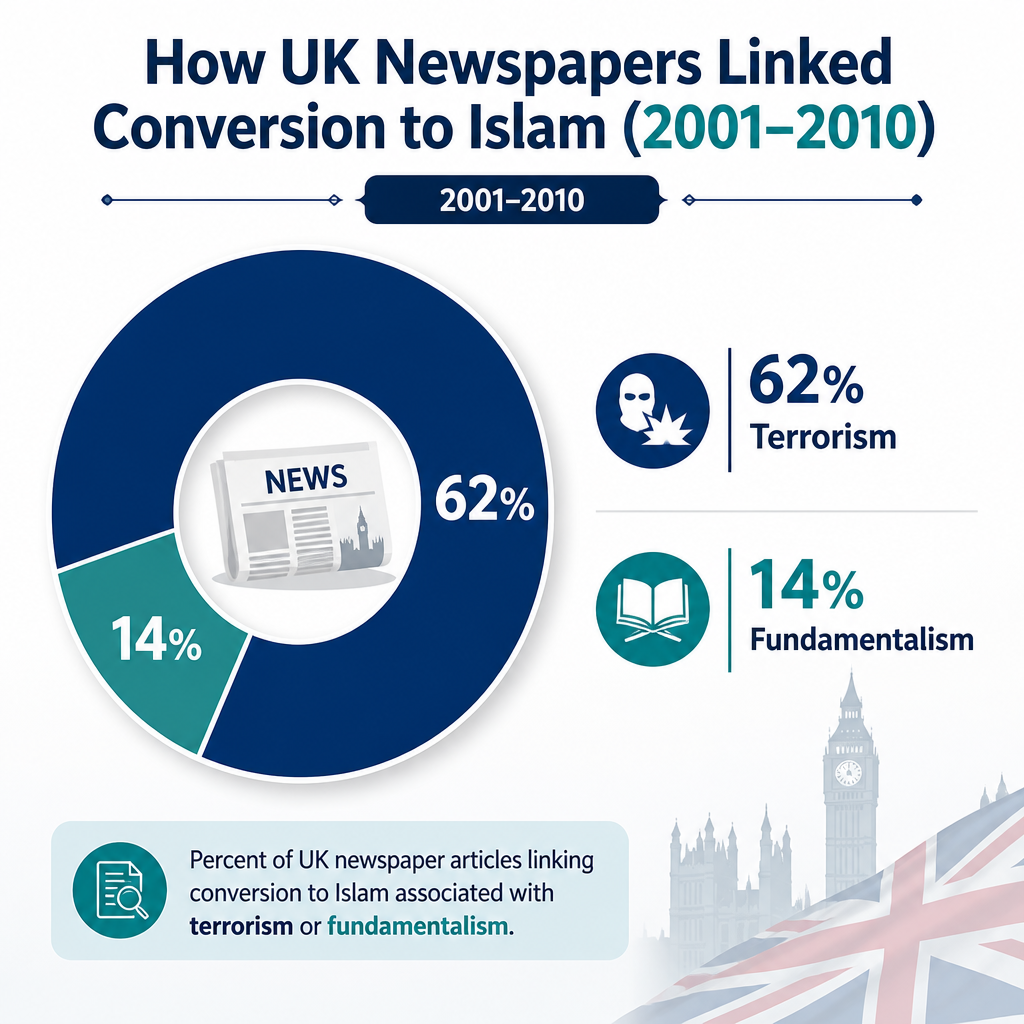
One study discussed in community sources found that between 2001 and 2010, 62% of UK newspaper articles linking conversion to Islam associated it with terrorism, and 14% associated it with fundamentalism. This kind of atmosphere can make peaceful dawah feel risky and can cause new Muslims to feel constantly “on trial.”
8) Practical Ways to Cope (Faithful Steps, Not Overwhelm)
When someone asks, “How do I deal with challenges of converting to Islam?”, the best answer is rarely a motivational quote—it’s a plan.
8.1) Start with the foundations
- Belief: strengthen certainty that Allah is guiding you.
- Prayer basics: focus on consistency, not instant mastery.
- Learn in small increments: pick a short goal for the week, not a whole curriculum.
8.2) Change gradually
Many converts try to do everything at once. That approach often backfires. Instead:
- Choose one major habit at a time (for example: prayer timing, halal meals, or reducing a harmful practice).
- Use patience with yourself—Islam is a long-term journey, not a sprint.
8.3) Use reliable knowledge sources
- Look for local scholars, structured classes, and reputable books.
- Be careful with advice that ignores your personal circumstances.
8.4) Find a mentor and a community circle
Isolation increases difficulty. A trusted mentor (or a small group) provides:
- Accountable guidance
- Emotional reassurance
- Protection from misinformation
If you’re supporting a new Muslim, your kindness may be what keeps them from quitting.
9) What Communities Should Do (So Revert Struggles Don’t Become Rejection)
New Muslims don’t only need “information.” They need belonging. Communities that want to retain converts should build empathy and structure.
9.1) Replace labels with dignity
As noted earlier, many converts dislike being reduced to labels. Even when “revert” is used lovingly, a better approach is to treat the person as a whole human being:
- Greet them warmly
- Learn their name and story with respect
- Ask how they’re coping emotionally
9.2) Create support groups and buddy systems
Community reporting suggests programs like buddy systems—pairing a new Muslim with a consistent support person, similar to the well-known pairing model of early Islam (Muhajirun–Ansar). The key is consistency: someone who checks in regularly, not someone who only appears at the beginning.
9.3) Make social inclusion normal
Invitations to safe, welcoming events like iftar and Eid matter. Belonging reduces loneliness faster than online advice.
9.4) Build safe spaces
A safe space means:
- Non-judgmental inclusion
- Cultural sensitivity (don’t confuse ethnicity with Islam)
- Scholars and educators who are accessible
- Appropriate boundaries to protect vulnerable people
10) Conclusion: Stay the Course with Support, Patience, and Dua
Yes—there are real challenges of converting to Islam. Revert struggles can include discrimination, family pressure, loneliness, and safety concerns. But these struggles don’t negate the truth of Islam. They are part of a human journey toward Allah.
And remember: many of the Sahaba were also converts in a broader sense—people who stepped into guidance from unfamiliar lives. Islam was built not only for instant ease, but for growth, patience, and mercy.
If you’re a new Muslim reading this, take a breath: you don’t need to “perform” your faith to be worthy of belonging. Keep taking small steps. Make dua for steadfastness. Seek real guidance. And if you are part of a community, offer that guidance with empathy, structure, and safety.
Further reading / references (3):
- The Muslim Vibe — The Challenges of Being a Muslim Revert and How We Can Help
- Al Mujtama Magazine — Problems and Challenges Faced by New Muslims in Europe
- Allah’s Word — Is Converting to Islam Difficult?
May Allah make your path easy, keep your heart firm, and place people around you who help you thrive.