Peace in Islam: Real Experiences of Finding Inner Calm Through Surrender, Prayer, and Remembrance
1. Introduction: What “Peace in Islam” Really Means
When people search online for peace in islam, they often mean something simple: “How can my heart stop feeling restless?” Or, “How do I finally feel safe inside?” Islam’s word for peace is salam—but peace in Islam is not merely a mood. It is a state of safety with God, a steadiness that can exist even while life remains hard.
Islam teaches that true calm doesn’t depend on perfect circumstances. It depends on a relationship: submission to Allah, trust in His wisdom, and remembrance that anchors the soul.
2. Peace vs. Relief: Why Islam’s Inner Peace Can Coexist With Life’s Hard Parts
Many forms of “relief” are temporary: a vacation, a breakthrough, a quiet moment, a successful day. Relief can disappear when stress returns.
But Islam’s concept of inner peace religion is deeper. It is connected to meaning:
- Your pain is not meaningless—it can be a test, purification, or mercy.
- Your heart is not abandoned—Allah is always aware.
- Your life has direction—you are walking toward something real: Paradise.
So peace in Islam can coexist with:
- family tension
- being misunderstood
- loneliness during transitions
- financial pressure
- and yes—mental health struggles
In Islam, peace is not “no storms.” Peace is how you keep your ship steady while the sea changes.
3. The Conversion Moment—And Why the Euphoria Can Fade
Real stories of conversion often include an intense early sweetness. People describe it as spiritual euphoria, a “quantum change,” a rush of certainty and calm.
But then reality arrives: telling family, learning practices, adapting habits, and facing community gaps. For some converts, the first months feel like flight—then come adjustment.
This is why many converts later say something like:
“Yes, I felt peace immediately—but I didn’t know how peace would be tested later.”
The key learning is that Islam’s peace is not just an emotional event. It is a connection that deepens through remembrance, practice, and patience.
4. Real Experiences After Shahada: Family, Hijab, and Community Gaps
One theme appears again and again in first-hand accounts: after shahada, peace grows, but it doesn’t always feel “easy.” Sometimes converts discover that their inner calm is real, yet their external world may still feel painful.
Example: Serenity With Loneliness
One documented story describes a convert who experienced inner tranquility while also facing a difficult social reality. Even after attending a mosque for years, she described how simple warmth and greetings were missing. Later, during a serious illness, support was limited—yet her overall experience included a surprising resilience and serenity.
How can that happen? Because Islam teaches peace as something rooted in submitting to Allah, not in applause from others.
Islam doesn’t deny loneliness. It addresses it by offering:
- Meaning (your heart is not abandoned)
- Ritual grounding (salah structures the day)
- Remembrance (hearts find rest)
- Hope (peace is also waiting in Paradise)
5. The Ego and Inner Turmoil (nafs): How Negative Narratives Hijack Peace
Even with sincere faith, many people notice how quickly their mind can spiral. A painful inner voice can say:
- “I’m not good enough.”
- “Nothing will change.”
- “Everyone will leave me.”
- “God must be disappointed.”
Islam calls the self that commands you toward harmful patterns nafs al-ammārah—the ego-self. The ego isn’t “evil” as a concept; it is the part of the human psyche that pushes you into compulsive thinking, attachment, and negativity.
Where peace gets lost:
- when the mind over-identifies with fear
- when you treat thoughts as facts
- when you obsess over what you cannot control
- when you chase satisfaction through shortcuts
Islam’s response is practical and spiritual: it provides a way to re-train your inner life through worship, discipline, and truth.
6. How Islam Rewires Inner Life Through Surrender
Islam’s core meaning includes surrender—not surrendering your personality, but surrendering your ultimate control to Allah. That shift transforms the inner world.
Shahadah as a heartbeat of surrender
The shahadah is not only a statement; it becomes a direction. It teaches the heart: “Allah is One. My life is held by Him.” In moments of anxiety, this can become an anchor—something you return to when fear tries to lead.
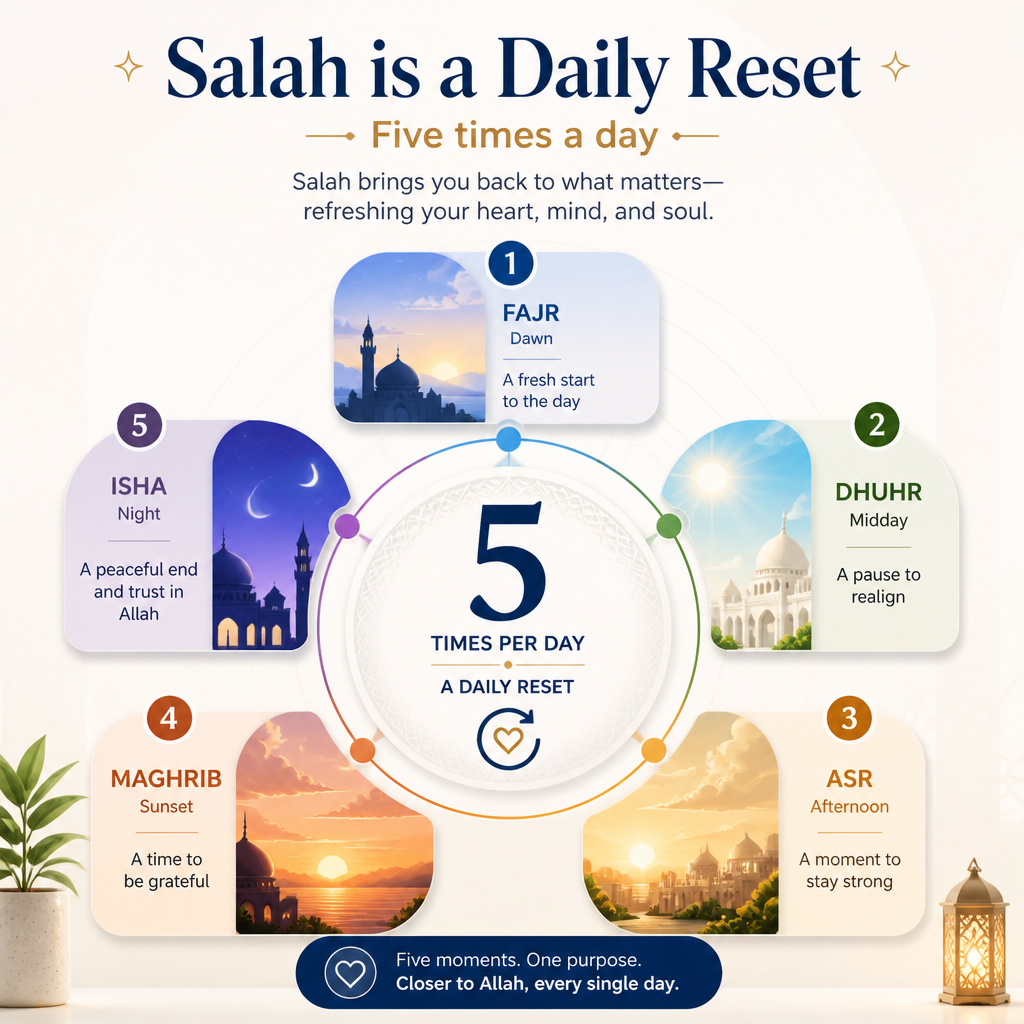
Salah for rhythmic harmony and grounding
Salah is like a daily reset. Five times a day, you stop performing for the world and reconnect with your Lord. Many people describe salah as “the only time I feel truly present.”
Even if you don’t yet feel calm, the practice teaches your nervous system and soul a rhythm of steadiness.
Sawm for discipline over impulses
Fasting trains the mind not to be governed by cravings and immediate emotional demand. When you can hold back impulses for Allah, you begin to regain inner freedom. Over time, that freedom becomes calm.
Zakat as purification from attachment
Attachment can become a hidden source of anxiety: needing things to feel safe. Zakat reduces that grip. It reminds you that wealth is not your security—Allah is.
Hajj as meditation on mortality and purpose
Hajj doesn’t just commemorate. It reorients the heart toward meaning: life is finite, and you are traveling toward accountability. That perspective changes how “small” everyday stress feels.
7. Prayer and Remembrance: The Direct Path to Rest
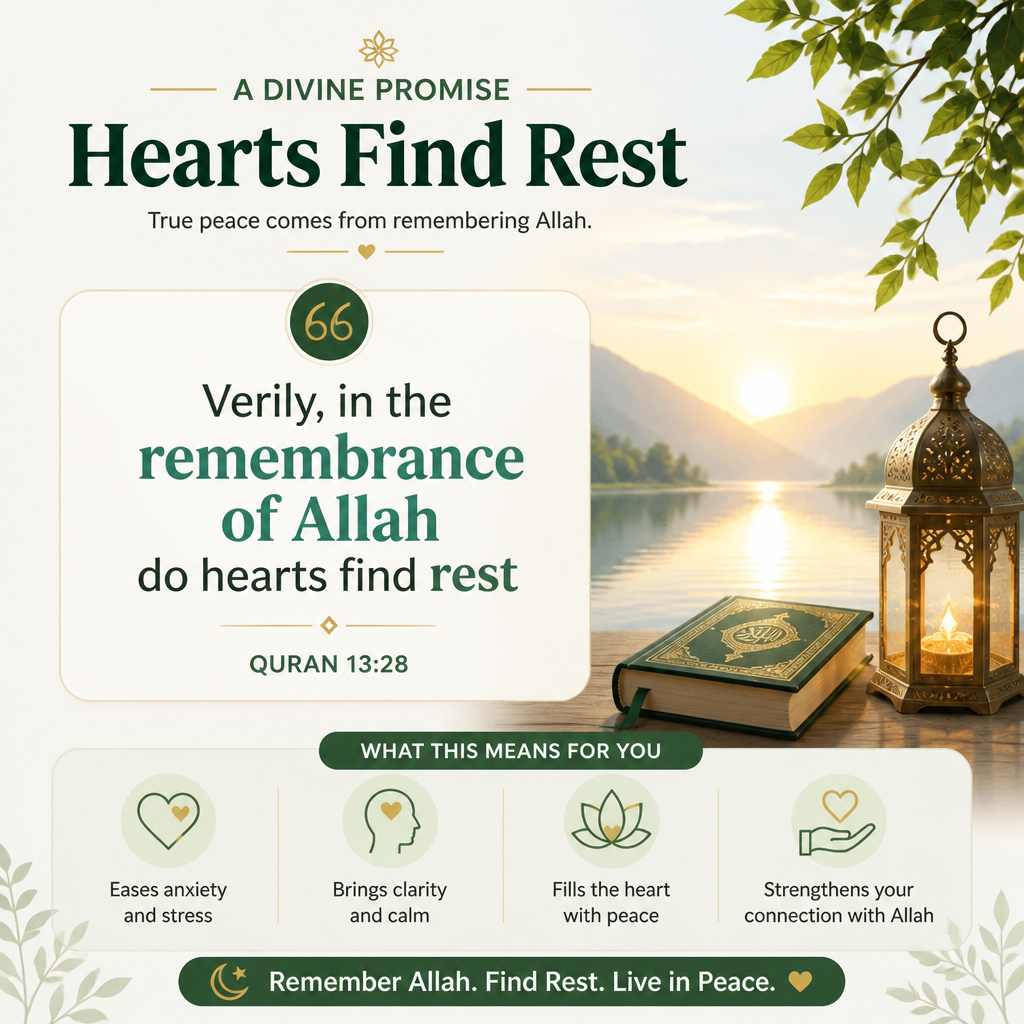
One of the most quoted promises in Islam is Quran 13:28:
“Verily, in the remembrance of Allah do hearts find rest.” (Quran 13:28)
This isn’t only about religious “feelings.” It’s about the heart’s need for a stable object of devotion. When you remember Allah—through Quran, dhikr, and dua—you stop letting fear write the story.
Remembrance can be as simple as:
- morning and evening adhkār
- short duas when you feel overwhelmed
- reciting Quran slowly, with reflection
- making istighfar until your mind softens
8. When Mental Health Hurts: Faith, Hope, and Seeking Help Together
Some stories of peace in Islam are especially powerful because they involve deep suffering. They show that faith doesn’t mean “instant cure”—but faith can be a lifeline, and Islam encourages both spirituality and practical care.
Example: From suicide attempts to profound peace in salah
One personal journey describes severe mental health struggles beginning in childhood, including suicide attempts and self-harm. For years, the pain was dismissed in her environment. At around 20 years old, during Ramadan, her first experience of salah brought tears and a sense of peace she had never felt before. Her searching led to shahada in her mid-twenties.
Importantly, the story does not claim that conversion magically erased all symptoms. Instead, it emphasizes something more realistic and hopeful:
- Islam transformed her relationship to suffering—from hopelessness to purpose and mercy.
- She continued to seek medical help alongside faith.
- Islam’s teachings about tests and divine wisdom helped her endure.
She also highlights Islamic historical contributions to mental health, and she advocates against stigma—because the heart cannot heal if society keeps blaming the suffering person.
9. Trials as Tests, Not Abandonment: Building Peace Through Meaning
One of the hardest moments in life is not the pain itself—it’s what your mind believes the pain means about you. Islam challenges that belief.
Instead of concluding “God left me,” Islam trains you to ask:
- “What is Allah teaching me through this?”
- “How can I respond with patience and prayer?”
- “What good can be shaped from this hardship?”
This doesn’t erase grief. But it changes grief from chaos into a path.
10. The Ultimate Promise: Peace That Waits in Paradise (and what we taste now)
Islam teaches that the deepest peace is not fully achieved on earth. This world contains trials, and therefore peace is sometimes experienced as:
- a quiet trust after dua
- calm while reading Quran
- steadiness during difficulty
- gratitude despite unresolved problems
The “full” version of peace is promised in Paradise—yet Muslims experience tastes of it now.
11. Practical Steps: How to Start Finding Peace This Week
If you want to begin finding peace in islam, don’t aim for perfection. Aim for consistent connection. Here’s a realistic seven-day plan:
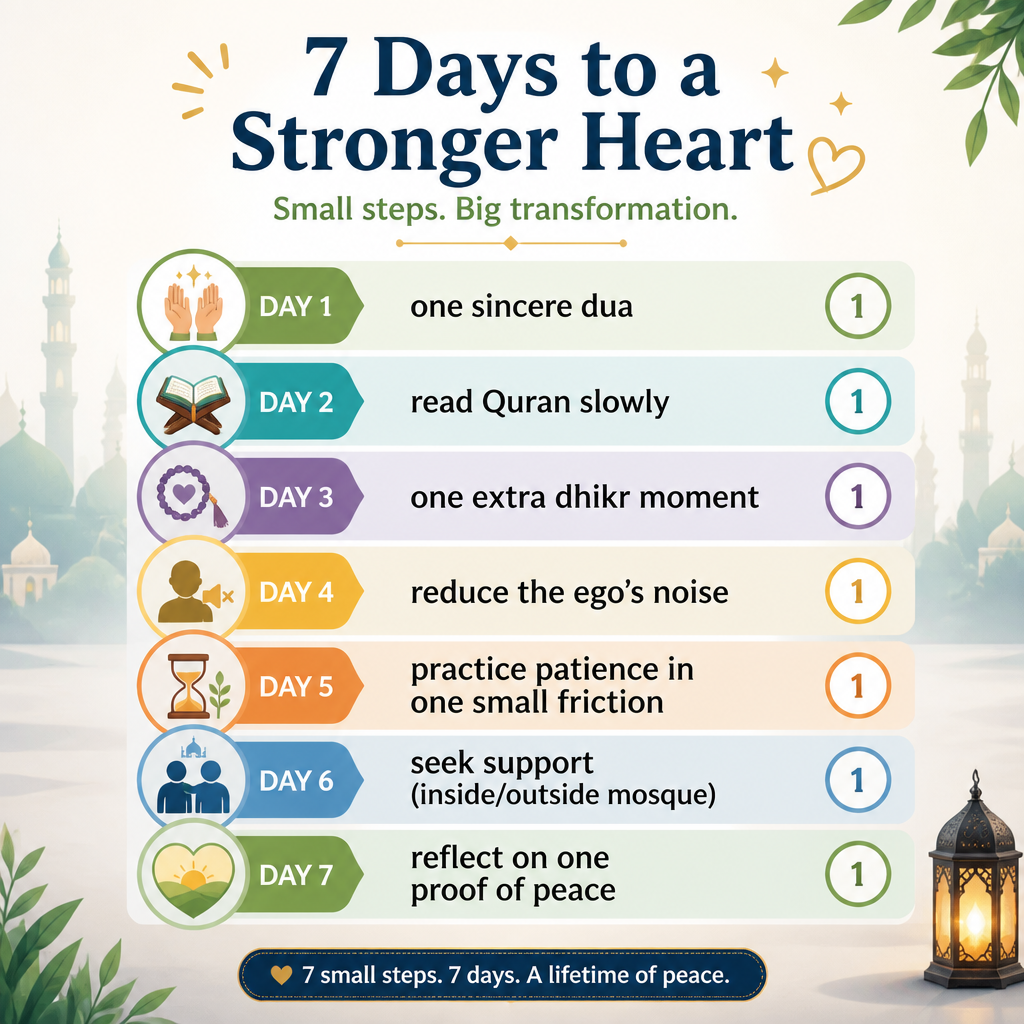
Day 1: Make space for one sincere dua
Choose one sentence: “Ya Allah, place tranquility in my heart.” Sit with it for a few minutes.
Day 2: Read Quran slowly (even one page)
Focus on meaning. Don’t rush to finish—return to the words that soften you.
Day 3: Add one extra dhikr moment
For example: after salah, make istighfar or say a short remembrace you can repeat with calm.
Day 4: Reduce the ego’s noise
When anxious thoughts arise, label them gently: “This is fear talking.” Then return to worship.
Day 5: Practice patience in one small friction
Pick a moment today that usually triggers you—traffic, family tension, stress. Respond with a calmer script and a dua.
Day 6: Seek support (inside or outside the mosque)
If you’re struggling emotionally, talk to someone trustworthy. And if needed, seek professional help. Islam supports taking the means—while trusting Allah for results.
Day 7: Reflect on one proof of peace
Write down one moment this week when you felt closer to Allah. That memory strengthens your future calm.
12. Conclusion: Peace in Islam Is a Lived, Ongoing Relationship With God
Real experiences show that peace in Islam is not a denial of hardship. It is a relationship—a daily surrender, prayer, and remembrance that keeps your heart from being fully captured by fear.
Conversion euphoria may fade, community support may vary, and mental health struggles may require continued care. Yet peace can still grow—quietly, steadily—through the practices Islam gives and the promise Allah makes.
If you want inner peace religion that can hold both joy and trial, Islam offers exactly that: salam as a direction your heart can return to again and again.